
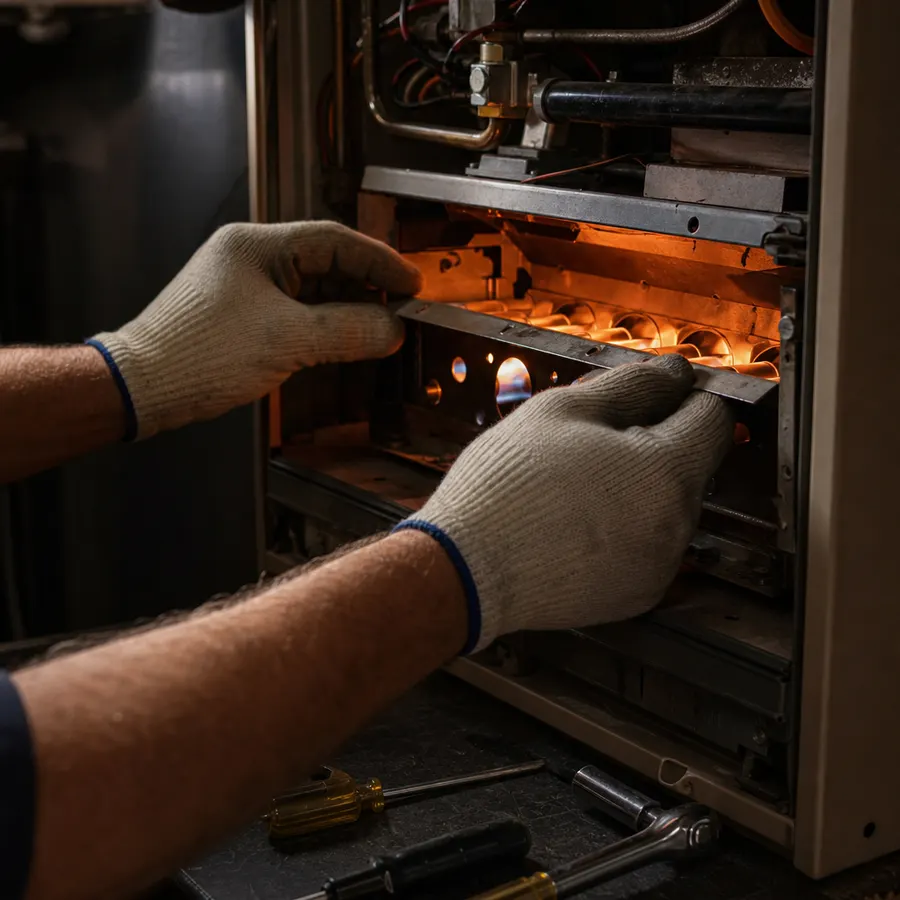
Resolving Heating Inefficiencies in Your Perryville Home
Are you noticing your heating system running constantly without ever quite reaching the thermostat setting, unexpected spikes in your utility bills, or a faint burning dust smell kicking up from the rural Perryville air? These are not just minor annoyances, but early warning signs of a system operating under extreme stress that needs professional attention before a complete breakdown occurs. Feistritzer Heating & Air Conditioning is ready to strip away this stress, restore your system's efficiency, and catch failing parts before you are left uncomfortable in your own home.
Warning Signs Your Heating System Needs a Tune-Up
Unexpected Spikes in Energy Bills
You might notice your utility costs creeping up significantly compared to the same time last year, even though your thermostat habits remain unchanged. This usually means the heating system has lost its baseline efficiency and is running much longer cycles to produce the same amount of heat.
If ignored, you will continue overpaying the utility company month after month. Simultaneously, you are wearing out critical components like the blower motor and heat exchanger from excessive, unnecessary runtime.
Weak Airflow or Cold Spots
Some rooms might feel perfectly comfortable while others, especially additions or rooms furthest from the unit, remain chilly and uninviting. The air coming from the vents often feels incredibly weak when you hold your hand up to the register.
In Perryville homes, this is frequently caused by heavy dust accumulation on the blower wheel or a failing blower motor capacitor that prevents the fan from spinning at full speed. Ignoring weak airflow forces the system to run continuously, leading to severe overheating inside the furnace cabinet.
Unusual Noises During Operation
You might hear a metallic scraping, high-pitched squealing, or a loud booming sound from the utility closet when the system turns on. Squeals usually indicate a worn drive belt or dry motor bearings screaming for proper lubrication.
A booming sound indicates delayed ignition, meaning dirt or carbon buildup is preventing the burners from lighting immediately. This allows gas to pool before igniting, creating a miniature explosion that can easily crack a heat exchanger.
Frequent System Cycling
Your heating system might turn on, run for only a few minutes, shut off, and then immediately turn back on. This rapid sequence, known as short-cycling, is a classic sign of an overheating system trying to protect itself.
Safety limit switches trip because restricted airflow from neglected maintenance traps intense heat inside the unit. Short-cycling destroys the system's efficiency and places immense electrical strain on the ignition system or compressor.
Lingering Odors and Poor Air Quality
When your system kicks on, you might notice a persistent, dusty burning smell that never quite fades away. This happens when a thick layer of debris settles directly on the heat exchanger or heating elements.
Instead of heating clean air, your system is actively burning off settled particulate matter and circulating those fumes throughout your living space. This significantly degrades your indoor air quality and indicates that the internal components are long overdue for a deep cleaning.
What Is Causing Your Heating System to Struggle
Severe Dust and Debris Accumulation
Over time, fine particulates bypass your air filter and thickly coat the blower motor blades, the evaporator coil, and the burner assembly. Because our local area is surrounded by agricultural activity and open land, the volume of airborne dust getting pulled into your home is substantial.
Systems here ingest this debris rapidly, essentially suffocating the unit and forcing it to work twice as hard to move air. The solution involves a deep, professional cleaning of the blower assembly, recalibrating the burners, and upgrading your filtration setup.
Neglected Moving Parts and Lubrication
Bearings, belts, and fans dry out, stretch, or lose their factory lubrication over thousands of hours of operation. In historic or older homes where systems might be tucked away in drafty basements, these mechanical parts degrade much faster.
When metal rubs against metal without proper lubrication, the resulting friction overheats motors and snaps drive belts entirely. A proper tune-up requires inspecting all moving components, applying specialized lubrication, and adjusting belt tension to ensure smooth operation.
Failing Electrical Components
Capacitors lose their ability to hold a charge, contactors become pitted and burned, and wiring connections vibrate loose over years of use. The drastic temperature swings in Central Kentucky force heating systems to cycle frequently, accelerating wear on these starting components.
When a capacitor gets weak, the motor it powers draws excessive amperage and runs hot until it eventually burns out completely. Maintenance involves testing microfarad readings on capacitors, checking amp draws on motors, and tightening all electrical connections.
Thermostat Calibration Issues
Sometimes the core issue is not inside the heavy machinery, but rather the device mounted on your hallway wall. A thermostat that has fallen out of calibration will read the room temperature incorrectly, forcing the heating system to run far longer than necessary.
Dust accumulation inside the thermostat housing or loose wiring behind the faceplate can disrupt the signal sent to the control board. Recalibrating the thermostat ensures your system receives accurate commands, reducing unnecessary runtime and lowering your utility bills.
What to Expect During Your Heating Maintenance Visit
A Consultative, Diagnostic Approach
Feistritzer Heating & Air Conditioning brings a consultative, repair-first approach to every home we visit. We do not use maintenance visits as an excuse to deliver a high-pressure sales pitch or push unnecessary upgrades. Instead, we perform a comprehensive inspection of your entire system from the thermostat to the heat exchanger.
Because we are completely brand-agnostic, we service all makes and models with equal expertise. We know the specific quirks, failure points, and lifespan expectations of whatever equipment is currently keeping your home warm.
Thorough Mechanical and Electrical Testing
Our technicians measure electrical draws, verify gas pressure, and clean critical components to restore factory-level performance. We hook up diagnostic meters to check the precise health of your capacitors, contactors, and blower motor bearings.
We also inspect the heat exchanger for microscopic cracks and ensure the burner assembly is producing a clean, safe flame. Every step of this process is designed to uncover hidden stress points before they cause a sudden breakdown.
Clear Communication and Accountability
After the inspection is complete, we sit down with you and explain exactly what we found using plain language. If a part is wearing out, we show you the diagnostic data so you can see the issue for yourself.
We explain what can be repaired safely, what can wait, and what we would do if it were our own home. You get honest recommendations based on load, comfort, and lifecycle, allowing you to make an informed decision.
Related HVAC Services to Consider
Comprehensive System Support
During a tune-up, if we discover a failing component that requires immediate attention, our team is fully equipped to handle comprehensive Heating Repair & Service on the spot. Catching these issues early prevents a much larger, more expensive breakdown later. If your equipment is simply too old or damaged to operate safely, we can walk you through your options for Heating Installation & Replacement.
Expanding Your Comfort Options
Many homes in the area utilize dual-fuel setups or standalone heat pumps to stay comfortable. We provide specialized Heat Pump Maintenance & Tune-Up services tailored to the unique refrigerant pressures and defrost cycle needs of those systems. If you have a room addition or a converted garage that struggles to stay warm, we also offer Ductless Mini-Split Maintenance & Tune-Up to keep those localized systems running flawlessly.
The True Cost of Skipping Heating System Tune-Ups
Safety Risks and Wasted Money
In gas furnaces, neglected maintenance can lead to cracked heat exchangers or dirty burners, posing a direct risk of dangerous carbon monoxide exposure. Safety is the primary reason professional technicians must inspect the combustion chamber annually.
Beyond safety, a heating system operating with restricted airflow or poor combustion can lose up to thirty percent of its efficiency. This means you are paying significantly more to utility companies for the exact same amount of heat, throwing money out the window.
Escalating Damage and Voided Warranties
A failing twenty-dollar capacitor, if left unchecked, will eventually force an expensive blower motor to overheat and burn out. Routine maintenance catches these minor, inexpensive problems before they escalate into catastrophic system failures.
Furthermore, most manufacturers explicitly state that parts warranties are voided if the system does not receive documented, annual professional maintenance. Skipping a tune-up leaves you entirely responsible for the full cost of major replacement parts down the line.
Ready to Restore Your System's Performance?
Routine maintenance is the single best investment you can make to ensure your heating system runs efficiently and safely. As a NATE-certified, family-owned business operating since 1976, we bring homegrown accountability to every job we take on in Perryville.
Do not wait for your system to fail when you need it the most. Feistritzer Heating & Air Conditioning is ready to evaluate your equipment, perform a thorough tune-up, and restore your home's comfort today.