
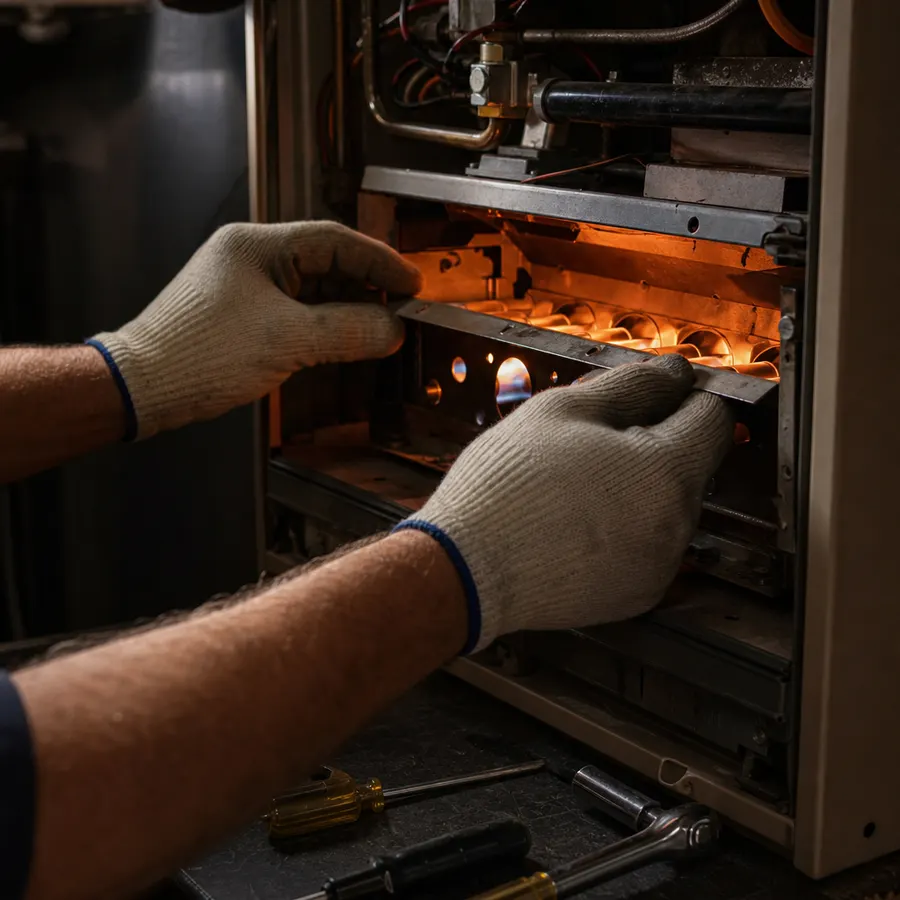
Solving Heat Pump Failures and High Energy Bills in Your Lebanon Home
Is your heat pump running constantly but struggling to keep your home comfortable, or are you noticing the auxiliary heat indicator staying on for days at a time followed by a massive electric bill? When a heat pump loses its capacity to transfer heat efficiently, it forces your system to rely on expensive electric resistance heating, which eventually leads to a complete breakdown right when you need it most. Our NATE-certified technicians at Feistritzer Heating & Air Conditioning are ready to evaluate your equipment and give you a clear, no-nonsense diagnosis today.
Warning Signs It Is Time to Replace Your Heat Pump
The Auxiliary Heat Indicator Stays On
You might notice that your thermostat constantly displays an emergency or auxiliary heat warning, even when the weather outside is relatively mild. This means the primary heat pump mechanism is failing to meet the temperature set on the thermostat. Because the compressor cannot keep up with the demand, the system is forced to rely on backup electric heat strips to condition your home.
These electric heat strips are essentially giant toaster coils hidden inside your air handler. They consume massive amounts of electricity to generate heat, and letting the system run this way will result in skyrocketing utility bills. More importantly, this constant auxiliary heating masks the fact that your outdoor unit is actively failing and requires professional attention.
Unexplained Spikes in Utility Bills
You may open your monthly electric bill to find it has jumped significantly compared to the exact same month in previous years. This happens despite no changes in your household habits, thermostat settings, or daily routines. As heat pumps age, their internal components wear down and lose their original cooling and heating efficiency ratings.
When a system loses its efficiency, it has to run twice as long to achieve the same indoor temperature. The longer the system runs, the more electricity it pulls from the grid. If you ignore this steady drop in efficiency, you end up paying the price of a brand-new heat pump in wasted energy costs without actually getting any new equipment.
Loud Grinding, Screeching, or Hard Starts
When the outdoor unit kicks on, the lights in your house might dim briefly, or the unit makes a loud grinding, rattling, or screeching noise. Dimming lights indicate a hard start, meaning the compressor motor is drawing excessive electrical current just to get its internal components spinning. Grinding noises point to failing internal bearings or metal-on-metal friction inside the unit.
The compressor is the absolute heart of your heat pump system. Once it reaches the point of mechanical failure, the system will die completely and leave your home without climate control. Furthermore, a failing compressor often causes electrical damage to other critical components like contactors or capacitors as it struggles to run.
Excessive Frost and Ice Buildup
Your outdoor unit might become encased in a thick block of ice that simply does not melt away. This ice accumulation completely blocks the airflow from the top exhaust fan and suffocates the entire system. While a light layer of frost is perfectly normal during operation, a solid block of ice means the system's defrost control board, reversing valve, or refrigerant charge has failed.
This thick ice acts as a powerful insulator that prevents the necessary transfer of heat. The compressor will quickly overheat as it tries to pump refrigerant through a completely blocked and frozen coil. Ignoring this symptom almost always leads to a burnt-out compressor and an expensive, total system replacement.
Common Causes Behind Heat Pump Failure
End of Mechanical Lifespan
Most heat pumps are designed to provide reliable comfort for about ten to fifteen years before major components begin to fail. Because they run year-round to provide both heating and cooling, they accumulate wear and tear twice as fast as a standalone air conditioner or furnace. Unlike a traditional air conditioning unit that gets to rest for half the year, your heat pump is working hard every single day.
In Lebanon and the surrounding rural areas, outdoor units are frequently exposed to heavy agricultural dust, pollen, and debris over their lifespan. This particulate matter slowly degrades the outdoor coil's ability to transfer heat and forces the compressor to work harder as the years go by. Once a system passes the twelve-year mark and experiences a major component failure, replacement is almost always more cost-effective than patching an obsolete unit.
Improper Sizing from a Previous Installation
Your existing heat pump might be either too large or too small for your home's actual thermal load. Many older farmhouses and properties in the area have had additions built, windows replaced, or insulation upgraded over the years. Unfortunately, the HVAC system is often replaced using outdated sizing rules instead of proper, modern load calculations.
An oversized unit will turn on and off rapidly without ever properly dehumidifying the air, while an undersized unit will run continuously and drive up your electric bill. We solve this by taking a precise approach and performing a strict load calculation based on your home's current footprint. This ensures your new system is sized perfectly for optimal comfort, humidity control, and equipment longevity.
Reversing Valve Malfunctions
The reversing valve is the critical component that allows a heat pump to switch back and forth between heating and cooling modes. Constant shifting between heating and cooling puts heavy mileage on this specific valve, causing the internal slider to get stuck or the electronic solenoid to fail. When this happens, your system might blow cold air when you want warmth, leaving you completely stranded without proper climate control.
While a stuck reversing valve is sometimes repairable, it often signals the beginning of the end for older equipment. If a reversing valve fails on a system using older, phased-out refrigerants, the repair costs rarely make financial sense. Upgrading to a modern, highly efficient heat pump is usually the smartest path forward to secure reliable comfort.
What to Expect During Your System Replacement Consultation
When you call Feistritzer Heating & Air Conditioning to your Lebanon home, you aren't getting a high-pressure sales pitch from a commissioned salesperson. We are a homegrown, family-owned company operating since 1976 with a strict repair-first philosophy. Our primary goal is to diagnose the whole system and show you clearly what can be fixed versus what actually warrants a full replacement.
First, our NATE-certified technicians will thoroughly inspect your current equipment to assess its condition. If a repair makes more sense for your budget and the system's current lifecycle, we will tell you straight away and get to work. If heat pump replacement is the necessary route, we take a consultative approach by performing a thorough load calculation of your home to determine the exact capacity required.
Because we are entirely brand-agnostic, we never push a specific manufacturer logo on you just to meet a quota. We explain your options clearly and recommend the exact solution we would choose for our own homes based entirely on load, comfort, and longevity. Once you select a system, our commissioned installations come with strict post-install accountability, ensuring your new heat pump operates exactly as promised from day one.
Related Services to Consider
If your system is less than ten years old and experiencing issues, a full replacement might not be necessary, and we can explore heat pump repair & service options to extend the life of your current equipment. For older Lebanon farmhouses with problematic rooms or recently added sunrooms that your central system struggles to reach, ductless mini-split installation & replacement offers a highly efficient, targeted solution. We also handle thermostat & controls installation & replacement, because sometimes a system that refuses to switch modes is simply suffering from a failing thermostat rather than a broken heat pump.
The True Cost of Waiting on a Heat Pump Replacement
Ignoring a failing heat pump rarely saves you money in the long run. Because heat pumps automatically default to auxiliary electric heat when they struggle to maintain temperature, waiting to replace a dying unit means you are actively draining your wallet. You end up paying the steep price of a new system directly to the utility company without gaining any of the reliability, warranty coverage, or comfort of new equipment.
Beyond the monthly utility waste, a struggling compressor acts as a ticking clock for your home comfort. Pushing an aged system to its absolute breaking point guarantees it will fail completely, usually during the most extreme temperatures when your family needs it the most. Replacing the system proactively allows you to choose the right equipment on your own timeline, rather than making a rushed, stressful decision during a total breakdown.
Securing Long-Term Comfort for Your Home
When your system is no longer keeping up with the demands of the weather, you need a local team that prioritizes your comfort over a quick sale. Whether it involves diagnosing a stubborn reversing valve or designing a brand-new, high-efficiency system for your Lebanon property, we provide honest answers and highly accountable installations. Reach out to Feistritzer Heating & Air Conditioning today to schedule a comprehensive evaluation of your heat pump system.