
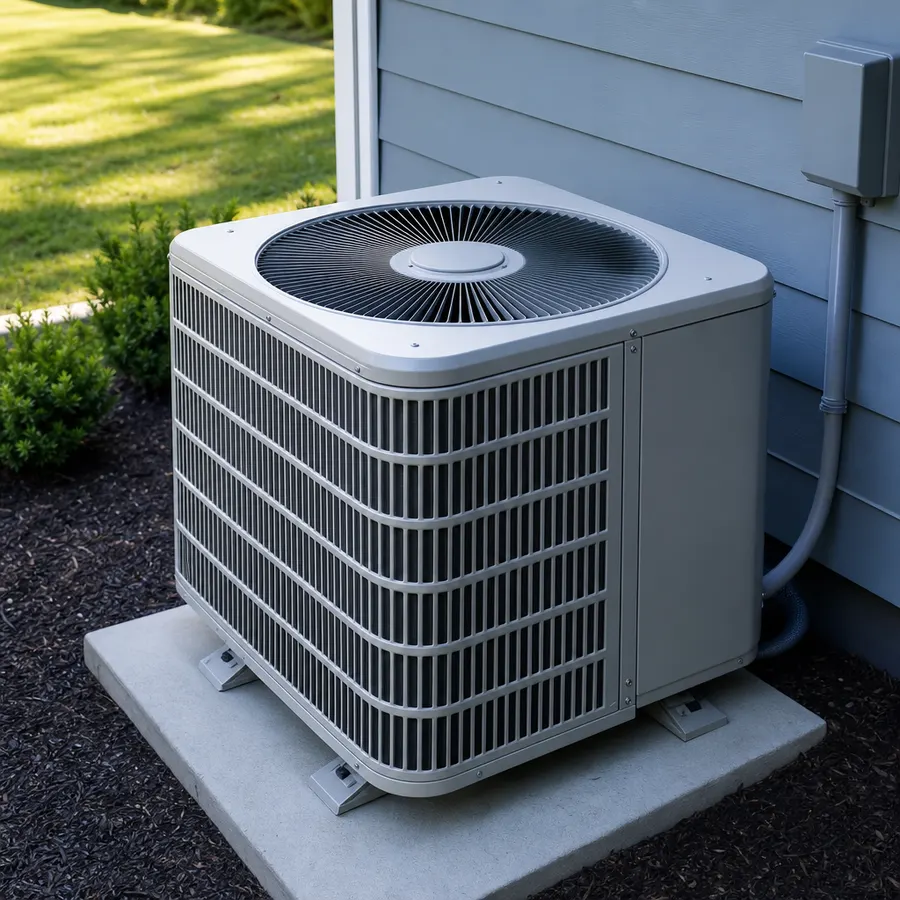
Solving Ductless Mini-Split Problems in Your Lebanon Home
Are you noticing water dripping down the drywall from your indoor air handler, smelling a musty odor when the system powers on, or listening to your outdoor unit grind away without actually changing the temperature in your Lebanon farmhouse? Ductless systems are highly sensitive machines, and ignoring a dripping head unit or a constantly running system isn't just an annoyance—it will eventually ruin your drywall or destroy your compressor. When these issues strike, the NATE-certified technicians at Feistritzer Heating & Air Conditioning are ready to diagnose the root cause and provide a clear, repair-first solution.
Warning Signs Your Ductless Mini-Split Needs Repair
Water Leaking from the Indoor Air Handler
You might notice water actively dripping from the bottom of the indoor wall unit, running down the drywall, or pooling on the floor beneath the system. Sometimes, a distinct gurgling or bubbling sound echoes from the unit right before the dripping starts. These symptoms mean water is trapped inside the chassis instead of flowing outside.
This almost always points to a clogged condensate drain line or a drain pan that has completely overflowed. Because mini-splits pull massive amounts of moisture out of the air during operation, the drain lines must remain perfectly clear to route that water outside safely. When that pathway is blocked, the water has nowhere to go but into your living space.
If ignored, this overflowing water will cause extensive damage to your drywall, paint, and flooring. It can also short out the sensitive electronic control boards housed inside the indoor unit. Repairing water-damaged electronics is a costly and entirely preventable expense.
The "Dirty Sock" Smell
When the system turns on, the room immediately fills with a musty, sour, or moldy odor that smells exactly like a locker room or dirty laundry. This is the result of bio-growth accumulating directly on the indoor coil or the cylindrical blower wheel. It happens frequently in homes that run their units continuously to keep up with drafts.
The dark, damp environment inside the head unit is a prime breeding ground when dust bypasses the washable filters. Breathing in this contaminated air degrades your indoor air quality and can severely aggravate allergies. The smell will only get worse as the bio-growth continues to spread across the internal components.
This sticky build-up also restricts airflow through the unit, meaning less conditioned air makes it into your room. That restriction forces the internal motor to work significantly harder just to push air through the grime. Over time, this added strain will wear out the blower motor entirely.
System Running Constantly but Not Reaching Temperature
The unit runs for hours on end, but the room never quite reaches the temperature you set on the remote control. Instead of crisp, conditioned air, the breeze coming from the vents feels lukewarm, weak, and largely ineffective. You might even notice your energy bills spiking as the system struggles to keep up.
In our experience, this usually indicates a slow refrigerant leak at the flare connections, or coils that are so heavily blanketed in dust that they can no longer transfer heat effectively. Letting a ductless system run low on refrigerant forces the outdoor compressor to overwork continuously. It tries to compensate for the lack of refrigerant by running longer cycles.
Compressors are the most expensive component of a mini-split system. Chronic overworking will quickly lead to premature and highly costly compressor failure. Fixing the underlying leak or airflow restriction is the only way to save the equipment.
Unresponsive Head Unit or Blinking Lights
The indoor unit might suddenly stop responding to the remote control, or the indicator lights on the front panel will begin flashing in a specific, repeating pattern. Those blinking lights are actually the system's diagnostic error codes trying to tell you exactly what is wrong. You should never ignore these visual warnings.
They typically indicate a communication failure between the indoor and outdoor units, a faulty temperature sensor, or a tripped internal breaker. The system will lock itself out entirely to prevent further electrical damage from occurring. Continuing to reset the breaker without fixing the issue will fry the control board.
A professional needs to decode these flashes and test the communication wire and control boards to restore functionality safely. We carry the specialized diagnostic tools required to read these specific error codes.
What's Actually Causing Your Mini-Split Malfunctions?
Clogged Condensate Drain Lines
The drain line that carries condensation from the indoor unit to the outdoors becomes blocked by a heavy buildup of dirt, algae, or even insect nests. In the Lebanon area, the combination of high Central Kentucky humidity and agricultural dust means these units pull in heavy, dusty moisture. This environmental factor makes local units particularly vulnerable to blockages.
This mixture quickly turns into a thick sludge that stops up the narrow drain tubes common to ductless systems. The solution involves carefully flushing and clearing the condensate line to remove the blockage entirely. We use specialized equipment to ensure the line is completely clear from end to end.
We also treat the drain pan to prevent future algae growth from taking hold again. Finally, we ensure the line has the proper pitch for reliable gravity drainage so water flows freely outside.
Refrigerant Leaks at Flare Connections
The system loses its vital refrigerant charge, causing a severe drop in performance and potentially freezing the indoor coil solid. Unlike traditional ducted systems, mini-splits rely on mechanical flare connections rather than brazed joints to connect the refrigerant lines. These connections require absolute precision during installation to remain tight.
Over time, the natural vibration of the running system can cause these mechanical fittings to loosen and leak. We must locate the exact source of the leak and repair or re-flare the connection to stop it permanently. Simply adding more refrigerant without fixing the leak is a waste of your money.
After fixing the joint, we pressure test the system with nitrogen to ensure it holds tight. Once verified, we recharge the refrigerant to the manufacturer's exact specifications by weighing it in on a digital scale.
Bio-Growth on the Blower Wheel
The cylindrical fan inside the wall unit becomes caked with a heavy layer of mold, dust, and grime, drastically reducing airflow and causing foul odors. Because many older homes rely on these units as their primary air source, the washable micro-mesh filters clog very quickly. Homeowners often do not realize how frequently these filters need to be rinsed.
Once the filter is bypassed, the sticky, humid environment inside the unit catches every particle of dust, creating a heavy build-up on the fan blades. Resolving this requires a deep, meticulous cleaning of the indoor unit. We cannot simply wipe the outside; we must get to the internal components.
We disassemble the casing and safely clean the blower wheel and coil to restore full airflow and eliminate the odor. This process protects the motor and immediately improves the air quality in your home.
Communication Wire Failure
The indoor and outdoor units lose the ability to "talk" to each other, causing the entire system to shut down completely. Ductless systems require a specialized communication wire that carries both high voltage and sensitive data between the components. This wire is the nervous system of your HVAC equipment.
If this wire is damaged by pests chewing through it, severe weather, or power surges, the entire system halts to protect itself. We test the electrical continuity between the units and identify exactly where the signal is dropping. Finding the break requires patience and specialized electrical meters.
Once located, we repair or replace the damaged wiring to restore the vital connection. We also ensure all terminal connections are tight and secure to prevent future communication dropouts.
What to Expect During Your Mini-Split Service Visit
A Consultative, Repair-First Approach
When you call Feistritzer Heating & Air Conditioning to your home, you get a consultative, repair-first approach. We don't just guess at the problem; we diagnose the entire system from top to bottom. Our NATE-certified technicians will test the communication wires, verify the refrigerant charge, inspect the flare connections, and check the indoor blower wheel for restriction.
Because we are brand-agnostic, we service all makes and models of ductless systems without pushing you toward a specific manufacturer's replacement. We take the time to explain exactly what has failed, show you the worn or broken components, and provide clear repair options. You will always understand exactly what you are paying for before any work begins.
Focused on Extending Equipment Lifecycle
Serving Lebanon and the surrounding communities, our goal is always to repair your existing equipment and extend its lifecycle whenever it is safe and cost-effective to do so. We recommend the solution we would choose for our own home, based on load, comfort, and lifecycle, not by logo. We show homeowners what can be repaired today and what can wait.
Our technicians arrive with fully stocked trucks, carrying the most common sensors, boards, and materials needed for ductless repairs. We respect your time and aim to restore your comfort during the very first visit whenever possible. You can trust our homegrown Central Kentucky team to treat your property with the utmost respect.
Related HVAC Services for Your Home
If your ductless system is running fine but hasn't been cleaned in a while, scheduling a Ductless Mini-Split Maintenance & Tune-Up is the best way to prevent the clogs and odors mentioned above. For homeowners who also have traditional central air systems or packaged units alongside their mini-splits, we also provide comprehensive Heat Pump Repair & Service to keep your entire property comfortable.
The Cost of Ignoring Mini-Split Symptoms
Minor Issues Become Major Expenses
Ignoring the warning signs of a struggling ductless system rarely saves money in the long run. A minor issue, like a partially clogged condensate line, can quickly overflow and cause hundreds of dollars in water damage to your drywall and flooring. Water damage often leads to secondary issues like structural rot and severe mold growth within your walls.
More importantly, running a mini-split that is low on refrigerant or fighting through a clogged blower wheel puts immense strain on the outdoor inverter compressor. The compressor is the absolute heart of the system, and replacing a burned-out compressor is often nearly as expensive as replacing the entire outdoor unit. Pushing a failing system to keep running guarantees a more expensive repair bill later.
Protect Your Comfort and Investment
Addressing strange noises, leaks, or poor performance early is the most effective way to protect your investment and keep repair costs low. Catching a small refrigerant leak today prevents a catastrophic compressor failure tomorrow. Prompt repairs also restore the system's energy efficiency, lowering your monthly utility bills.
Ductless systems are precision engineered to provide exceptional comfort when operating correctly. Letting them degrade through neglect deprives you of the quiet, efficient heating and cooling you paid for. Let a professional handle the quirks so you can enjoy your home again.
Get Your Mini-Split Back to Peak Performance
Since 1976, our family-owned business has been delivering accountable, expert HVAC solutions to Central Kentucky. If your ductless system is leaking, smelling musty, or failing to keep your space comfortable, let our professionals accurately diagnose the issue. We will give you the honest answers you need to get your Lebanon home comfortable again. Call Feistritzer Heating & Air Conditioning today to schedule your diagnostic visit.