
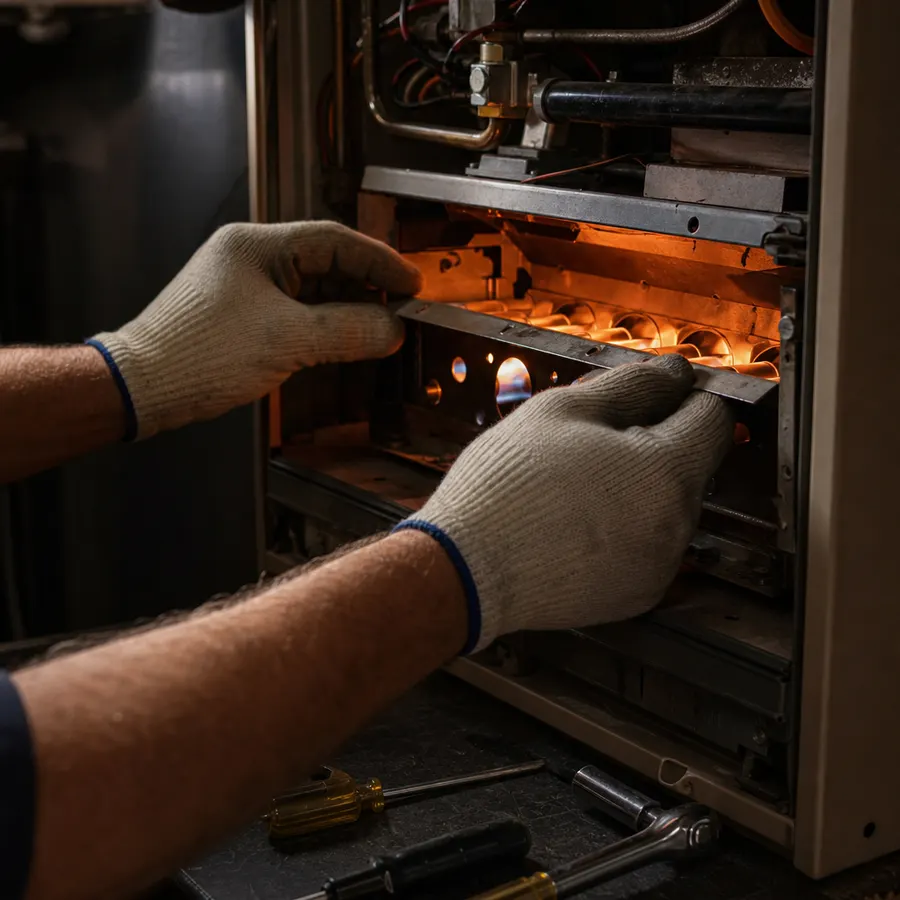
Installing and Upgrading Heating Gas Lines in Your Bardstown Home
Are you trying to upgrade your home to a powerful new gas furnace, only to find your current piping is completely undersized, or have you caught a faint scent of sulfur near your basement utility closet? Gas line installation and modification is never a do-it-yourself project, as undersized lines will literally starve your heating equipment of fuel while aging pipes pose a severe safety hazard to your entire property. Whether you are converting a historic property to natural gas for the first time or need to replace corroded lines, Feistritzer Heating & Air Conditioning is ready to help with safe, code-compliant solutions.
Warning Signs Your Gas Lines Need Professional Attention
Heating Equipment Locking Out or Underperforming
You might notice that your furnace struggles to produce consistent heat, frequently turns itself off, or completely locks out and requires a manual reset. This frustrating cycle often happens when another gas appliance, like a water heater or stove, is running at the exact same time. It is a massive red flag that your heating system is not getting the continuous fuel it needs to operate safely.
This is a classic symptom of an undersized gas line connected to your furnace. The existing pipe simply cannot deliver the required volume of gas to keep the furnace burners fully and safely ignited. If ignored, this fuel starvation will cause your heating equipment to work significantly harder, leading to soot buildup, damaged gas valves, and a cracked heat exchanger.
The Distinct Smell of Rotten Eggs
You might catch a sudden whiff of sulfur or rotten eggs when you walk past your utility closet, head down into your basement, or stand near your outdoor gas meter. Natural gas is naturally odorless, so utility companies add a harmless but pungent chemical called mercaptan specifically to give it this distinct warning smell. If you smell it inside or outside your home, it means there is an active leak somewhere in your piping system.
These leaks often develop at a degrading joint, a loose valve, or a deeply rusted section of pipe. This is an immediate, critical safety hazard that you cannot afford to ignore for even a few hours. You must evacuate the area, call your utility provider to shut off the gas supply, and have a professional locate and replace the compromised line.
Visible Rust and Flaking on Existing Pipes
When looking at the black iron pipes running along your basement ceiling or through your crawlspace, you might see heavy orange rust, deep pitting, or large flakes of metal peeling away. Moisture in the air reacts with the iron over decades, which is a very common issue in older, unsealed crawlspaces throughout Bardstown. While a tiny amount of surface rust is normal on old pipes, deep pitting means the structural integrity of the pipe wall is actively failing.
Waiting to replace heavily corroded pipes basically guarantees a severe leak in the near future. Proactively replacing these degrading lines prevents emergency shut-offs when you need your heating system the most. A professional can easily swap these failing sections out for modern, durable piping materials before a catastrophic failure occurs.
Hissing Sounds Near the Furnace
You might hear a faint, continuous hissing sound coming from the gas line connections directly behind or beside your furnace, even when the system is not actively running. This troubling sound indicates a pressurized leak somewhere in the immediate vicinity of your heating equipment. It is usually caused by a failing gas shut-off valve, a degraded flexible connector, or pipe threads that have completely lost their protective seal.
A hissing leak is actively releasing combustible gas directly into your living space. This creates a severe fire and health hazard that requires immediate professional repair. Never attempt to tighten these fittings yourself, as you can easily make the leak worse or snap a brittle pipe.
Common Causes Behind Gas Line Issues
Upgrading to Higher-BTU Heating Systems
Homeowners often purchase a brand new, high-efficiency furnace only to find out during the installation process that the system will not run properly. Many older homes were built with half-inch gas lines, which were perfectly fine for older, smaller appliances with lower fuel demands. However, modern heating systems often require three-quarter-inch or one-inch piping to deliver the necessary thermal energy.
When you try to push a massive amount of fuel through a tiny pipe, the furnace chokes and shuts down for safety. The solution involves a technician performing a strict load calculation to determine the total gas demand of the entire house. Once we know the exact requirements, we run a properly sized trunk line from the meter directly to the new equipment.
Converting from Electric or Oil Heating
You might be tired of high winter electric bills or dealing with an aging, inefficient oil furnace, and want to make the permanent switch to natural gas or propane. Because these homes were never piped for gas originally, there is absolutely no existing infrastructure to tie into. You are essentially starting from a blank slate, which requires careful planning and expert execution.
A professional will need to design and install a complete gas piping system from scratch for your property. This involves coordinating directly with the local utility company to set a new meter outside your home. We then ensure all interior pipe runs meet current safety codes and deliver the precise amount of fuel your new system needs.
Aging and Corroded Infrastructure
Sometimes the existing gas lines have simply reached the absolute end of their safe operational lifespan. Over decades of use, these metal pipes become brittle, heavily rusted, or highly prone to dangerous joint leaks. In historic areas, it is incredibly common to find original black iron piping running through damp basements and unencapsulated crawlspaces.
Decades of humidity exposure slowly eat away at the metal, compromising the entire fuel delivery system. The technician will shut off the gas supply and safely remove the compromised sections of piping from your home. We then install new, modern black iron or flexible corrugated stainless steel tubing, ensuring all joints are properly doped and permanently sealed.
What to Expect During Your Service Visit
Thorough Load Calculations and Assessment
When you call for gas line services, the process begins with a thorough, consultative assessment of your home's entire infrastructure. We do not just guess what size pipe you need based on what was there before. The technician will first perform a comprehensive load calculation to determine exactly how much fuel your heating system and other appliances require simultaneously.
This crucial mathematical step ensures any new lines are sized perfectly for your specific property. By calculating the exact demand, we prevent future fuel starvation issues and protect your expensive heating equipment from premature wear. You will know exactly why we are recommending a specific pipe diameter before any work begins.
Safe Routing and Material Selection
If we are installing new lines or replacing old ones, the team will carefully map out the safest, most efficient routing through your home. We actively look for paths that minimize disruption to your finished walls, ceilings, and living spaces. Feistritzer Heating & Air Conditioning proudly serves Bardstown and surrounding communities, meaning we handle all local code compliance and pull the necessary permits for you.
We only use the highest quality materials, choosing between rigid black iron pipe or flexible corrugated stainless steel tubing based on your home's structural needs. Every single fitting, valve, and joint is meticulously sealed using specialized compounds designed specifically for combustible gases. We treat your home with the exact same care and caution we would use in our own.
Rigorous Pressure Testing
Once the new lines are fully installed, the absolute most critical step is the final pressure test. The technician will cap the lines and pump them full of compressed air rather than volatile gas. We then monitor a highly sensitive gauge for an extended period to ensure the system holds pressure perfectly.
This rigorous testing process guarantees there are absolutely zero leaks anywhere in the new piping system. We will never introduce natural gas or propane into the lines until this pressure test is passed flawlessly. Your family's safety is our highest priority, and this test provides complete peace of mind.
Related Services You May Need
If you are upgrading your gas lines because your current heating system is actively failing, it may be the perfect time to explore a complete Heating Installation & Replacement. Our brand-agnostic approach means we will recommend the best furnace for your home's specific load and your personal budget, rather than pushing a specific logo. Alternatively, if your gas lines are perfectly fine but your system is still underperforming, our dedicated Heating Repair & Service team can diagnose the root cause of the issue and focus on repairing the equipment rather than pushing for an unnecessary replacement.
The Cost of Waiting to Fix Gas Line Issues
Severe Safety Hazards
Ignoring gas line issues or attempting to cut corners with sizing and installation carries massive, immediate risks to your property. The most obvious and terrifying risk is safety, as a leaking gas line can quickly lead to dangerous carbon monoxide exposure. In the worst-case scenario, a buildup of combustible gas in an enclosed space can lead to a catastrophic explosion.
Gas leaks do not fix themselves, and they will only grow larger as the pipe continues to degrade or the fitting loosens further. Taking immediate action when you notice a warning sign is the only way to protect your family and your home.
Expensive Equipment Damage
Beyond the immediate safety concerns, there is the massive financial cost of permanent equipment damage. If your furnace is constantly starved for gas due to undersized piping, the internal components will overheat and fail prematurely. The system will strain to meet your thermostat settings, causing the heat exchanger to crack under the extreme stress.
What started as a relatively straightforward piping upgrade quickly turns into a total, thousands-of-dollars system replacement. Properly sized gas lines are an investment that actively extends the lifespan of your expensive heating equipment.
Code Violations and Property Complications
Finally, unpermitted or poorly installed gas lines are serious code violations that can cause massive headaches down the road. If a fire or damage occurs due to DIY gas work, it can completely void your homeowners insurance policy. Insurance companies require this highly volatile work to be performed by certified, licensed professionals.
Furthermore, illegal or undocumented gas line modifications will massively complicate the future sale of your property. Home inspectors will flag undersized or improperly sealed pipes immediately, forcing you to pay for professional corrections before the sale can close.
Safe, Accountable Gas Line Solutions for Your Home
Whether you are converting an older home to natural gas or need to replace a failing line, you need a homegrown team that does the job right the first time. We bring decades of hands-on experience to every single job, ensuring your Bardstown home is safe, entirely up to code, and equipped to keep you warm safely. Contact Feistritzer Heating & Air Conditioning today to schedule a comprehensive consultation and ensure your home's gas infrastructure is built to last.