
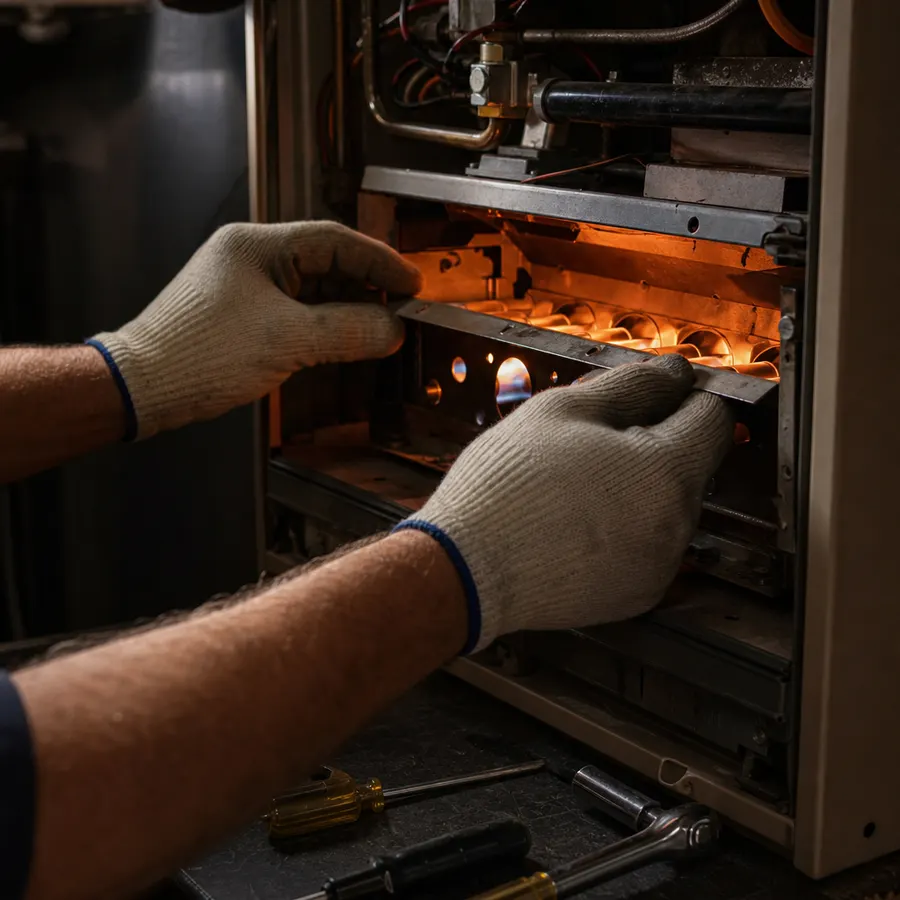
Solving Uneven and Unreliable Heating in Your Hustonville Home
Are you constantly adjusting the thermostat because the living room is freezing while the hallway is sweltering, or listening to your furnace kick on for three minutes only to shut off and leave the house feeling drafty? These are not just the normal quirks of living in an older rural home, but a mechanical cry for help that will lead to burnt-out motors or a cracked heat exchanger if ignored. At Feistritzer Heating & Air Conditioning, we bring a repair-first approach to every service call, finding out exactly why your system is struggling and giving you the honest truth about what it takes to fix it.
Signs Your Heating System Needs Immediate Repair
Short-Cycling (Running Constantly but Briefly)
You notice the heating system turns on, runs for just a few minutes, shuts off, and then immediately tries to start again. The house never actually reaches the temperature set on the thermostat, leaving you constantly chilly. This usually means the system is overheating and tripping a high-limit safety switch to prevent catastrophic damage to the unit.
Short-cycling can be caused by severe airflow restriction, a failing flame sensor, or an oversized unit struggling with poor ductwork. If let go, this rapid on-and-off action will completely destroy the system's compressor or blower motor. It also causes your energy bills to skyrocket because the equipment uses the maximum amount of power during its startup phase.
Cold Spots and Weak Airflow
You can hear the system running, but when you put your hand over the vent, the warm air is barely trickling out. Certain rooms in your home stay stubbornly cold no matter how high you crank the heat at the main thermostat. Weak airflow points directly to a failing blower motor, a heavily clogged filter, or blocked ductwork restricting the distribution of heat.
In rural areas, we often find that dust buildup on the blower wheel has made it too heavy to spin at the proper revolutions per minute. Restricted airflow starves the system of the air it needs to transfer heat effectively throughout your living space. This strains every moving part in the unit and severely degrades your indoor comfort when the winter winds pick up.
Loud Grinding, Banging, or Squealing Noises
Every time the system kicks on, it sounds like metal grinding on metal, a loud boom echoes through the ductwork, or you hear a high-pitched squeal. Grinding usually means the bearings in the blower motor are shot and the internal components are tearing themselves apart. A squeal indicates a frayed belt or a failing inducer motor that needs to be replaced before it snaps.
A loud boom is often delayed ignition, meaning gas is pooling in the combustion chamber before it finally catches a spark. These are mechanical failures that will not resolve themselves, and ignoring them only guarantees a more expensive breakdown. Delayed ignition is a serious safety hazard, and bad bearings will eventually cause the motor to seize up entirely.
Persistent Unusual Odors
You smell burning plastic, electrical ozone, or a thick, heavy dust smell that lingers long after the system has been running. While a brief dust smell is normal when a system has not run in a while, a persistent odor means something is actively burning inside the cabinet. It could be melting wire casing, a failing electrical component, or heavy debris burning off an electric heat strip.
Electrical odors are an immediate fire hazard that require professional intervention right away. Shut the system down at the thermostat and call a technician to prevent serious property damage. Addressing these smells promptly also protects your indoor air quality from dangerous fumes circulating through your vents.
What's Actually Causing Your Heating Problems?
Heavy Agricultural Dust and Debris Accumulation
Over time, a thick layer of dirt and grime coats the blower wheel, the indoor coil, and the heat exchanger. Hustonville's rural and agricultural setting means a significantly higher volume of airborne dust makes its way into older, draftier homes. This dust bypasses cheap filters and builds up inside the unit, acting like an insulating blanket that traps heat where it shouldn't be.
This heavy accumulation weighs down moving parts and forces the heating equipment to run longer cycles to keep up with heat loss. The solution involves a deep, precision cleaning of the blower assembly and internal components to restore proper airflow. After cleaning, we typically recommend an upgrade to a better filtration setup that can handle rural air quality without choking the system.
Dirty or Failing Flame Sensors
The system ignites the gas, burns for a few seconds, and then abruptly clicks off before any warm air reaches your rooms. The flame sensor is a vital safety device that tells the gas valve to stay open when a fire is actively present. When it gets coated in carbon buildup or dust, it loses its ability to sense the flame accurately.
Because the sensor cannot detect the fire, it shuts the system down as a safety precaution to prevent raw gas from flooding your home. We carefully remove the sensor and clean it with specialized abrasives to restore its sensitivity. If the internal element is degraded beyond repair, replacing it is a quick process that restores reliable heating immediately.
Worn Out Electrical Components
The system struggles to start, hums loudly without turning the blower on, or trips the breaker at the main electrical panel. Capacitors, contactors, and relays lose their ability to hold or transfer an electrical charge over years of heavy use. Rural power grids can sometimes experience micro-fluctuations that wear these sensitive electrical parts out faster than normal.
We test the microfarads and voltage drops across all electrical components to identify exactly where the power flow is breaking down. Replacing a weak capacitor or a pitted contactor is a quick, inexpensive repair that restores full power to your equipment. Catching these electrical drops early saves the much more expensive blower motor from burning out due to voltage strain.
What to Expect During Your Heating Repair Visit
When a Feistritzer Heating & Air Conditioning technician arrives at your Hustonville property, we do not just guess at the problem or immediately push you toward buying a new system. We are a repair-first, brand-agnostic company that focuses on diagnosing the entire system properly. We start with a comprehensive evaluation of your equipment, checking airflow, testing electrical draws, inspecting the heat exchanger, and evaluating the ductwork.
Once we find the root cause, we sit down and explain exactly what failed and why without using confusing industry jargon. We will show you what can be repaired today and what components might need attention down the road. Because we prioritize load, comfort, and lifecycle over brand logos, the recommendations we make are the exact same ones we would choose for our own homes.
Honest Advice and Accountable Service
You get honest advice, transparent options, and professional repairs designed to last through the toughest winter nights. As a homegrown company serving Central Kentucky since 1976, we believe in delivering commissioned installations and repairs with strict post-install accountability. Our NATE-certified technicians ensure that when we fix a problem, you understand exactly what was done and why it matters.
Comprehensive Climate Control Solutions
Sometimes a system is simply too old, or the heat exchanger is cracked, making repairs unsafe or financially irresponsible to complete. If a repair exceeds the value of the unit, we will walk you through your options for Heating Installation & Replacement, ensuring you get a system properly sized for your home. If your system is running fine but you want to prevent these sudden breakdowns, ask our technicians about scheduling routine Heating Maintenance & Tune-Up services to keep your equipment running at peak efficiency year-round.
The True Cost of Delaying Heating Repairs
Ignoring a struggling heating system rarely saves money, especially when open, rural landscapes cause homes to take the brunt of the wind and force units to run longer cycles. When a unit is short-cycling or fighting restricted airflow, it consumes significantly more electricity or gas, driving up your monthly utility bills unnecessarily. More importantly, small, inexpensive issues cascade into catastrophic failures when the system is forced to keep running in a compromised state.
A failing capacitor will eventually destroy a blower motor, turning a simple part swap into a major mechanical overhaul. A dirty burner assembly can lead to a cracked heat exchanger, which is not only a fatal blow to the equipment but a serious carbon monoxide risk for your family. Getting a professional diagnosis early protects your wallet from massive replacement costs and ensures your family stays safe indoors.
Get Your Heating System Back on Track
Do not spend another day shivering in a cold house or worrying about strange noises coming from your utility room. As a homegrown, NATE-certified team, Feistritzer Heating & Air Conditioning is proud to bring accountable, repair-first HVAC services to Hustonville homeowners. We are ready to diagnose the problem accurately and restore your comfort. Reach out today to schedule your service visit.