
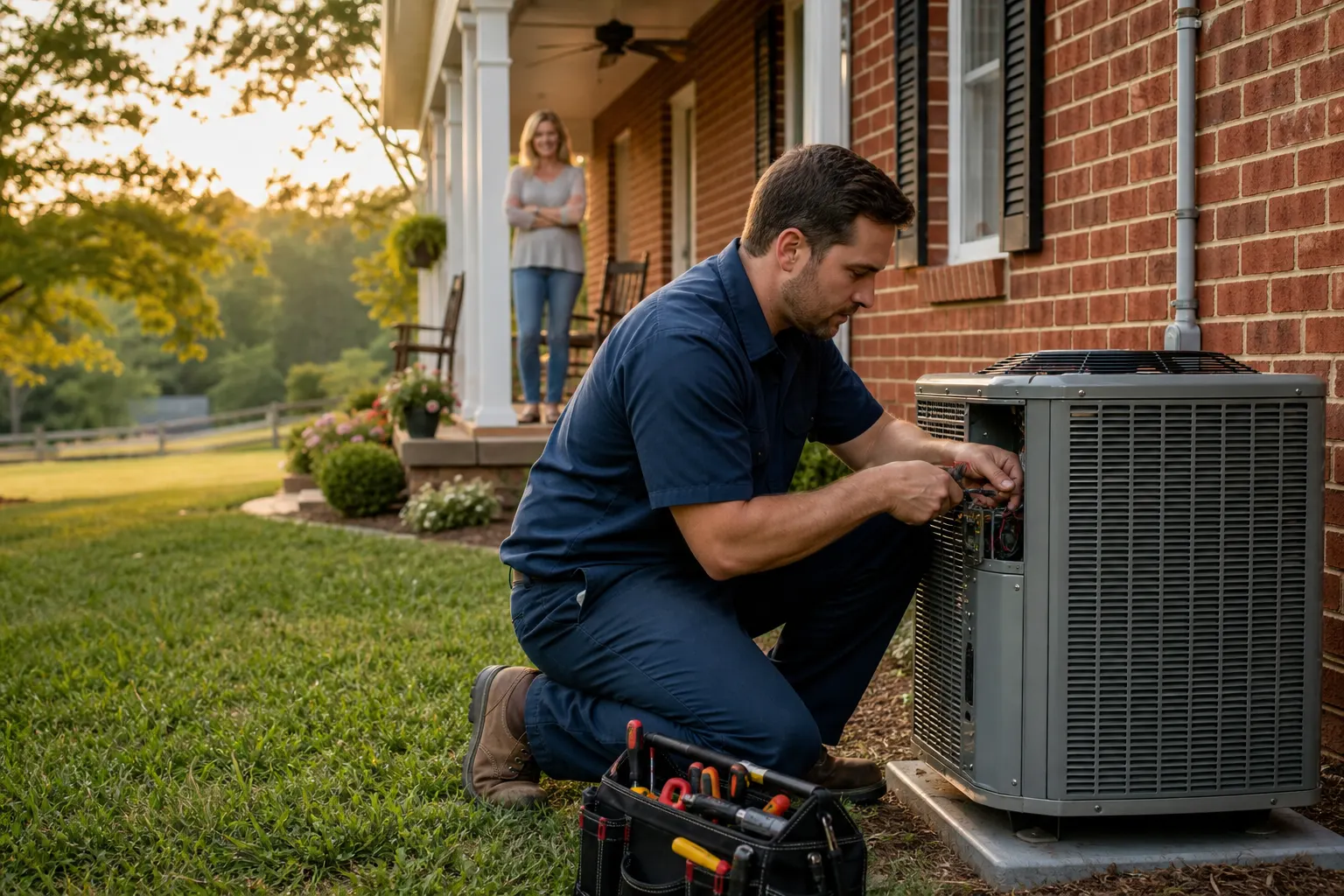
Resolving Poor Airflow and High Energy Costs with Commercial HVAC Maintenance in Somerset Facilities
Are you dealing with constant tenant complaints about hot and cold spots, noticing a heavy, muggy feeling in your retail or office space, or wondering why your facility's energy overhead has spiked unexpectedly over the last few quarters? In a commercial environment, ignoring these subtle shifts in performance doesn't just make the building uncomfortable—it forces your rooftop units or split systems to work overtime, accelerating wear on expensive components like compressors and risking sudden, catastrophic breakdowns that disrupt your business operations. You need a partner who looks out for your bottom line, and at Feistritzer Heating & Air Conditioning, our NATE-certified technicians are ready to diagnose your entire system to restore efficiency, catch failing parts early, and keep your commercial property comfortable.
Signs Your Commercial HVAC System Needs a Professional Tune-Up
Inconsistent Zone Temperatures
Employees or tenants in one area of the building are using space heaters, while those in another zone are complaining that cold air is blasting constantly. This usually indicates that your system's airflow is restricted, dampers are stuck, or the thermostat sensors are misreading the ambient temperature due to dust buildup or calibration loss. We see this often in Somerset's older downtown brick storefronts where retrofitted systems struggle to push air evenly through the ductwork.
If ignored, the system will continuously run to try and satisfy the thermostat in the struggling zones. This drastically inflates your utility bills and burns out blower motors prematurely. Proper tuning balances the airflow and ensures every zone receives the right amount of conditioned air.
Elevated Indoor Humidity and Musty Odors
The air inside your facility feels sticky, paper on desks might feel slightly damp, and there is a distinct musty or dirty sock smell circulating through the vents. An HVAC system doesn't just cool or heat, it dehumidifies. When coils are caked with dirt or condensate drains are backed up, the system loses its ability to strip humidity from the air.
This loss of humidity control is a common issue with Somerset's high moisture levels near Lake Cumberland. The smell you notice is often microbial growth in the drain pan or on the coils themselves. Poor indoor air quality leads to an uncomfortable environment for customers, decreased employee productivity, and potential health liabilities due to mold circulation.
Unexplained Spikes in Operating Costs
Your building's energy usage has crept up significantly compared to the same time last year, even though your operating hours and thermostat settings haven't changed. This is the textbook definition of a system losing efficiency. Dirty condenser coils, failing contactors, or slipping belts force the equipment to draw more amperage and run longer cycles to achieve the same heating or cooling output.
Paying for wasted energy eats directly into your business's profit margins. High-traffic retail spaces experience heavy cooling loads that accelerate this wear and tear quickly. The underlying strain causing these energy spikes will eventually cause a major component failure if left unaddressed.
Unusual Noises from Rooftop Units
You or your maintenance staff can hear squealing, grinding, or heavy rattling coming from the ceiling, ductwork, or directly from the rooftop equipment. Squealing typically points to a worn or loose blower belt, while grinding usually means motor bearings are failing due to a lack of lubrication. Rattling can indicate loose hardware or unbalanced fan blades vibrating against the unit housing.
These sounds are mechanical cries for help that should never be ignored in a commercial setting. A snapped belt or seized motor will cause an immediate shutdown of the unit. This leaves your business without climate control until an emergency repair can be performed.
Sluggish Startup and Frequent Cycling
Your rooftop units seem to turn on and off constantly, running for only a few minutes at a time before shutting down. This process, known as short-cycling, puts immense stress on the compressor and prevents the system from properly dehumidifying the space. It often points to a severely clogged air filter, a refrigerant leak, or a malfunctioning thermostat.
Every time a commercial compressor starts, it draws a massive amount of electricity. Short-cycling not only drives up your energy costs but also cuts the lifespan of your most expensive HVAC components in half.
What's Actually Causing Your Building's Heating and Cooling Issues?
Clogged Condensate Drains and Fouled Coils
Dust, pollen, and debris accumulate on the system's coils, while algae and sludge build up in the condensate drain lines. Because Somerset properties deal with heavy humidity and agricultural dust from the surrounding Pulaski County region, commercial coils get insulated by grime quickly. This excessive condensation creates the perfect breeding ground for algae in the drain pans.
A thorough tune-up involves chemically cleaning the evaporator and condenser coils and clearing the drain lines. We also treat the pans to prevent future blockages and restore optimal heat transfer. Clean coils allow the system to absorb and reject heat efficiently, dropping your operating costs immediately.
Worn Belts and Failing Electrical Contactors
The rubber belts that drive the blower motors stretch, crack, and slip over time. Meanwhile, the electrical contactors that turn the heavy compressors on and off become pitted and burned from thousands of cycles. Commercial systems run under heavy loads with frequent cycling, making this mechanical and electrical wear and tear unavoidable but highly predictable.
Maintenance includes inspecting and tensioning or replacing belts, and testing the voltage and resistance across contactors. Replacing a pitted contactor during maintenance costs a fraction of replacing the compressor it will eventually destroy. Keeping these wear items fresh ensures reliable daily operation.
Aging or Miscalibrated Controls
The thermostats or building management sensors are no longer communicating accurately with the rooftop units or split systems. Vibrations, power fluctuations, or simple age can cause sensors to drift out of calibration. This means the system thinks the building is 72 degrees when it's actually 76, leading to constant temperature complaints.
Technicians recalibrate thermostats, check sensor accuracy, and ensure the control wiring is intact. This guarantees the system only runs exactly when it needs to. Accurate controls prevent the equipment from fighting itself across different building zones.
Restricted Airflow from Neglected Filters
Commercial air filters trap an enormous amount of airborne particulates, especially in industrial spaces or buildings near busy highways. When these filters are left in place too long, they form a solid wall of dirt that suffocates the blower motor. The motor then has to work twice as hard to pull air through the system, causing it to overheat.
Restricted airflow also leads to frozen evaporator coils during the summer, which stops all cooling capacity entirely. Changing filters is a basic but critical step in maintaining commercial HVAC performance. We ensure your system has the correct filter type and size for your specific commercial application.
What to Expect During Your Commercial HVAC Maintenance Visit
When you call Feistritzer Heating & Air Conditioning for commercial maintenance in Somerset or the surrounding areas, you aren't just getting a quick filter change. We take a consultative, brand-agnostic approach. Our NATE-certified technicians diagnose the whole system, evaluating it based on load, comfort, and lifecycle rather than pushing a specific brand logo.
First, we conduct a comprehensive inspection of all mechanical and electrical components. This includes testing motor amperages, checking refrigerant charges, and inspecting heat exchangers for safety. Next, we perform the necessary preventative tasks, such as cleaning coils, clearing drains, lubricating bearings, and replacing worn belts. We treat your facility with respect, working efficiently to minimize any disruption to your staff or customers.
Finally, we provide a detailed, plain-English report of your system's health. We are a repair-first company, so we will show you exactly what can be adjusted or repaired today, what might need attention next quarter, and what the most cost-effective long-term strategy is for your facility. We explain our findings clearly, giving you the information you need to make smart decisions for your property without any high-pressure sales tactics.
Comprehensive Climate Solutions for Your Facility
During a routine tune-up, our technicians sometimes uncover components that have already failed or are beyond simple adjustment. If this happens, we seamlessly transition into commercial HVAC repair and service, providing you with straightforward options to fix the issue before it impacts your operations. In cases where the equipment has reached the end of its safe operational life, we can guide you through commercial HVAC installation and replacement, ensuring your next system is sized perfectly for your building's load. Additionally, if your building's heating and cooling costs remain high due to outdated controls, we often recommend thermostat and controls installation and replacement to give you better, automated management over your facility's climate zones.
The True Cost of Delaying Preventative Commercial HVAC Maintenance
Treating commercial HVAC maintenance as an optional expense is a risky strategy that always costs more in the long run. When systems are neglected, efficiency drops, causing your monthly utility bills to inflate silently. More importantly, minor issues like a slipping belt, a clogged filter, or a pitted contactor put immense strain on the system's most expensive components.
A compressor failure doesn't just mean a hefty replacement bill. It means emergency downtime, uncomfortable customers leaving your retail space, or lost productivity from your workforce. When your building is too hot or too cold, your business operations suffer immediately.
Furthermore, most commercial equipment manufacturers require proof of regular, professional maintenance to keep their warranties valid. Skipping your tune-ups could mean paying out of pocket for a major repair that would have otherwise been covered by the manufacturer. Proactive maintenance is an investment that protects your equipment, your comfort, and your bottom line.
Schedule Your Somerset Commercial HVAC Tune-Up Today
Protect your commercial investment and keep your business running smoothly with proactive care. Family-owned and operated since 1976, Feistritzer Heating & Air Conditioning brings decades of homegrown accountability and repair-first expertise to every job. Don't wait for a breakdown to disrupt your operations, contact us today to schedule comprehensive commercial HVAC maintenance for your Somerset facility.