
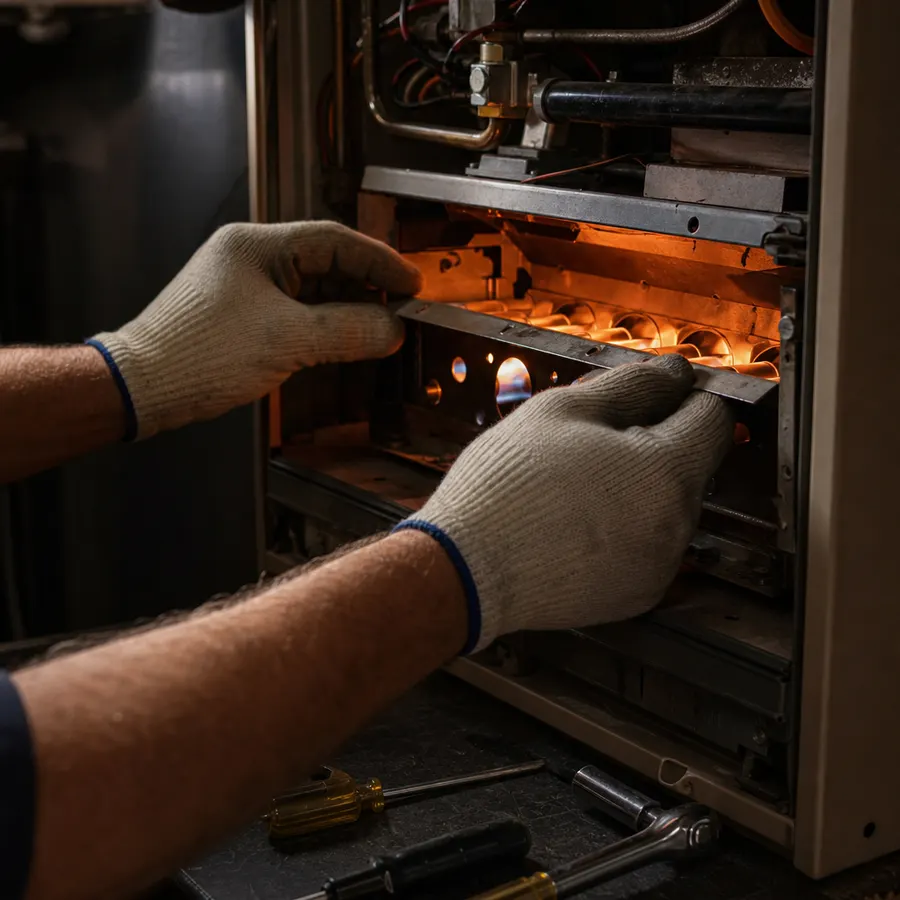
Resolving Heating Inefficiencies in Your Somerset Home
Are you noticing a persistent burning or musty smell when your heat kicks on, or finding that your system runs constantly just to keep your home lukewarm? These are not just quirks of an aging unit—they are direct indicators of restricted airflow, mechanical friction, or failing components that require professional attention before they cause a complete breakdown. Feistritzer Heating & Air Conditioning is ready to step in with a comprehensive, whole-system diagnosis to find out exactly what is dragging your equipment down and correct it.
Recognizing the Warning Signs of a Struggling Heating System
Musty or Burning Odors During Operation
Customers often notice a distinct burning smell or a stale, musty odor coming from their vents shortly after the system kicks on. While a brief smell on the very first startup of a cycle can be normal, a lingering odor means a thick layer of dust has settled on the heat exchanger. Because of the ambient moisture around Lake Cumberland, this dust often clumps and sticks rather than simply blowing through the ductwork.
This debris essentially bakes onto the heating components when the system runs, creating that noticeable burning smell. If ignored, this thick buildup acts as an insulator that traps heat inside the equipment. This forces the system to run hotter than designed and risks warping or cracking the heat exchanger over time.
The System Runs Constantly but the House Feels Cold
The thermostat is set to a comfortable temperature, and the equipment sounds like it is running continuously, yet certain rooms still feel drafty. This is a classic sign of restricted airflow or a system that has lost its heating capacity. It often stems from a heavily soiled blower motor, a clogged filter, or worn belts.
These issues prevent the system from moving air efficiently through your vents, leaving the house feeling unevenly heated. Letting a system run continuously without reaching the set point causes rapid, unnecessary wear on moving parts. It also guarantees an unexpectedly high utility bill at the end of the month.
Frequent, Short Heating Cycles
The heating system turns on, runs for just a few minutes, shuts off before the house is warm, and then immediately turns back on again. This erratic behavior is known as short-cycling, and it is usually caused by the system’s internal safety mechanisms tripping. When airflow is blocked by neglected maintenance, the system quickly overheats inside the cabinet.
Once it overheats, the high-limit switch steps in to shut the unit down immediately to prevent a fire. Short-cycling is incredibly hard on the electrical components and the compressor in heat pump systems. It will significantly shorten the lifecycle of the equipment if not addressed promptly by a professional.
Grinding, Squealing, or Rattling Noises
Instead of a smooth hum, the system operates with loud squeals, metal-on-metal grinding, or rhythmic banging noises that echo through your vents. These harsh sounds point directly to mechanical friction inside the air handler or furnace cabinet. Squealing usually indicates a slipping belt or dry motor bearings crying out for lubrication.
Grinding often means a bearing is failing entirely, while rattling can point to loose panels or an unbalanced blower wheel heavily caked in debris. Mechanical friction does not fix itself over time. A squealing bearing today easily becomes a seized, burned-out motor tomorrow, turning a routine tune-up into a costly repair.
What is Causing Your Heating System to Struggle
Heavily Soiled Blower Components
The blower assembly acts as the lungs of the HVAC system, pulling air in and pushing it back out into your living spaces. Over time, the blower wheel blades gather dirt that changes their aerodynamic shape and prevents them from moving air effectively. In our area, the mix of rural dust and higher humidity creates a sticky sludge on these blades.
Standard air filters cannot completely stop this matted debris from accumulating on the wheel. The solution involves a deep, professional cleaning of the blower assembly to remove the buildup and restore proper balance. We also check the amperage draw of the motor to ensure it has not been permanently damaged by the extra strain.
Fouled Flame Sensors and Igniters
In gas heating systems, the flame sensor is a critical safety device that tells the control board a fire is actually burning. If it gets dirty, it cannot read the flame, prompting it to shut the gas valve off immediately to prevent a leak. The constant cycling of air naturally oxidizes these small metal probes over time.
Combined with household humidity and airborne particles, this creates a microscopic layer of soot and rust that blinds the sensor. A technician will carefully remove and clean the sensor using specialized materials to restore its function without scratching the metal. We also test the electrical microamps and inspect the igniter for hairline cracks to ensure safe firing.
Neglected Upkeep on Secondary Properties
Our region has a high mix of vacation properties near the water where systems sit dormant for weeks or months at a time. Lubricants in the motors can settle during these long pauses, and dust has ample time to accumulate on vital electrical components. When you arrive and immediately demand maximum performance from a cold, neglected system, things break.
The sudden thermal and mechanical stress often causes weak components to fail right when you need the heat the most. Routine heating maintenance resolves this by keeping moving parts lubricated, electrical connections tight, and safety controls tested. This ensures the system is ready to perform safely regardless of how long it has been sitting idle.
Out-of-Calibration Thermostats and Controls
Sometimes the heating equipment itself is mechanically fine, but the system is taking bad directions from a failing thermostat. If the thermostat is reading the room temperature incorrectly, the whole system suffers from poor timing. Dust accumulation inside the thermostat housing, loose wiring, or simple age can cause the temperature sensor to drift.
This drift results in the system turning off too early or running far longer than necessary. During a tune-up, the technician will recalibrate the thermostat and check the low-voltage wiring connections at the control board. We ensure communication between the controls and the equipment is instantaneous and accurate.
What to Expect During Your Heating Maintenance Visit
A Complete System Diagnosis
When Feistritzer Heating & Air Conditioning arrives at your property, we do not just change a filter and wipe down the cabinet. We take a consultative, repair-first approach, sending NATE-certified technicians to perform a complete, whole-system diagnosis. We check the electrical draws, inspect the heat exchanger for structural integrity, test all safety limits, and measure the airflow.
Because we are brand-agnostic, we evaluate your system based on its load, comfort delivery, and lifecycle rather than the logo printed on the box. Once the diagnosis is complete, we show you exactly what we found and explain the situation in plain language. We want you to understand exactly how your equipment is performing and where it might be struggling.
Transparent Recommendations for Your Home
We outline what needs immediate attention, what can be safely repaired, and what can wait. Serving Somerset and the surrounding Central Kentucky communities, our goal is to recommend the exact solution we would choose for our own homes. As a family-owned business operating since 1976, we prioritize honest guidance over quick sales.
This straightforward process ensures you have reliable, efficient heat without dealing with unnecessary upselling. We deliver commissioned installations with post-install accountability, meaning we stand by our work long after the service visit is over.
Comprehensive Heating Solutions for Every Situation
Finding the Right Path Forward
While routine heating maintenance and tune-up services catch most issues early, some systems require more extensive intervention to restore proper function. If our evaluation reveals a failing component, we seamlessly transition into heating repair and service, focusing on fixing the problem rather than pushing a new unit. However, if your system is severely aged or unsafe to operate, we provide honest heating installation and replacement options tailored to your home's specific footprint. We also handle specialized equipment, offering heat pump maintenance and tune-up services as well as geothermal maintenance and tune-up solutions.
The True Cost of Skipping Routine Heating Maintenance
Financial and Safety Risks
Heating systems do not heal themselves, and ignoring the early warning signs of inefficiency always leads to compounding problems. From a financial standpoint, a system struggling against friction and restricted airflow will consume significantly more energy. This drives up your monthly utility bills while failing to keep your home comfortable.
Mechanically, the stress of operating in a compromised state causes premature failure of expensive components like blower motors and compressors. Most importantly, neglected maintenance poses serious safety risks for your household. In gas furnaces, a dirty, overheating system can lead to a cracked heat exchanger, which introduces the risk of carbon monoxide leaking directly into your living space.
Secure Your Comfort with Accountable Local Service
Do not wait for a sudden breakdown to find out your system is struggling to keep up with demand. Regular maintenance protects your investment, lowers your energy costs, and ensures your home remains safe. As a homegrown business delivering post-install accountability, Feistritzer Heating & Air Conditioning is here to provide honest, expert care for your Somerset property. Reach out today to schedule your comprehensive system tune-up.