
Resolving AC Breakdowns and Cooling Issues in Somerset
Is your air conditioner running non-stop but your home still feels sticky and humid, or are you noticing water pooling around your indoor unit and warm air blowing from your vents? When an AC struggles to keep up with Somerset’s heavy moisture loads, it is doing more than just costing you comfort, putting immense strain on the compressor and risking costly water damage from backed-up drain lines. You need a proper diagnosis, not a sales pitch, and Feistritzer Heating & Air Conditioning provides a repair-first approach to get to the root of the problem and restore your system's performance.
Signs Your Air Conditioner Needs Repair
High Indoor Humidity and Clammy Air
The thermostat might say your house is at the target temperature, but the air still feels heavy, sticky, and uncomfortable. Your system is failing to remove latent heat and moisture from the air, which is a primary function of any modern cooling setup. This often points to an oversized system short-cycling, a failing blower motor, or restricted airflow over the evaporator coil.
An AC that cannot dehumidify forces you to lower the thermostat further just to feel some relief from the mugginess. This constant adjustment drives up your utility bills and accelerates the wear and tear on your moving parts. Getting a professional to check the airflow and system sizing can resolve this clammy feeling.
Water Pooling Around the Indoor Unit
You might notice puddles of water forming around the base of the indoor air handler or furnace. If your equipment is located in the attic, this issue often reveals itself as unsightly water stains spreading across your ceiling. This usually means the condensate drain line is clogged by a thick buildup of algae and sludge, or your drain pan has rusted completely through.
Air conditioners produce gallons of condensation during heavy use, and that water needs a clear path to exit your home. If left unaddressed, overflowing water will ruin drywall, warp flooring, and create a perfect environment for severe organic growth. Stopping the leak immediately protects your property from extensive secondary damage.
Ice Buildup on the Refrigerant Lines
A thick layer of white ice forming on the copper pipes connected to the outdoor unit is a major warning sign. You might also find that the indoor evaporator coil has frozen into a solid block of ice behind the access panel. The system is experiencing a severe pressure drop, typically caused by either a refrigerant leak or a severe airflow restriction like a plugged filter.
A frozen system simply cannot absorb heat, meaning it will completely fail to cool your home. More importantly, running an AC while it is frozen can allow liquid refrigerant to slug back to the compressor. This liquid slugging will quickly destroy the compressor, which is the most expensive component in your entire system.
Buzzing or Clicking at the Outdoor Unit
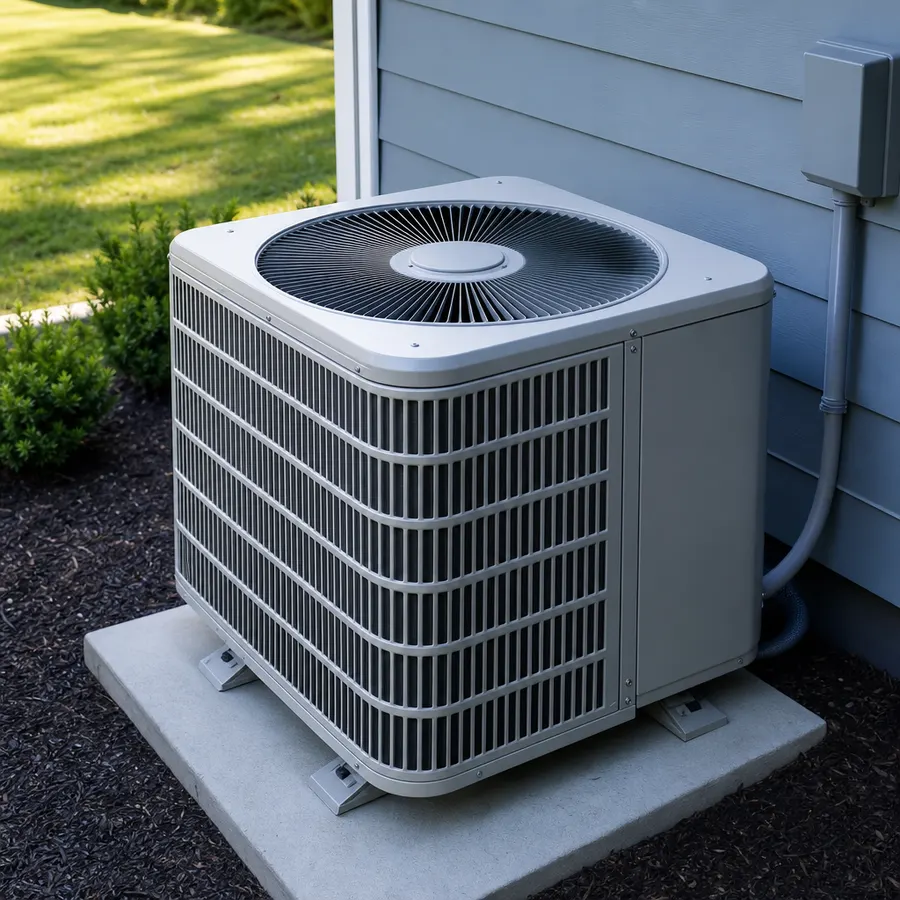
The thermostat calls for cooling and the indoor fan turns on, but the outside unit just makes a loud buzzing or clicking sound. When you inspect the outdoor cabinet, you will notice that the large fan blade at the top is not spinning. Nine times out of ten, this points to a failed dual-run capacitor or a bad contactor preventing the compressor and fan from drawing the voltage they need.
These electrical components act as the gatekeepers for the high voltage required to start your system. The air conditioner will not cool your house at all while it is stuck in this state. If the unit continues to try and start with a bad capacitor, it generates excessive heat that can eventually burn out the compressor motor entirely.
Weak or Barely Noticeable Airflow
You might hold your hand up to the supply vents and feel only a weak trickle of cold air coming through the grilles. Even if the air feels cold, a lack of volume means the system will run continuously without ever satisfying the thermostat. This symptom usually indicates a failing indoor blower motor, a heavily blocked air filter, or collapsed ductwork.
Weak airflow traps the cold air inside the equipment rather than distributing it through your living spaces. This trapped cold air drops the temperature of the indoor coil drastically, creating the perfect conditions for the system to freeze over. Restoring proper air volume is critical for both your comfort and the longevity of the equipment.
Common Causes of Air Conditioning Failures
Algae-Clogged Condensate Drain Lines
The PVC pipe responsible for draining the water your AC pulls from the air can easily become choked with a thick, jelly-like algae buildup. Because Somerset sits close to Lake Cumberland, local air conditioners pull massive amounts of water out of the highly humid ambient air. This constant, heavy flow of moisture creates the absolute perfect breeding ground for algae inside the dark drain lines.
When the line clogs, the water backs up into the drain pan and eventually overflows into your home. A technician will clear the blockage using specialized vacuums or pressurized nitrogen to blow out the sludge. We then flush the line completely and treat the drain pan to prevent immediate algae regrowth.
Blown Capacitors from Electrical Strain
The capacitor acts like a high-voltage battery to jump-start the compressor and fan every time a cooling cycle begins. Over time, these cylindrical components can bulge, leak their internal fluids, or simply lose their required microfarad rating. Rural electrical grids and older home wiring in the area often experience minor voltage fluctuations that degrade these parts rapidly.
The heavy workload of running long cycles to combat local humidity also bakes the capacitors, causing them to fail prematurely. Testing the electrical components with a multimeter allows us to pinpoint exactly which part has failed. Replacing the faulty capacitor with an OEM-rated part restores proper starting voltage to the system and gets the fan spinning again.
Low Refrigerant Due to Micro-Leaks
Your system might be low on refrigerant, causing a significant loss of cooling capacity, longer run times, and potential freezing at the coil. Air conditioners operate on a closed loop and do not consume refrigerant like a car consumes gas. If the refrigerant levels are low, there is definitely a leak somewhere in the copper lines or coils.
In older properties where systems have been running for over a decade, constant vibration and thermal expansion eventually cause tiny pinhole leaks. Locating the leak requires using electronic leak detectors or injecting a specialized UV dye into the system. Once found, we repair the copper if possible and recharge the system to exact factory specifications.
Failing Indoor Blower Motors
The indoor blower motor is the workhorse responsible for pushing conditioned air through your ductwork and across the cold evaporator coil. When systems run extended, grueling cycles to handle heavy latent heat and humidity, these motors experience immense premature wear. The bearings can dry out, the motor can overheat, or the internal electrical windings can short out completely.
A failing blower motor often gives warning signs like a burning smell, loud squealing noises, or intermittently dropping airflow. Replacing a struggling blower motor restores proper air volume throughout the house. This prevents the indoor coil from freezing over and ensures even, consistent cooling in every single room.
What to Expect During Your AC Repair Visit
Our Consultative Diagnostic Process
When a NATE-certified technician from Feistritzer Heating & Air Conditioning arrives at your home, you get a thorough, consultative diagnostic process. We serve Somerset and the surrounding communities with a strict repair-first philosophy that respects your budget. We do not just look at the obvious broken part; we evaluate the entire system by checking airflow, electrical draw, and refrigerant pressures.
Once we locate the root cause of the breakdown, we explain exactly what is going on in plain English without using confusing industry jargon. Because we are completely brand-agnostic, we are never there to push a specific logo or manufacturer on you. We show you what can be repaired today, what maintenance can wait, and offer the exact solutions we would choose for our own homes.
Honest Recommendations and Repairs
You make the final decision on how to proceed with absolutely zero pressure from our technicians. Our homegrown approach means we deliver honest, accountable service without relying on high-pressure sales tactics. We prioritize getting your existing equipment back up and running safely and efficiently whenever a repair makes financial sense.
If you approve the repair, we get to work immediately using high-quality parts stocked on our service vehicles. After the faulty component is replaced, we cycle the system multiple times to ensure the repair holds under real-world conditions. We check the temperature drop across the vents and verify that your home is actually cooling down before we consider the job complete.
Comprehensive Cooling Solutions
Proactive Upkeep and Replacements
Sometimes an AC repair is all you need to get through the season, but we offer a full suite of sibling services to keep your home comfortable long-term. The absolute best way to prevent sudden breakdowns, blown capacitors, and clogged drain lines is through proactive AC Maintenance & Tune-Up services. Regular maintenance keeps your system running efficiently, lowers your monthly utility bills, and catches minor wear before it causes a major failure.
However, no mechanical system lasts forever, and eventually, repair costs begin to outweigh the value of the equipment. If your system is suffering from a catastrophic compressor failure, uses obsolete refrigerant, or is simply too old, we provide commissioned AC Installation & Replacement. We base our replacement recommendations on proper load calculations, home comfort needs, and lifecycle value rather than just swapping boxes.
The True Cost of Delaying AC Repairs
Financial and Property Risks
Ignoring a struggling air conditioner almost always leads to a much more expensive outcome down the road. If your system is short-cycling or running constantly to combat local humidity, your monthly energy bills will spike significantly as it wastes electricity. Operating an AC with a frozen coil or a failing capacitor forces the compressor to work under extreme, damaging stress.
The compressor is the heart of your cooling system, and replacing a dead one is often nearly as expensive as buying an entirely new outdoor unit. By forcing a compromised system to run, you turn a simple, affordable repair into a major financial burden. Prompt attention to strange noises or weak airflow protects your most expensive HVAC components.
Water Damage and Mold Growth
Furthermore, ignoring a water leak from a clogged drain pan can result in thousands of dollars in hidden water damage. Water dripping through attic floors will quickly ruin drywall ceilings, warp expensive hardwood flooring, and saturate your insulation. Once insulation and drywall become wet, they lose their structural integrity and must be completely torn out and replaced.
This standing water also creates the ideal dark, damp environment for severe mold and mildew growth inside your home. Breathing in this organic growth circulating through your ductwork can severely impact your indoor air quality and comfort. Addressing drain line issues immediately saves your property from extensive secondary damage and keeps your indoor air fresh.
Reliable Diagnostics and AC Service in Somerset
Since 1976, our homegrown, family-owned business has been dedicated to honest, accountable HVAC service throughout Central Kentucky. When your cooling system fails, you need a team that prioritizes accurate diagnostics and reliable repairs over unnecessary replacements. Feistritzer Heating & Air Conditioning is ready to diagnose your AC issues in Somerset and restore your home's comfort today.