
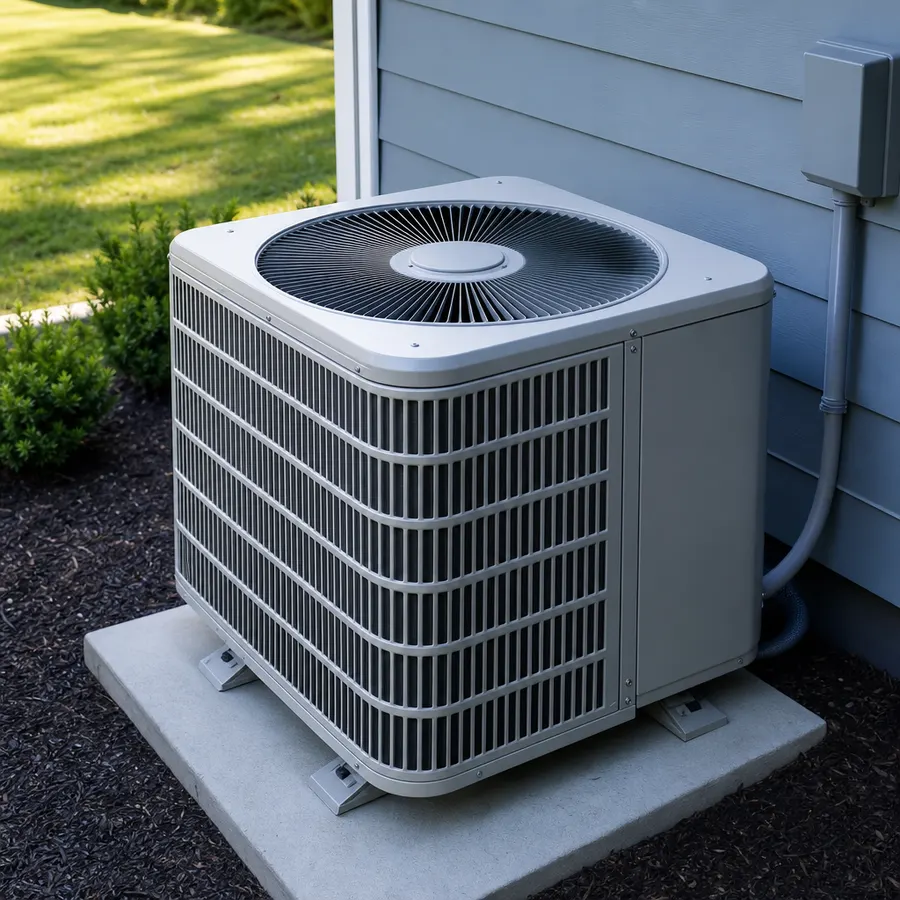
Solving Geothermal Performance Drops in Your Wilmore Home
Is your geothermal system's "auxiliary heat" light staying on longer than it should, or are you noticing the heavy Central Kentucky humidity lingering in your home despite the unit running constantly? Geothermal systems are built to be the most efficient comfort setups on the market, so when that efficiency suddenly vanishes, it means an underlying issue like low loop pressure or restricted airflow is forcing the equipment to work overtime. Feistritzer Heating & Air Conditioning is ready to diagnose the exact cause of your performance drop and perform the precise maintenance needed to restore your system.
Warning Signs Your Geothermal System Needs Attention
The Auxiliary Heat Indicator Stays On
You look at your thermostat and notice the auxiliary or emergency heat indicator is illuminated, even when the weather outside is mild. You might also notice the air coming from your vents feels hotter and drier than usual. This is often accompanied by a system that runs in short, aggressive bursts.
When we see this, it usually means the geothermal heat pump cannot extract enough thermal energy from the ground loop. The system's computer realizes it is falling behind the thermostat demand and triggers the electric resistance backup heaters to compensate.
The Hidden Cost of Auxiliary Heat
While auxiliary heat keeps you comfortable in the short term, it uses a massive amount of electricity. Ignoring this negates the entire financial benefit of owning a geothermal system. It also masks an underlying issue that could eventually burn out the compressor.
Unexplained Spikes in Electricity Bills
Everything seems to be working fine, but when your utility bill arrives, it is significantly higher than it was at this time last year. This is the classic silent symptom of a geothermal system that needs a professional tune-up.
A sudden spike in costs means the system is running significantly longer cycles to achieve the same indoor temperature. This usually points to a dirty heat exchanger, a failing pump in the flow center, or a slow leak in the ground loop.
Efficiency Loss Over Time
Geothermal systems are designed to operate at ultra-high efficiencies, so any jump in operating costs is an immediate red flag. Over time, this constant operation causes premature wear and tear on the blower and compressor. Catching this early prevents minor inefficiencies from turning into major mechanical failures.
Reduced Dehumidification and Clammy Indoor Air
The system is running, but your home feels sticky, heavy, or clammy. Hardwood floors might feel slightly tacky, and the air inside just does not feel crisp.
This happens when the system's airflow is restricted or the indoor coil is fouled with dirt and debris. The system is cooling the air just enough to satisfy the thermostat, but it is not moving enough volume across the cold coil. This prevents the equipment from extracting the heavy humidity we get in Wilmore.
Indoor Air Quality Concerns
Poor dehumidification creates an incredibly uncomfortable living space. It also creates a damp environment where mold and mildew can thrive inside your ductwork and living areas. Restoring proper airflow is essential for both your comfort and your home's air quality.
Strange Noises from the Heat Pump Cabinet
Geothermal systems are famously quiet, so if you suddenly hear grinding, rattling, or a loud whining noise coming from the indoor unit, it is a clear warning sign. A whining noise often indicates a failing loop pump that is struggling against low fluid pressure or air bubbles in the line.
Rattling or grinding usually points to a blower motor bearing that is drying out or a loose component vibrating inside the cabinet. Mechanical noises never resolve themselves on their own.
Preventing Mechanical Failure
Allowing a pump or blower motor to run while grinding will eventually lead to complete mechanical failure. This turns a routine maintenance visit into an expensive component replacement. Shutting the system down and having it inspected is the safest course of action.
What Causes Geothermal Efficiency Drops
Low Ground Loop Pressure or Fluid Leaks
The buried ground loop circulates a water and antifreeze mixture to transfer heat. If the pressure in this loop drops, the flow center pumps have to work overtime, and heat transfer plummets.
In the Wilmore area, our mix of clay and limestone soils can shift and settle over time. While the high-density polyethylene pipes are incredibly tough, this ground movement can occasionally stress manifolds or fusion joints.
Restoring Loop Pressure
This environmental stress leads to microscopic leaks and a gradual loss of loop pressure. Our tune-up process involves checking this pressure at the flow center, re-pressurizing the system, and purging any trapped air. We also verify the antifreeze concentration to ensure optimal heat transfer.
Scaling in the Desuperheater
Many geothermal systems are equipped with a desuperheater, which uses excess heat from the compressor to generate free hot water for your home. Over time, mineral deposits build up inside the heat exchanger of this component.
Central Kentucky is known for its hard, limestone-filtered water. If your home is not running a robust water softener, that hard water will rapidly deposit calcium and magnesium scale inside the desuperheater.
Flushing the Mineral Buildup
This scaling chokes off water flow and destroys the efficiency of the hot water generator. We isolate the desuperheater and flush it with a specialized descaling solution. This clears out the mineral buildup so it can transfer heat efficiently without stressing the compressor.
Dirty Air Filters and Restricted Blower Motors
It sounds incredibly simple, but severely restricted airflow is the number one cause of geothermal performance issues. When the blower cannot pull enough air across the coils, the system cannot distribute the energy it just extracted from the ground.
This is especially common in rural properties where dust, pollen, and agricultural debris are more prevalent. It is also an issue in older historic homes where ductwork might already be slightly undersized for the system's requirements.
Clearing the Airside Components
We inspect the entire airside of the system to correct these restrictions. This includes replacing filters, cleaning the blower wheel, and ensuring the indoor coil is spotless. Clean components ensure air can flow freely and efficiently throughout your home.
Faulty Sensors or Control Board Issues
Geothermal heat pumps rely on a complex network of thermistors, limit switches, and control boards to monitor loop temperatures, refrigerant pressures, and air temperatures. If a sensor drifts out of calibration, it feeds bad data to the control board.
A bad sensor might tell the system the loop is too cold, unnecessarily triggering the expensive auxiliary heat. It might also cause the system to short-cycle, turning on and off rapidly before the house reaches the desired temperature.
Testing Electrical Components
Because we diagnose the whole system objectively, we do not just guess based on symptoms. We test the electrical draw and resistance of every sensor and relay against factory specifications. This ensures the system's brain is making the right operational decisions to keep you comfortable.
What to Expect During Your Geothermal Tune-Up
A Consultative Diagnostics Approach
When you call Feistritzer Heating & Air Conditioning for a geothermal tune-up, you get a consultative, repair-first approach. We do not just change the filter and walk away. We diagnose the whole system by its load, comfort output, and lifecycle, regardless of the brand logo on the cabinet.
First, we check the water-side of your system by measuring the loop pressure at the flow center. We test the antifreeze concentration and ensure the loop pumps are drawing the correct amperage. Next, we evaluate the refrigerant circuit to verify the compressor is operating at peak efficiency.
Comprehensive Component Inspections
We measure the temperature drop and rise across the coaxial heat exchanger to confirm optimal heat transfer. We also thoroughly inspect the air-side components, cleaning the blower assembly and checking the ductwork static pressure. Finally, if your system includes a hot water generator, we inspect it for hard water scaling.
Throughout the process, we explain exactly what we are testing and why. As a homegrown company serving Wilmore and the surrounding area, our goal is to show you exactly what condition your system is in. We only recommend the maintenance steps we would choose for our own homes.
Related Services You May Need
Comprehensive Climate Control Solutions
During a comprehensive maintenance visit, we occasionally uncover components that have already failed or are beyond simple tuning. If a compressor or flow center pump has failed, we provide transparent options for Geothermal Repair & Service or Geothermal Installation & Replacement. Additionally, if you have outbuildings or a dual-fuel setup that utilizes standard air-source equipment, we also provide comprehensive Heat Pump Maintenance & Tune-Up services to keep all your property's climate control systems running efficiently.
The True Cost of Delaying Geothermal Maintenance
Slow Degradation of Efficiency
Ignoring routine maintenance on a geothermal system rarely results in an immediate, catastrophic breakdown. Instead, it results in a slow, expensive degradation of efficiency. When ground loop pressure drops or coils get dirty, the system has to run longer cycles to heat or cool your home.
This constant operation drives up your monthly utility bills, entirely defeating the purpose of investing in geothermal technology. More importantly, forcing the system to work harder drastically increases the internal temperature and wear on the compressor.
Protecting Your Investment
Replacing a burned-out geothermal compressor is one of the most expensive repairs in the HVAC industry. Regular tune-ups catch low pressure, scaling, and electrical issues early before they cause permanent damage. Staying proactive protects your investment and ensures the system lasts for decades.
Securing Your System's Efficiency
Your geothermal heat pump was a significant investment in your home's comfort and energy independence. Do not let neglected maintenance compromise its performance or lifespan. Our NATE-certified technicians are ready to provide the thorough, accountable service your system requires.
Contact Feistritzer Heating & Air Conditioning today to schedule your Wilmore geothermal maintenance visit and keep your system running exactly as it was designed to.