
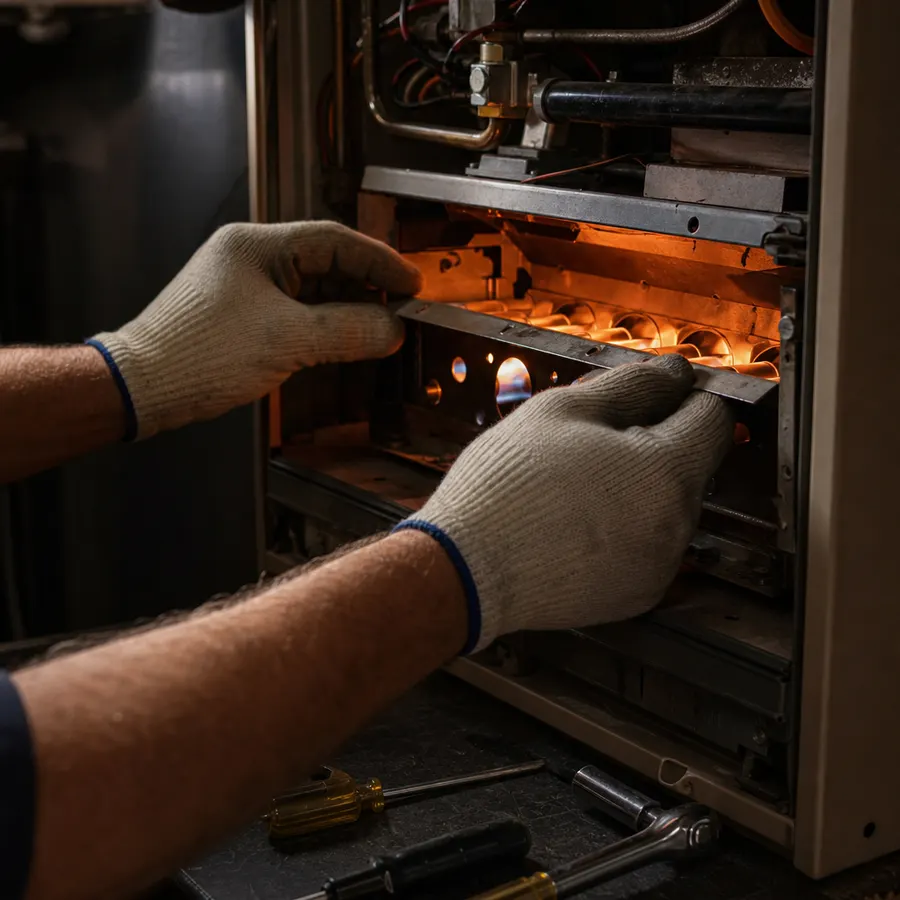
Installing and Upgrading Heating Gas Lines in Your Wilmore Home
Are you planning to upgrade to a high-efficiency gas furnace but your current pipes are undersized, or have you noticed a faint rotten egg smell near your utility closet in your older Wilmore property? Gas line installation and repair is never a DIY project, as undersized lines will starve your new heating equipment and poorly sealed joints present an immediate, severe safety hazard to your family. You need a certified professional who understands local building codes, and Feistritzer Heating & Air Conditioning is ready to ensure your gas lines are sized correctly, routed safely, and pressure-tested for total peace of mind.
Signs Your Gas Line Needs Professional Attention
If your gas piping is compromised, your home and your heating equipment will usually give you clear warnings. Watch out for these common indicators:
- The smell of sulfur or rotten eggs near your utility spaces
- Gas furnaces or appliances that repeatedly fail to ignite
- Visible rust, flaking, or corrosion on exposed pipes
- Unexplained increases in your monthly natural gas bills
The Unmistakable Rotten Egg Odor
The most obvious sign of a problem is the smell of sulfur or rotten eggs near your furnace, water heater, or gas meter. Natural gas is odorless, but this scent is added specifically to alert homeowners to a leak. This means gas is escaping from a compromised pipe, a degraded joint, or a faulty valve connection.
In older homes, the threading on aging black iron pipes can slowly lose its seal over time. Ignoring this odor is a severe safety hazard that puts your entire property at risk. Even a faint smell requires immediate professional intervention to locate the leak, shut off the supply, and replace the compromised section of piping.
Heating Equipment Struggling to Ignite
You might notice your gas furnace clicking repeatedly without firing up, or it might ignite but shut down shortly after. You may also notice your gas logs or other appliances producing a weak, yellow flame instead of a robust blue one. Nine times out of ten, this points to insufficient gas pressure.
When homeowners add new gas appliances to an existing system, the old lines are often too narrow to deliver the required volume of gas. If left unaddressed, this low pressure will cause your heating equipment to work much harder than designed. This leads to premature wear and tear, soot buildup, and repeated system lockouts on the coldest nights of the year.
Visible Rust and Flaking on Exposed Pipes
When you look at the exposed gas lines running along your basement ceiling or down to your furnace, you might see heavy rust or pitting. You may also notice a flaky, powdery texture on the surface of the metal piping. This is a sign of advanced oxidation that requires a professional assessment.
Many historic properties in the area still rely on original black iron piping installed decades ago. Over time, ambient moisture in basements and crawlspaces causes the iron to slowly degrade. If ignored, this corrosion will eventually eat through the pipe wall and lead to a dangerous leak.
Catching this degradation while it is just surface rust allows for a planned, safe replacement. We can remove the compromised sections before an emergency occurs. This proactive approach keeps your home safe and prevents sudden heating disruptions.
Unexplained Spikes in Your Utility Bill
Your heating habits have not changed, but your natural gas bill has steadily crept up over the last few months. While this can sometimes point to a failing furnace, it can also indicate a slow, continuous leak in a hidden gas line. This often happens with lines running underground where the smell dissipates before you can notice it.
You are paying for gas you are not using, and more importantly, gas is accumulating somewhere it should not be. A professional pressure test can quickly determine if the line itself is compromised. If the system loses pressure during our test, we know exactly what steps to take to find and fix the leak.
What Causes Gas Line Issues and Requires New Installation?
Transitioning to Modern High-Efficiency Heating
Many homeowners are upgrading their aging HVAC systems to modern, high-efficiency gas furnaces. When this happens, the existing gas lines often need to be completely reworked to handle the new equipment. Older homes were simply piped for the specific, less efficient appliances installed decades ago.
Modern equipment often requires different gas volumes to operate safely and efficiently. Our consultative approach ensures your piping is mathematically sized by load to support the new system. We do this regardless of the equipment brand you ultimately choose for your home.
The solution involves calculating the total BTU load of all gas appliances running simultaneously. We then remove any undersized bottlenecks in your current plumbing. Finally, we install appropriately sized lines to ensure flawless operation for the lifespan of your new furnace.
Soil Settlement Stressing Buried Lines
Homeowners with buried gas lines running to detached garages, workshops, or standby generators often experience underground line failures. Central Kentucky is known for its heavy clay soils, which expand and contract significantly with moisture changes. This constant shifting puts massive physical stress on underground pipes, eventually causing rigid joints to crack or snap.
We resolve this by excavating the damaged section and replacing it with modern, flexible materials. We use code-compliant underground poly piping designed specifically to handle soil movement without breaking. We also ensure proper trench depth and install tracer wire so the line can be easily located in the future.
Aging Black Iron Pipe Degradation
Over time, the threading on black iron pipes begins to fail and lose its airtight seal. The pipe compound dries out, and ambient moisture causes the raw iron at the joints to rust. Because Wilmore features a dense concentration of older architecture, we frequently see original gas lines that have reached the end of their safe lifecycle.
The fix requires safely disconnecting the old lines, removing the degraded sections, and threading new piping. We treat this with a repair-first mindset, replacing only what is necessary if a specific section is bad. However, we will always recommend full replacement if the entire run is heavily corroded or compromised.
What to Expect During Your Gas Line Service Visit
When you call Feistritzer Heating & Air Conditioning for gas line installation or repair in Wilmore, you get a homegrown team that prioritizes safety. We handle the entire process with transparency and accountability from start to finish. Here is exactly how we approach your gas line project.
Comprehensive Load Calculation
We do not just guess pipe sizes or visually estimate what your home needs. We calculate the total BTU requirements of your furnace and every other gas appliance in the house. This ensures the new line will deliver adequate pressure without starving your system during peak usage.
Safe Routing and Planning
For installations in older homes, we map out the least intrusive route through your crawlspace, basement, or walls. We navigate tight, historic crawlspaces or retrofit lines through finished basements without disrupting the home's footprint. This careful planning ensures the pipe is protected from physical damage and meets all local building codes.
Precision Installation and Assembly
Our NATE-certified technicians cut, thread, and seal the piping with exact precision. We use high-quality materials and modern sealing compounds designed to outlast the equipment they are connected to. Every joint is assembled meticulously to guarantee a permanent, leak-free connection.
Rigorous Pressure Testing
Before we ever turn the gas back on, we cap the line and pressurize it with air. We monitor the pressure gauge to ensure there is absolutely zero drop over a sustained period. This rigorous testing protocol guarantees a perfectly sealed system before any combustible gas enters the pipes.
Post-Install Accountability
Once the gas is flowing, we commission the connected appliances to ensure everything operates perfectly. We check for proper ignition, a clean burn, and optimal gas pressure at the equipment valves. Finally, we walk you through the work and ensure you know exactly where your emergency shut-off valves are located.
Comprehensive Heating Solutions for Your Home
Gas line installation is rarely a standalone project, making it the perfect time to evaluate the equipment attached to those lines. If you are upgrading your gas lines because your old furnace is failing, our team provides complete heating installation and replacement services. We offer a brand-agnostic assessment to help you choose the right replacement system for your home's unique footprint.
Many homeowners are also opting for heat pump installation and replacement to create highly efficient dual-fuel systems. This setup combines an electric heat pump with a gas furnace backup for extreme cold weather. We can install the necessary gas infrastructure to make this hybrid setup a reality for your property.
Whether you need heating repair and service on your current unit or routine heating maintenance and tune-up visits, we have you covered. Our goal is to ensure your entire HVAC system works in perfect harmony with your newly installed gas lines.
The True Cost of Delaying Gas Line Repairs
Ignoring a suspected gas line issue or trying to make do with undersized pipes is a massive risk. Gas infrastructure is not something that improves with time, and delaying repairs always leads to more severe consequences. Addressing these problems immediately protects your property and your wallet.
Severe Safety Hazards
Even a microscopic leak can allow natural gas to pool in enclosed spaces like basements or crawlspaces. This creates an extreme risk of fire, explosion, or dangerous carbon monoxide exposure for your family. There is simply no acceptable level of gas leakage inside a residential property.
Expensive Equipment Damage
Forcing a new furnace to run on an undersized gas line causes chronically low gas pressure. This leads to poor combustion, excessive soot buildup in the heat exchanger, and rapid wear and tear. This unnecessary strain will often void your manufacturer warranty and lead to early, expensive system failure.
Code Violations and Real Estate Issues
Unpermitted or improper DIY gas line work is a serious liability for any homeowner. These amateur repairs will flag immediately during a professional home inspection. This can potentially derail a future property sale and require costly professional rework to bring the home up to code.
Secure Your Home's Heating Infrastructure Today
Whether you need a dangerous leak repaired immediately or you are planning a major heating upgrade for your Wilmore home, you need local experts you can trust. We diagnose the whole system, explain your options clearly, and recommend the exact solution we would choose for our own home. Reach out to Feistritzer Heating & Air Conditioning today to schedule your gas line inspection or installation consultation, and let us ensure your home's heating system operates safely and efficiently.