
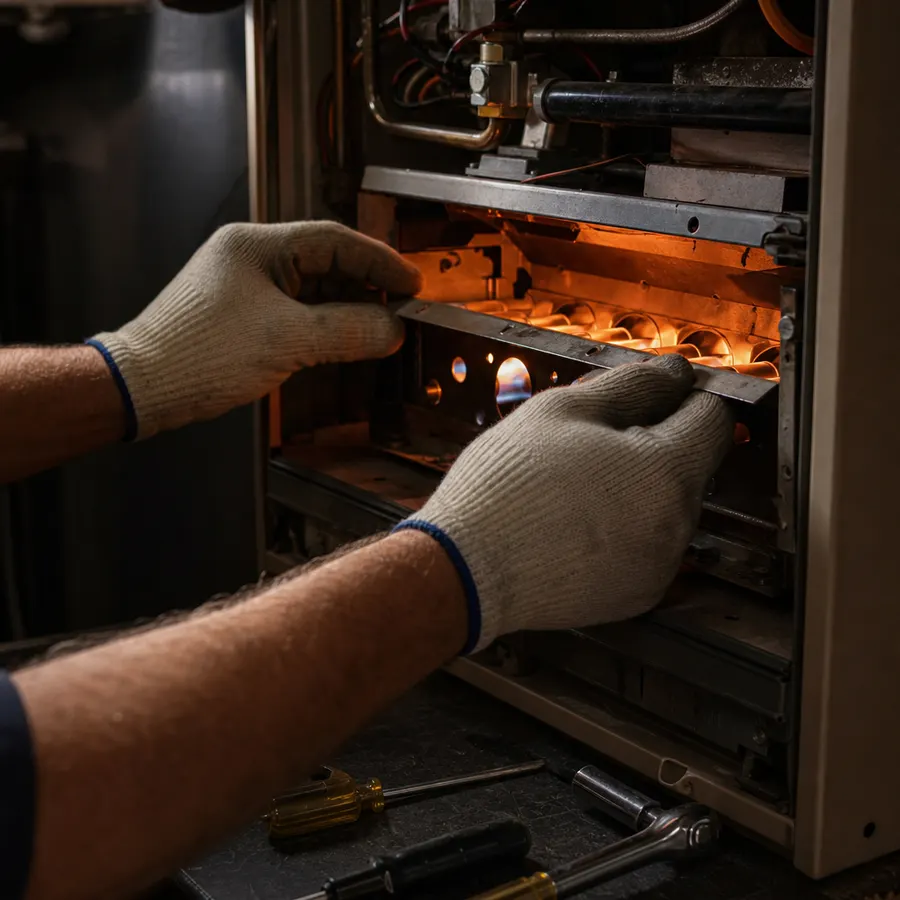
Restoring Reliable Warmth When Your Wilmore Heating System Fails
Are you waking up to a freezing house because the furnace tripped in the middle of the night, or noticing that certain rooms in your older Wilmore home feel like ice boxes while others are sweltering? Ignoring these symptoms does not just mean throwing on an extra sweater; in our damp Central Kentucky climate, a struggling heating system quickly leads to compromised indoor air quality, spiked energy bills, and the very real risk of frozen pipes. Feistritzer Heating & Air Conditioning provides repair-first, brand-agnostic diagnostics to pinpoint exactly what is failing and get your heat back online safely.
Signs Your Heating System Needs Professional Repair
When a heating unit begins to fail, it rarely stops working all at once without giving you a few warnings first. Catching these symptoms early can mean the difference between a simple part replacement and a catastrophic system failure. If you are experiencing any of the following issues, it is time to have a professional take a look.
Uneven Heating and Persistent Cold Spots
You might notice the living room is comfortably warm, but the upstairs bedrooms or back additions are freezing. This usually points to a failing blower motor that has lost the power to push air throughout the entire house, leaking ductwork, or a failing thermostat.
In older homes, this uneven airflow forces the system to run constantly to try and satisfy the thermostat. This endless running spikes your energy bills and drastically shortens the lifespan of your heating equipment. A professional diagnostic will determine if the equipment is failing or if the ductwork is restricting the necessary airflow.
Frequent Short-Cycling
It is incredibly frustrating when the heating system kicks on, runs for just a few minutes, shuts off, and then immediately starts the cycle over again. The system is likely overheating and shutting down as a safety precaution due to a severely clogged air filter, a malfunctioning flame sensor, or an oversized unit.
Starting up requires the most energy and causes the most wear and tear on any mechanical system. Short-cycling destroys blower motors and wastes massive amounts of electricity or gas. Letting a system short-cycle for days or weeks will eventually burn out the internal safety switches.
Unusual Mechanical Noises
You should never ignore loud metal-on-metal scraping, high-pitched squeals, or deep, booming rumbles right as the unit turns on. Squeals usually mean worn belts or failing bearings in the blower motor, while a booming sound is often delayed gas ignition where gas builds up before finally catching a spark.
Mechanical failures never fix themselves, and ignoring them simply breaks more expensive parts inside the cabinet. Delayed ignition is particularly dangerous because the small explosion inside the unit can crack the heat exchanger over time.
Strange or Burning Odors
Pay immediate attention to a persistent smell of burning plastic, electrical ozone, or a rotten egg odor when the heat runs. While a brief dusty smell is normal the very first time you run the heat, persistent burning smells indicate melting wires or failing electrical components.
Electrical and gas odors are immediate safety hazards that cannot be ignored. They require an emergency shutdown of the system and professional intervention to prevent fire or carbon monoxide exposure. Do not wait to see if the smell goes away on its own.
What’s Actually Causing Your Heating Problems?
Understanding the root cause of your heating failure helps take the mystery out of the repair process. Our Central Kentucky climate creates specific challenges for heating equipment, especially in older properties. Here is what we typically find when we open up a struggling system.
Worn or Dirty Flame Sensors
Over time, carbon buildup coats the flame sensor inside your furnace. Because the sensor can no longer detect the flame, it shuts the gas valve off immediately as a safety precaution, leaving you with cold air or a system that will not stay on.
This is incredibly common in our region, where fluctuating temperatures cause systems to cycle on and off frequently, accelerating the rate of carbon buildup. A technician will carefully remove, clean, and recalibrate the sensor, or replace it if the component has failed completely.
Failing Blower Motor or Capacitor
The electrical capacitor that gives the blower motor its starting jolt can die, or the motor itself can burn out from overwork. Many of the older homes in Wilmore have aging, restrictive ductwork that forces the blower motor to work twice as hard to move air.
This high static pressure leads to premature burnout of the motor and its supporting electrical components. We test the electrical draw of these parts to find the exact failure point. Often, replacing a cheap capacitor restores the system without needing a full blower motor replacement.
Cracked Heat Exchanger
The heat exchanger is the metal shield that separates the toxic combustion gases from the air you breathe. This vital component can develop a crack due to years of thermal expansion and contraction. Older furnaces in historic properties are highly susceptible to this after decades of battling damp, drafty conditions that force the unit to run longer cycles.
This is a critical safety failure that introduces carbon monoxide into the home. It requires either a complete replacement of the heat exchanger or, more often, upgrading the entire heating unit to ensure your family's safety.
Thermostat Miscommunication
Sometimes the thermostat is simply sending the wrong temperature signals, or no signal at all, to the control board of the furnace or heat pump. Drafty walls in aging properties can trick older thermostats into misreading the actual room temperature, causing the system to run erratically.
We resolve this by checking the low-voltage wiring and recalibrating the unit. If necessary, we can seal the wall draft behind the thermostat or upgrade you to a modern, more accurate control system.
What to Expect During Your Heating Repair Visit
When you call for a heating repair, you need answers rather than a sales pitch. We arrive ready to listen to exactly what you have been experiencing, whether it is a strange noise, a sudden drop in temperature, or a spike in your utility bills.
Comprehensive Diagnostics
Our NATE-certified technicians perform a complete, whole-system diagnostic to find the actual root cause of the failure. We look at the heating load, the airflow, and the mechanical components rather than just guessing at the problem. We test safety switches, measure electrical draws, and inspect the ductwork to ensure nothing is missed.
Honest, Repair-First Recommendations
Because Feistritzer Heating & Air Conditioning has been family-owned and operated since 1976, we focus entirely on what can be fixed. We sit down with you, explain the options clearly, and recommend the exact solution we would choose for our own homes. You get honest advice on what needs to be repaired now, what can wait, and what makes the most financial sense for the lifecycle of your system.
Comprehensive HVAC Solutions for Your Home
Sometimes a repair visit reveals that a system needs more than just a quick fix to remain safe and efficient. If your unit is aging or has suffered a catastrophic failure like a cracked heat exchanger, we can walk you through your options for Heating Installation & Replacement. Conversely, if we get your system back up and running, we highly recommend scheduling regular Heating Maintenance & Tune-Up services to catch small wear-and-tear issues before they turn into midnight breakdowns.
The True Cost of Delaying Heating Repairs
Waiting to see if a heating problem will resolve itself almost always leads to a more expensive outcome. Heating systems are complex networks of electrical and mechanical parts that rely on each other to function properly. When one part struggles, the rest of the system suffers.
Escalating Damage
A failing capacitor is an inexpensive part, but it can easily burn out an expensive blower motor if left running. Minor airflow restrictions cause systems to overheat, frying costly control boards and destroying internal components. Fixing the small issue today prevents the massive repair bill tomorrow.
Safety Risks
Ignoring strange smells or delayed ignition noises puts your home at risk of electrical fires or carbon monoxide leaks. These are not problems you can simply sleep on or wait out. Professional diagnostics ensure that your equipment is operating safely and efficiently without putting your property at risk.
Complete System Failure
A struggling system is most likely to fail completely when it is working its hardest to keep you warm. This leaves your family freezing and puts your home's plumbing at risk of bursting frozen pipes. Proactive repairs keep the heat flowing when you actually need it most.
Get Your Heating System Back on Track
You do not have to settle for a cold house or a contractor who only wants to sell you a new unit. We are committed to a homegrown, accountable approach that prioritizes your comfort and your budget. If your Wilmore heating system is struggling, making strange noises, or failing to keep you warm, call Feistritzer Heating & Air Conditioning to diagnose the real issue and provide a lasting, repair-first solution.