
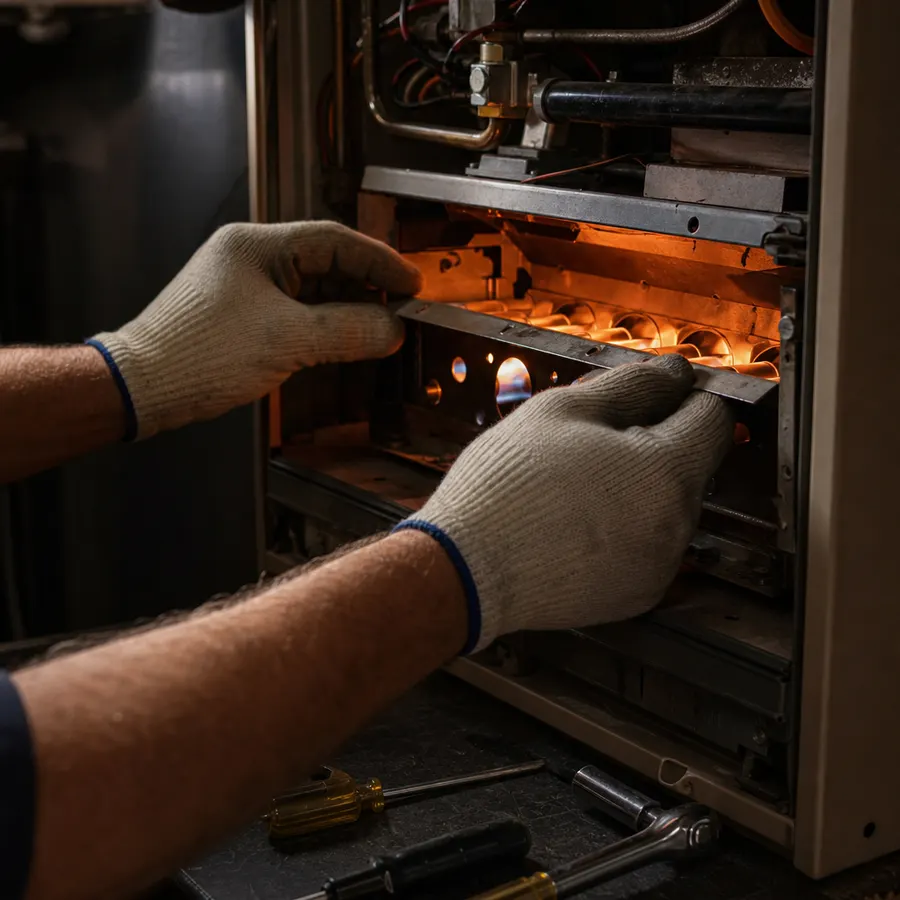
Resolving Heat Pump Performance Issues in Your Richmond Home
Are you noticing your heat pump running continuously without ever quite reaching the temperature set on your thermostat, blowing lukewarm air from the vents, or causing a sudden, unexplained spike in your recent electric bills? Because heat pumps handle both heating and cooling, they rarely get a break, and ignoring these subtle signs of strain forces the system to rely on expensive auxiliary heat while pushing your compressor toward premature failure. You do not have to wait for a total breakdown to get your system back on track, because Feistritzer Heating & Air Conditioning is ready to provide the thorough, professional maintenance needed to restore your heat pump's efficiency.
Warning Signs Your Heat Pump Needs Professional Attention
Unexplained Spikes in Your Energy Bills
You open your utility bill and it is significantly higher than the same time last year, even though your thermostat habits have not changed. You might also notice the auxiliary or emergency heat indicator illuminated on your thermostat when the weather outside is not extreme. This is a classic sign that your heat pump can no longer extract heat or cool air efficiently.
When the primary system struggles due to a dirty coil or a failing component, it automatically triggers the backup electric resistance heat strips to make up the difference. These backup strips consume a massive amount of electricity to keep your home comfortable. If left unaddressed, you will continue overpaying on your utility bills month after month while your equipment continues to degrade.
The System Never Seems to Turn Off
Your heat pump runs continuously for hours on end, or you hear it turning on and off in rapid, short bursts without fully satisfying the temperature setting in your home. Heat pumps are designed to run in longer, steady cycles than traditional furnaces, but they should still cycle off eventually. Constant running usually points to restricted airflow, a clogged filter, or an outdoor unit caked in dust.
When your system cannot absorb or release heat properly, it has to work overtime just to maintain the baseline temperature. A system that never rests is a system that is actively burning out its compressor. The compressor is the most expensive part of your heat pump, and replacing it is often nearly as costly as replacing the entire outdoor unit.
Lukewarm or Weak Airflow from Vents
When you put your hand over the supply vents, the air barely trickles out, or the temperature of the air simply does not match what the system is supposed to be doing. Weak airflow is commonly caused by a severely clogged blower wheel, a blocked indoor coil, or failing blower motor capacitors. Lukewarm air often points to a sticky reversing valve or a slow refrigerant leak.
Ignoring restricted airflow causes the internal coils to freeze over entirely. Once the coils freeze, the system cannot condition the air at all, leading to a complete system shutdown. This turns a simple maintenance visit into a much more expensive repair call.
Unusual Noises During Operation
You hear grinding, squealing, or loud rattling coming from either the indoor air handler or the outdoor cabinet. You might also hear a loud whoosh that sounds much more aggressive than the normal sound of the system entering defrost mode. Metallic grinding or squealing indicates failing motor bearings or a loose fan belt that needs immediate attention.
Rattling often means hardware has vibrated loose over months of continuous operation. Mechanical parts do not fix themselves, and a squealing bearing will eventually seize completely. This causes the blower motor or outdoor fan motor to burn out, leaving you without any climate control.
Common Causes of Heat Pump Inefficiency
Clogged Outdoor Coils from Local Debris
The delicate aluminum fins on your outdoor unit easily become matted with a thick layer of dirt, grass clippings, and biological growth. In the Richmond area, the combination of high humidity, agricultural dust, and heavy pollen creates a sticky residue that clings to heat pump coils. Because these systems run constantly, they act like giant outdoor vacuum cleaners pulling this debris straight into the fins.
A professional tune-up involves applying specialized, coil-safe chemical cleaners to break down this local grime. We follow this up with a low-pressure wash to restore maximum airflow and heat transfer. This careful cleaning process removes the heavy blanket of dirt without bending the delicate fins.
Sludge in the Condensate Drain Line
Water begins pooling around your indoor air handler, or the system shuts itself off completely because a safety float switch has been tripped by standing water. Heat pumps pull gallons of moisture out of the air as they condition your home. In our humid climate, the dark, damp environment of a condensate drain line is the perfect breeding ground for algae and mold.
This biological growth eventually forms a thick sludge that completely blocks the drainage pipe. Maintenance includes flushing and clearing the entire condensate drain line to ensure water flows freely outside. We also treat the drain pan to prevent future biological growth and verify that the safety switches are operating correctly to protect your home from water damage.
Sticky or Failing Reversing Valves
The system gets stuck in one mode, blowing cold air when you want heat or blowing hot air when you need cooling. The reversing valve is the defining component of a heat pump, physically shifting to reverse the flow of refrigerant through the system. Because the weather fluctuates wildly and requires constant switching between modes, this valve gets a heavy workout.
Over time, the valve can become stuck due to electrical solenoid failure or internal mechanical wear. During a tune-up, a technician will test the electrical draw of the solenoid and cycle the reversing valve. This ensures it engages smoothly and fully seats in both directions so your system is ready for any temperature shift.
Electrical Fatigue and Weak Capacitors
The system struggles to start, the outdoor fan hums but will not spin, or the system frequently trips your circuit breaker. Heat pumps require a massive jolt of electricity to start the compressor and fans, and capacitors store this energy to deliver it on demand. Year-round operation means these electrical components degrade faster than they would on a seasonal air conditioning unit.
We test the microfarad readings of all capacitors and inspect contactors for pitting or burn marks. Replacing a weak capacitor during a tune-up is a minor expense that prevents a major compressor failure down the road. Catching electrical fatigue early keeps your system running reliably and safely.
What to Expect During Your Heat Pump Tune-Up
A Thorough, Whole-System Diagnosis
When you call Feistritzer Heating & Air Conditioning to your Richmond home, you get a consultative, repair-first approach. We do not use maintenance visits as an excuse to sell you a new system. Our NATE-certified technicians diagnose the whole system to show you exactly what is going on with your equipment.
We start by measuring the vital signs of your heat pump, which includes testing the refrigerant pressures and checking the amp draw on the compressor and motors. We also verify the operation of the reversing valve and defrost controls to ensure the system transitions smoothly. Next, we perform a deep clean of the outdoor coils to remove the stubborn pollen and dust common in our area, and we flush the condensate lines to prevent water backups.
Honest, Repair-First Recommendations
Because we are brand-agnostic, we know the quirks of every major manufacturer and service them all. Once the tune-up is complete, we explain our findings clearly and honestly. If we spot a worn part, we will tell you whether it needs to be repaired today or if it can wait, giving you the honest advice we would use for our own homes.
Comprehensive HVAC Support for Your Home
While routine maintenance prevents most major issues, sometimes a tune-up reveals a component that has already failed and requires immediate attention. If your system requires more extensive work, our team seamlessly transitions into expert Heat Pump Repair & Service to get it running safely again. Additionally, if you have older additions to your home or areas that your central heat pump struggles to reach, we also provide Ductless Mini-Split Maintenance & Tune-Up services to keep those specialized systems operating at peak efficiency.
The True Cost of Skipping Heat Pump Maintenance
Compounding Mechanical Strain
Ignoring the subtle signs of a struggling heat pump is a costly gamble that rarely pays off. Because these systems run continuously to manage your home's climate, a minor inefficiency compounds rapidly into a major mechanical issue. A heat pump operating with dirty coils or a low refrigerant charge has to run significantly longer to achieve the same results in your living space.
This extended run time causes your monthly utility bills to skyrocket, especially if the system defaults to emergency electric heat. It also puts immense thermal and mechanical strain on the compressor, which is the heart of your system. What could have been resolved with a standard tune-up and a new capacitor can quickly escalate into a catastrophic compressor failure, leaving you with a massive repair bill. Regular maintenance is the only proven way to protect the lifespan of your equipment and keep your energy costs predictable.
Schedule Your Richmond Heat Pump Service Today
Do not wait for your system to fail when you need it most. Our homegrown team at Feistritzer Heating & Air Conditioning is dedicated to providing accountable, repair-first service that keeps your equipment running efficiently year after year. Whether you are dealing with weak airflow, strange noises, or just want the peace of mind that comes with a professionally tuned system, we are here to help. Reach out today to schedule your heat pump maintenance visit in Richmond or the surrounding areas.