
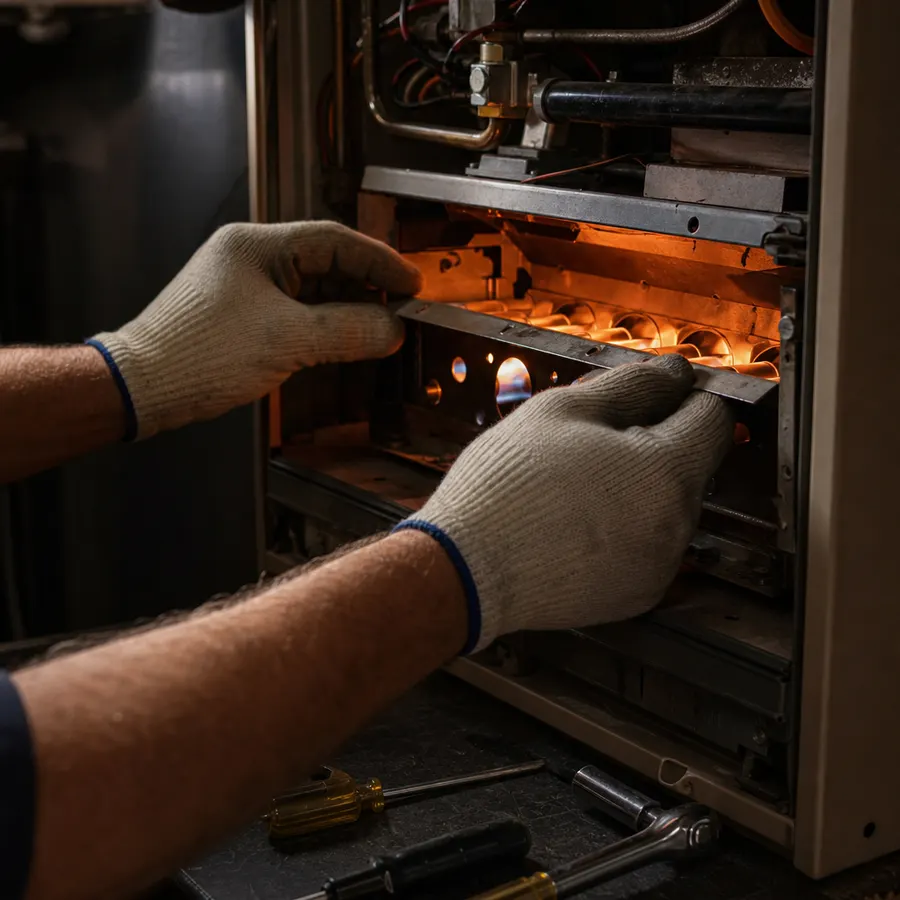
Solving Gas Line and Pressure Problems in Your Richmond Home
Are you trying to upgrade to a high-efficiency gas furnace, only to be told your current gas lines are too small to handle the load, or is your heating system constantly locking out because it isn't getting enough fuel pressure? Gas line problems are never something you can put off, because inadequate gas pressure forces your expensive heating equipment to run lean, which damages internal components and drastically shortens the lifespan of your HVAC system. Feistritzer Heating & Air Conditioning provides safe, code-compliant gas line sizing, installation, and repair to ensure your home's heating systems operate safely and efficiently.
Recognizing the Warning Signs of Gas Line Issues
When your home gas infrastructure starts to fail or proves inadequate for your equipment, the symptoms are usually clear if you know what to look for. Catching these issues early can save your heating equipment from premature failure and protect your family from severe safety hazards.
We always tell our customers to trust their senses and pay attention to how their furnace behaves during a heating cycle. Here are the most common signs that you need professional gas line intervention.
Faint Rotten Egg Odors
You might notice a subtle, sulfur-like smell that seems to hover near the furnace, water heater, or the outdoor gas meter. This scent might come and go depending on the airflow in the house or the weather outside. Natural gas is completely odorless on its own, so utility companies add a harmless chemical called mercaptan specifically so leaks can be detected.
Even a very faint smell indicates a compromised joint, a failing shut-off valve, or a micro-leak somewhere in the piping. This is a critical safety hazard because small leaks can easily accumulate in enclosed spaces like Richmond crawlspaces or utility closets. Allowing this gas to pool creates an immediate risk of combustion and severely degrades your indoor air quality.
Heating System Lockouts and Short Cycling
Your gas furnace might fire up normally but then shut down just a few minutes later, repeating this cycle endlessly. Because of this constant starting and stopping, your home never reaches the temperature set on the thermostat. You might also notice a blinking error code on the furnace control board indicating an ignition failure.
This usually means your furnace is experiencing gas starvation due to undersized lines. When modern equipment is installed on older piping, the system safety sensors detect a sudden drop in gas pressure and shut the unit down to prevent internal damage. Ignoring this forces the system to constantly restart, which burns out the igniter, stresses the heat exchanger, and leaves you without reliable heat.
Visible Rust and Flaking on Exposed Pipes
Take a look at the black or dark grey pipes running along your basement ceiling or passing through your crawlspace. If these pipes look orange, crusty, or are actively flaking metal shavings onto the floor, you have a serious corrosion problem. Moisture from humid Kentucky summers or damp basements easily oxidizes the exterior of traditional black iron pipes.
Over decades, this continuous corrosion eats away at the structural integrity of the pipe wall and the threaded joints connecting the sections. Corroded pipes are essentially ticking time bombs for gas leaks. Eventually, the weakened metal will thin out enough to crack under normal internal pressure or slight physical movement.
Hissing Sounds Near Gas Appliances
You might hear a faint, continuous hissing or whistling noise coming from behind the furnace, near a gas fireplace, or around the main shut-off valves. This sound is pressurized gas physically escaping from the line into your home. This typically happens at a loose connection, a degraded flexible connector, or a failing valve seal.
A hissing leak is an active, significant leak that requires immediate attention. You must shut off the gas supply to the appliance immediately and call for professional repair. Leaving a hissing leak active will quickly lead to a dangerous accumulation of combustible gas in your living space.
What is Causing Your Gas Line Problems
Gas line issues rarely happen overnight, unless there has been severe physical damage to the pipes. In most cases, these problems develop slowly over decades of environmental exposure or become apparent the moment you try to upgrade your heating system.
Understanding the root cause of your gas line trouble helps us determine whether a simple repair is sufficient or if a complete line replacement is necessary. Here are the most common culprits we encounter in the field.
Undersized Lines for Modern Equipment
The existing gas piping in your home was likely sized decades ago for older, lower-capacity appliances. When a new, high-BTU appliance is added to the system, the old pipe simply cannot carry enough volume to meet the sudden demand. As older homes in Richmond historic and mid-century neighborhoods are upgraded with modern high-efficiency furnaces, the original half-inch gas lines are frequently proven inadequate.
To solve this, an HVAC professional must perform a comprehensive BTU load calculation for all gas appliances in the home. We then install properly sized trunk lines and branches to ensure adequate fuel delivery. This guarantees your new equipment receives the exact fuel pressure it needs to operate at peak efficiency.
Soil Settling and Ground Shifting
The earth beneath and around your home foundation constantly shifts, putting downward or lateral pressure on buried gas lines. Central Kentucky freeze-thaw cycles cause the local clay soils to expand and contract heavily throughout the year. This continuous movement slowly stresses underground lines and rigid pipe joints over time until they eventually give way.
Fixing this involves excavating the affected area to expose the damaged pipe. We then replace the stressed or broken piping with flexible, code-approved underground gas lines. We also ensure proper trenching depth and leave enough slack in the line to accommodate future ground movement without breaking.
Degraded and Corroded Black Iron Piping
Traditional black iron gas pipes have a long lifespan, but they are highly susceptible to moisture damage. Many older Richmond homes feature unfinished basements or crawlspaces that trap humidity, creating the perfect environment for pipe corrosion. Over time, these damp conditions cause the iron to rust, weakening the pipe walls and the threaded joints where leaks most commonly occur.
The only safe solution is removing the compromised sections of black iron entirely. We replace them with new, properly threaded iron pipe or modern corrugated stainless steel tubing, depending on the specific application. This restores the integrity of your gas system and eliminates the risk of future rust-through in that section.
What to Expect During Your Gas Line Service Visit
When you call Feistritzer Heating & Air Conditioning for gas line service, we take a consultative, safety-first approach to your home. We are a brand-agnostic, repair-first company, which means we diagnose the whole system and explain your options clearly. We recommend the exact solution we would choose for our own homes, focusing on safety, load capacity, and lifecycle.
We never just guess at pipe sizes or throw parts at a problem. Our NATE-certified technicians start with a thorough evaluation of your entire gas infrastructure.
Comprehensive Load Calculations
If you are upgrading your equipment, we calculate the total BTU load of your home to ensure any new lines will adequately support your furnace. We check the data plates on your water heater, stove, and furnace to determine the maximum potential draw. This math guarantees your system will never starve for fuel on the coldest nights of the year.
Precision Leak Detection
If we are hunting down a suspected leak, we use highly sensitive electronic combustible gas detectors to sweep the area. We also utilize targeted pressure testing to pinpoint the exact location of the failure behind walls or under floors. Once we find the issue, we will clearly explain what needs to be repaired versus what needs to be replaced.
Pressure Testing and Verification
Once the installation or repair is complete, our job is still not finished. We perform a rigorous static pressure test on the entire gas system to verify there are absolutely zero leaks. We also test the manifold pressure at the furnace to ensure your equipment is firing at the correct pressure before we consider the job done.
Related Heating Services to Consider
If you are dealing with undersized gas lines because you are upgrading your home comfort system, this is the perfect time to look at Heating Installation & Replacement. Proper gas line sizing goes hand-in-hand with new furnace installations to ensure maximum lifespan and efficiency. Alternatively, if you are looking to maximize efficiency, a Heat Pump Installation & Replacement paired with a gas backup requires precise gas line configuration to ensure seamless transitions between electric and gas heating.
The True Cost of Ignoring Gas Line Issues
Ignoring gas line issues carries severe consequences that go far beyond a simple nuisance. The most obvious is the safety risk, as leaking natural gas can lead to carbon monoxide exposure or catastrophic combustion. A small leak in a crawlspace can quickly fill the void, creating an incredibly dangerous environment for your family.
Beyond the immediate safety concerns, ignoring low gas pressure from undersized lines will actively destroy your HVAC equipment. When a furnace runs lean, the burner flames change shape and temperature, causing the system to overheat.
Protecting Your Equipment and Your Home
This extreme stress leads directly to cracked heat exchangers and premature system failure. What could have been a straightforward gas line upgrade quickly turns into the cost of replacing an entire heating system thousands of dollars before its time.
Furthermore, attempting do-it-yourself repairs or hiring uncertified handymen for gas line work often violates local building codes. Unpermitted gas work can easily void your homeowner insurance policy and complicate future property sales. Professional, permitted installation is the only way to protect your investment.
Ready for Safe, Reliable Gas Line Installation?
Whether you need to properly fuel a new high-efficiency furnace or need a dangerous leak permanently resolved, Feistritzer Heating & Air Conditioning is ready to help. Our homegrown, repair-first approach means you get honest answers and safe, code-compliant solutions tailored to your Richmond property. Contact us today to schedule a thorough inspection and load calculation for your home gas system.