
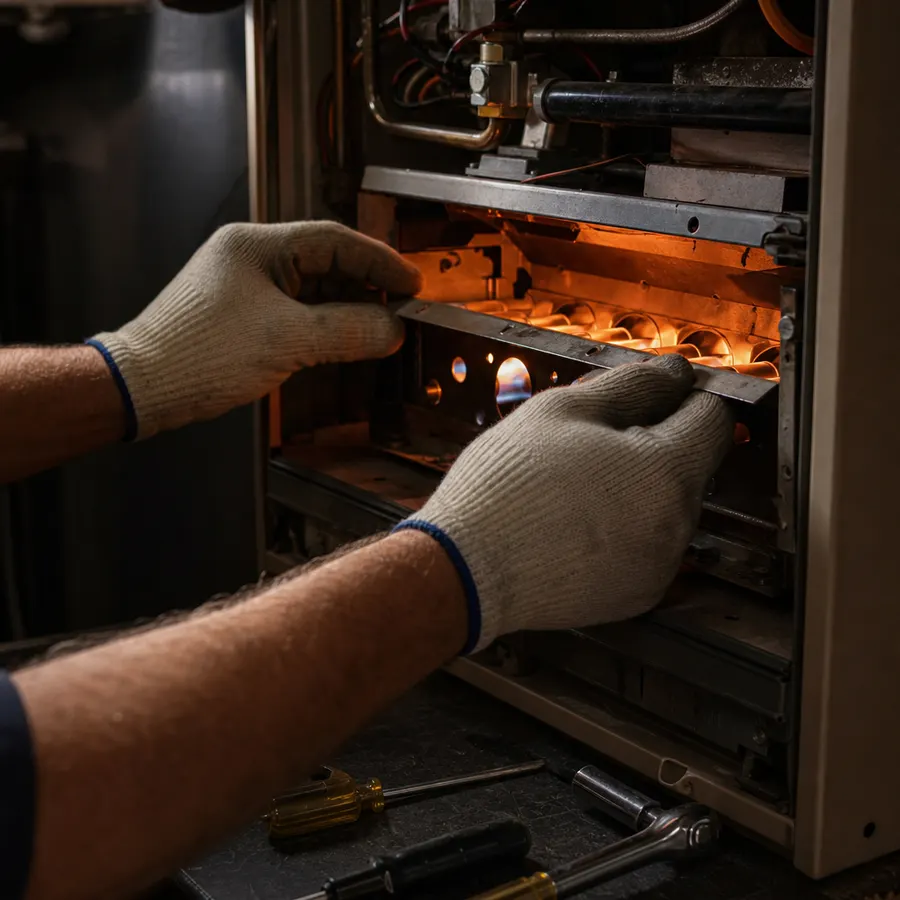
Solving Heating Gas Line Problems in Crab Orchard Homes
Are you smelling that unmistakable "rotten egg" odor near your furnace, noticing heavy rust on the gas pipes in your crawlspace, or struggling with a new heating system that keeps shutting down because it isn't getting enough fuel? Gas line issues are never something you can put off or attempt to fix yourself, as active leaks pose severe safety hazards and undersized lines will constantly starve your heating equipment. Whether you need an emergency repair for a leaking pipe or a brand-new installation for a system upgrade, Feistritzer Heating & Air Conditioning is ready to diagnose the issue and ensure your home's fuel supply is safe.
Signs You Need Heating Gas Line Repair or Replacement
The Distinct Smell of Sulfur or Rotten Eggs
The most obvious and alarming sign of a gas issue is the smell of sulfur in or around your property. Because natural gas and liquid propane are naturally odorless, suppliers add a chemical called mercaptan to make leaks highly detectable. You might notice this foul smell near your indoor furnace, around crawlspace vents, or lingering near your exterior fuel tank.
This odor means there is an active breach somewhere in your fuel piping system. It could be a loose threaded joint, a rusted-out section of pipe, or a failing gas valve right at the heating unit itself. Never ignore this symptom, as even a small leak allows combustible gas to pool in enclosed spaces and creates an immediate fire hazard.
Visible Rust and Flaking on Exposed Pipes
When you look at the gas lines running to your furnace or water heater, you might see heavy orange or brown scaling. Bubbling paint or active metal flaking on the surface of the pipe is a serious warning sign that the material is degrading. In many older farmhouses around Crab Orchard, damp crawlspaces and humid basements create the perfect environment for traditional black iron pipes to oxidize.
Over decades, this constant moisture eats away at the structural integrity of the metal. If left unchecked, the pipe walls will thin out until a dangerous pinhole leak eventually develops. Rusted joints are also highly susceptible to cracking if bumped or if the house foundation settles.
Heating Equipment Struggling to Stay Lit
Your gas furnace might turn on, run for a few minutes, and then abruptly shut down before heating the house. You might also notice the burner flames are yellow or wavering instead of maintaining a steady, strong blue color. This is a classic symptom of a significant pressure drop in your fuel supply line.
Often, a homeowner will upgrade to a larger, high-capacity furnace without realizing their existing half-inch gas line cannot carry enough volume to feed the new equipment. Running heating equipment on low gas pressure causes dangerous soot buildup and heavily damages the heat exchanger. The line must be properly sized for the exact load of the system to keep your home comfortable and safe.
Hissing Sounds Near the Furnace or Foundation
You might hear a faint, continuous hissing or whistling noise when standing near your indoor heating equipment. This sound can also occur outside right where the exterior line enters the home from the yard tank. This indicates a high-pressure leak somewhere in the immediate vicinity of the pipe.
These leaks often occur at a cracked fitting, a degraded flexible connector, or a failing pressure regulator. A hissing leak is releasing a significant volume of gas into your home very quickly and requires an immediate shutoff of the fuel supply.
What Causes Gas Line Problems in Central Kentucky?
Corrosion from Crawlspace Moisture
Moisture is the natural enemy of traditional black iron gas piping used in residential heating systems. When pipes are exposed to high humidity and standing water, they begin to rust from the outside in. In Crab Orchard, where many older rural homes sit on fieldstone foundations or dirt crawlspaces, this environmental dampness accelerates pipe degradation significantly.
This corrosion happens much faster in these damp environments than in modern, climate-controlled basements. The solution involves removing the compromised sections of pipe and replacing them with upgraded materials. We often upgrade vulnerable runs to modern corrugated stainless steel tubing or wrap exterior lines to protect them from the elements.
Ground Shifting and Settling Soils
Underground lines running from a yard propane tank to the house can easily become stressed, bent, or broken over time. The entry point where the pipe penetrates the foundation wall is particularly vulnerable to sheer force. The heavy clay soils in Lincoln County expand when saturated with rain and shrink during dry spells.
This constant heaving pulls and pushes on buried lines over the years, eventually compromising the underground joints. We excavate the damaged section and repair or replace the underground line using code-approved, flexible underground poly piping. We also ensure the foundation penetration is properly sleeved to allow for future ground movement without stressing the pipe.
Improper Line Sizing for System Upgrades
Sometimes a new furnace is installed, but it never seems to run right and keeps locking out on safety switches. This happens when a previous installer hooks up a modern, high-capacity heating system to an existing gas line that is simply too narrow. Lines with too many sharp bends or improperly installed fittings can also severely restrict the total fuel delivery.
As a brand-agnostic, repair-first company, we calculate the exact fuel load your system requires before making any modifications. If the line is undersized, we will run a new, correctly sized trunk line to support the equipment. This ensures your heating system operates at peak efficiency and delivers the warmth you expect without constant breakdowns.
What to Expect When We Inspect or Install Your Gas Lines
When you call Feistritzer Heating & Air Conditioning to your property, safety and accuracy are our top priorities. We do not just guess where a leak is or eyeball pipe sizes when evaluating your residential fuel system. If there is a suspected leak, we use highly sensitive electronic combustible gas detectors and classic soap-bubble tests to pinpoint the exact location of the breach.
If we are installing a new line for a system conversion, we start with a precise load calculation. We determine the total fuel required by your heating equipment and calculate the exact pipe diameter needed based on the length of the run. We look at the whole picture to recommend the exact solution we would choose for our own homes.
Rigorous Pressure Testing and Verification
Once the repair or new installation is complete, we perform a rigorous pressure test to verify the integrity of the system. We cap the line, fill it with compressed air, and monitor a pressure gauge over a set period to ensure the system holds perfectly tight with zero drop. Finally, we purge the air, introduce the gas, and test fire your heating equipment to verify the manifold pressure meets exact manufacturer specifications.
Comprehensive Heating Solutions for Your Home
Heating gas line installation rarely happens in a vacuum. If you are running new lines because you are upgrading from an inefficient electric system, our Heating Installation & Replacement team can design the perfect high-efficiency gas furnace for your home. We evaluate your ductwork, insulation, and square footage to ensure the new furnace is perfectly matched to your property.
Hybrid Heating Options
If you are looking for the ultimate in rural energy efficiency, ask us about Heat Pump Installation & Replacement. Many homeowners utilize a dual-fuel setup, pairing an electric heat pump for mild weather with a propane-fueled gas furnace for the coldest winter nights. We can install the gas lines necessary to make this hybrid system work flawlessly and keep your utility bills manageable.
The Dangers of Ignoring Gas Line Warning Signs
Putting off a gas line inspection is not like ignoring a squeaky door or a dripping faucet. The consequences of waiting are severe and potentially catastrophic for your property. Combustible gas pooling in your home can be ignited by something as small as a static spark, a light switch, or a water heater pilot light.
Beyond fire risks, poorly drafting gas appliances or leaks near the burner assembly can introduce carbon monoxide into your living space. This colorless, odorless gas is lethal and requires immediate professional attention. Furthermore, forcing a gas furnace to run on inadequate gas pressure causes the fuel to burn improperly.
Equipment Damage and Wasted Fuel
Low gas pressure creates excessive soot that clogs the heat exchanger, ultimately destroying the equipment and voiding your manufacturer warranty. You are also losing money every day the problem persists on your property. A slow leak on an underground propane line means you are paying to vent expensive fuel directly into the atmosphere instead of heating your home.
Secure Your Home's Fuel Supply Today
Since 1976, our family-owned team has been the homegrown choice for Central Kentucky homeowners. We show you exactly what needs to be repaired, explain the safety codes clearly, and deliver fully accountable installations without pushing unnecessary equipment. If you suspect a leak, need an old pipe replaced, or are ready to upgrade your Crab Orchard home to a new gas heating system, trust our NATE-certified technicians to do the job safely.
We are committed to doing the job correctly the first time so you can sleep soundly knowing your home is secure. Reach out to Feistritzer Heating & Air Conditioning today to schedule your gas line inspection or installation estimate.