
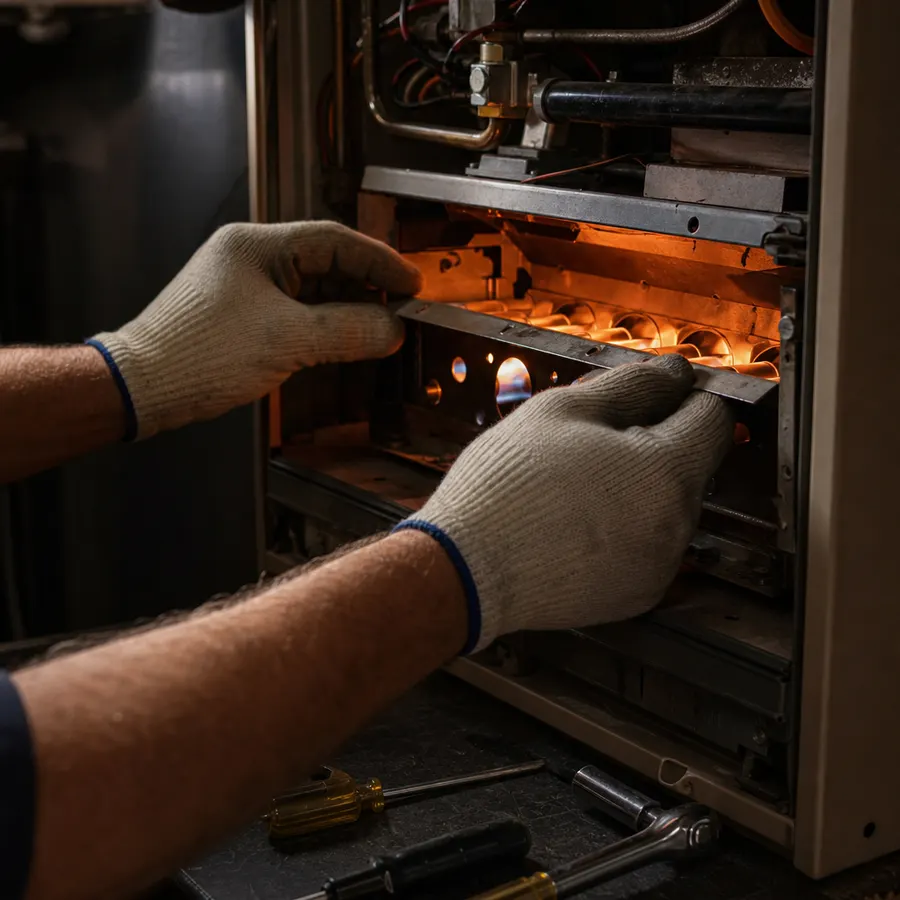
Solving Gas Line and Pressure Issues in Your Lawrenceburg Home
Are you catching faint whiffs of a "rotten egg" smell near your furnace, noticing heavy rust flaking off the pipes in your damp crawlspace, or struggling with a newly installed gas appliance that keeps locking out due to low pressure? Gas line issues are never something to wait out, whether you have a deteriorating older pipe slowly leaking or an undersized line starving your heating system of the BTUs it needs to function safely. When your home's gas piping is compromised or inadequate for your heating needs, Feistritzer Heating & Air Conditioning is ready to evaluate your lines, explain your options clearly, and ensure your home is safe and properly fueled.
Signs Your Gas Piping Needs Professional Attention
Faint "Rotten Egg" Odors Near Heating Equipment
The most obvious sign of a problem is the distinct smell of mercaptan, the sulfur-like additive put into natural gas specifically so you can detect a leak. You might only notice this odor when the furnace kicks on, or it might linger constantly in a utility closet or basement. Because natural gas can pool in low-lying areas, the smell might be stronger near the floorboards.
This scent indicates a breach in your gas piping system, often at a threaded joint that was improperly sealed, physically stressed by a shifting foundation, or degraded by decades of age. Even a tiny, intermittent leak is a severe safety hazard that requires immediate shut-off and professional pressure testing to isolate and replace the compromised section of piping.
Flaking Rust on Exposed Basement or Crawlspace Pipes
When you look under your home or in an unfinished basement, you might see existing black iron gas lines covered in orange rust. In many older Lawrenceburg homes with damp crawlspaces, ambient moisture slowly eats away at the exterior of the piping, and heavy flaking means the actual wall thickness is deteriorating. The most vulnerable parts of any gas line are the threaded joints, because cutting the threads makes the metal thinner than the rest of the pipe.
If heavy rust is allowed to progress, this corrosion will eventually eat entirely through those weakened threads. Replacing heavily rusted sections before they breach prevents a sudden and dangerous gas leak directly beneath your living space.
Heating Equipment Experiencing Frequent Lockouts
Sometimes the issue is not a leak, but a lack of capacity that causes a newly installed gas furnace or fireplace to randomly shut down, flash error codes, or fail to produce adequate heat. This is a classic symptom of an undersized gas line starving the appliance of fuel. Your gas line might literally be too narrow to deliver the volume of gas the new equipment demands.
When multiple appliances run simultaneously, the gas valve pressure drops below safe operating limits, triggering the furnace's safety sensors to lock the system out. Running equipment on chronically low gas pressure is incredibly hard on the machinery, creating dangerous soot buildup and ultimately voiding your manufacturer warranty.
Common Reasons for Gas Line Installation and Replacement
Upsizing for New Heating Equipment
Many homes were originally piped with just enough capacity for a standard water heater and a low-efficiency furnace. When you upgrade to a high-capacity system or add new gas logs to a living room, the existing half-inch branch lines simply cannot carry the required load. The total connected load of your home has exceeded the pipe's delivery limits.
We calculate the exact BTU requirements for every gas appliance in the house to determine if a larger trunk line or a dedicated home run is needed directly from the meter. Sizing by load rather than guesswork ensures every appliance operates flawlessly without dropping pressure.
Soil Settling and Foundation Stress
Over the years, the heavy clay soils common in Anderson County expand significantly when wet and shrink when dry, causing foundations to settle, shift, and sink. When a rigid gas line passes through a foundation wall or runs underground to a meter, this shifting puts immense torque on the pipe. The pipe essentially acts as a lever against the masonry, and over time, the stress breaks the pipe sealant at the nearest joint.
This creates a hidden leak that slowly releases natural gas into the surrounding area. Fixing this involves replacing the stressed section of pipe, ensuring proper sleeving where the line passes through the masonry, and adding flexible appliance connectors to absorb future vibration.
Transitioning from Propane to Natural Gas
As natural gas lines expand into previously rural areas, many homeowners are making the switch from liquid propane to natural gas to lower their monthly energy costs. However, natural gas operates at a different pressure and requires different orifices and pipe sizing than propane, meaning you cannot simply hook a natural gas meter up to an old propane system. We evaluate your entire existing piping layout to ensure compatibility with the new utility.
Because natural gas requires a higher volume to produce the same heat as propane, older pipes are frequently undersized for the conversion. Often, this requires running new, properly sized black iron or corrugated stainless steel tubing lines to accommodate the higher volume, followed by converting your furnace components.
Moisture Damage in Unencapsulated Spaces
Older black iron pipes are highly susceptible to oxidation when exposed to the elements, and when run through damp environments with poor ventilation, the factory protective coating eventually wears off. Because many homes locally have traditional vented crawlspaces that trap summer humidity, we frequently see severe pipe degradation. We routinely encounter pipes that have rusted completely through at the threads due to this constant dampness.
The solution involves carefully removing the compromised pipe and threading new, properly coated black iron to restore the system's integrity. We ensure all new joints are coated with leak-detecting, corrosion-resistant compounds and route the new piping to minimize exposure to the dampest areas.
What to Expect During Your Gas Line Service Visit
Precision Leak Detection and Pressure Testing
When Feistritzer Heating & Air Conditioning arrives at your Lawrenceburg property, our priority is safety and whole-system accuracy, meaning we look at both the pipe and what the pipe is feeding. If you suspect a leak, our NATE-certified technicians will immediately secure the area and perform a comprehensive pressure test on your entire gas system. We use advanced combustible gas detectors and manometer drop-tests to pinpoint exactly where the integrity of the line has failed.
A manometer measures the precise gas pressure in the system; if the pressure drops while all appliances are off, we know definitively that a leak is present. Once we isolate the problem, we show you exactly what failed and explain the necessary steps to restore your home's safety.
Consultative Installation and Load Calculation
If you are calling for a new installation, we take a highly consultative approach by calculating the total BTU load of your home to ensure the new line is sized correctly. We will clearly explain the routing options, whether that involves threading rigid black iron pipe in your basement or safely routing flexible gas piping through complex framing. Before we leave, the new system is pressure-tested well above normal operating limits to guarantee a completely airtight, code-compliant seal.
Complete Heating Solutions for Your Home
Diagnostics for Your Entire Heating System
Gas line installation goes hand-in-hand with the equipment it powers, so if your lines need upgrading because of aging equipment, we provide comprehensive Heating Installation & Replacement. As a brand-agnostic company, we evaluate your home's load and recommend the unit that best fits your family's comfort needs, rather than pushing a specific logo.
If your gas lines are in excellent condition but your furnace is still underperforming, our Heating Repair & Service team can diagnose the root cause. Whether you are dealing with a failing gas valve, a cracked heat exchanger, or a severe airflow issue, we diagnose the whole system and show you exactly what can be repaired and what can wait.
The Real Cost of Delaying Gas Line Service
Immediate Safety and Equipment Risks
Ignoring gas line issues is never an option, as the consequences of waiting go far beyond a simple inconvenience and start with severe, immediate safety risks. A leaking gas line is a massive fire and health hazard because natural gas can easily pool in enclosed spaces like crawlspaces and basements. You also risk premature equipment failure by forcing a gas furnace or water heater to operate on an undersized or restricted line.
Starving the burners of fuel leads to incomplete combustion and heavy soot buildup, forcing the system to work harder and ultimately leading to the premature death of expensive heating equipment. Furthermore, improperly installed or deteriorating gas lines will fail local safety inspections, which can halt home renovations, complicate property sales, and potentially void your homeowner's insurance.
Securing Your Home's Safety and Comfort
Your home's gas piping is the absolute lifeline of your heating system. Whether you are dealing with the stress of a potential leak or need a professional to pipe in a new high-efficiency furnace, you deserve a homegrown company that provides absolute accountability. We have been serving Central Kentucky families since 1976 with a repair-first, honest approach that prioritizes your safety above all else. If your Lawrenceburg home needs expert gas line installation or repair, reach out to Feistritzer Heating & Air Conditioning today to schedule a thorough system evaluation.