
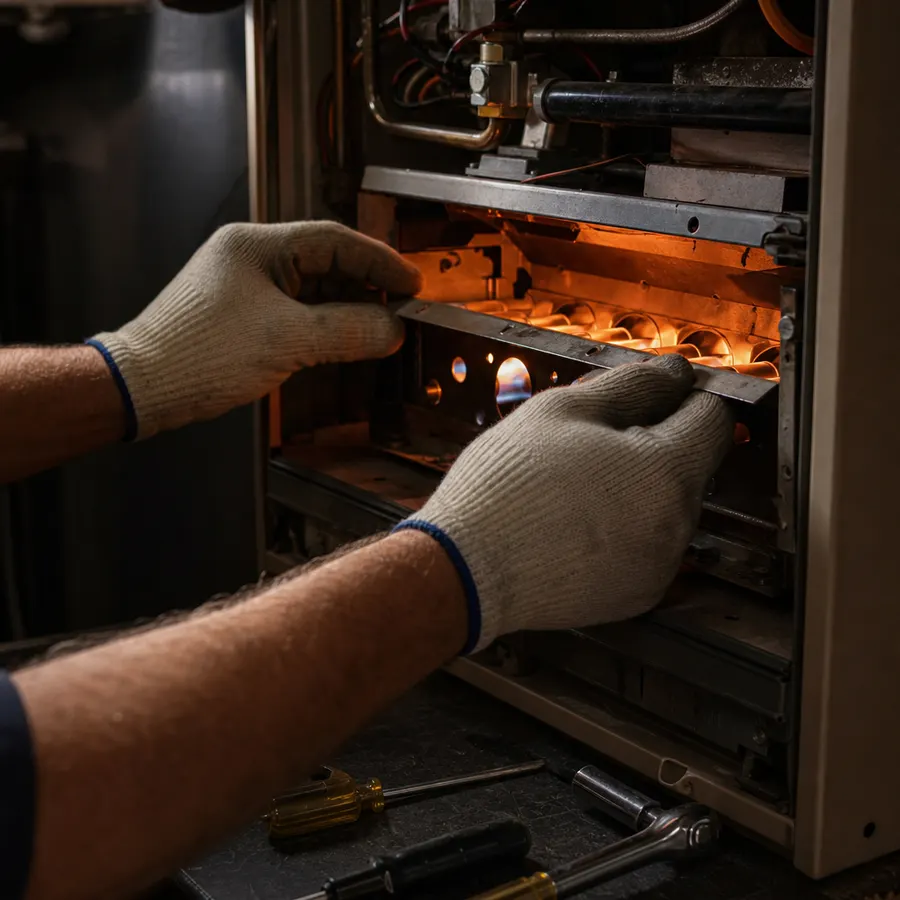
Safe Heating Gas Line Installation and Upgrades in Your Nicholasville Home
Are you trying to upgrade to a new high-efficiency gas furnace but lack the proper gas hookup, dealing with a heating system that locks out because existing lines are too small, or noticing a faint sulfur smell near your older equipment here in Nicholasville? Dealing with gas lines is never a DIY weekend project because undersized lines will slowly ruin expensive heating equipment through fuel starvation, while compromised, aging pipes present an immediate, catastrophic safety hazard to your home. When it comes to fuel delivery, precision and safety are non-negotiable, and our NATE-certified team at Feistritzer Heating & Air Conditioning is ready to properly size, route, and install the gas lines required to keep you safe and warm.
Warning Signs You Need Gas Line Services
Frequent Furnace Lockouts or Short-Cycling
You might notice your gas furnace attempts to start, runs for a very short period, and then shuts down completely. Sometimes the system will even flash a confusing error code on the control board. While this can look like an equipment failure, it frequently means the furnace is starving for fuel.
The gas line is likely undersized for the BTU requirements of the system, causing a massive pressure drop when the gas valve opens. If ignored, this constant short-cycling causes premature wear on your ignition components and heat exchanger. Eventually, this fuel starvation leads to a total system breakdown that requires expensive repairs.
Visible Rust and Flaking on Exterior Pipes
Take a look at the exterior gas pipes leading from your meter into your foundation or crawlspace. You might spot bubbling paint, deep orange rust, or physical flaking on the surface of the metal. Kentucky's high humidity and frequent rain easily break down the protective coating on older black iron pipes.
Once that coating fails, the metal actively oxidizes and thins out over time. Left alone, this corrosion will eventually eat entirely through the pipe wall. This results in a dangerous exterior gas leak and a mandatory shutoff by the utility company until repairs are made.
The Distinct Rotten Egg Odor
If you smell a faint, sulfur-like odor near your furnace, water heater, or down in the basement, you have an immediate problem. Natural gas and liquid propane are naturally odorless fuels. Utility companies add a chemical called mercaptan to create this smell specifically as an emergency warning system.
Smelling this odor means a pipe joint has failed, a valve is leaking, or a line is severely compromised. This is an immediate emergency that you cannot ignore. Ignoring this sign risks gas pooling in enclosed spaces, which is a severe fire and explosion hazard.
Hissing Sounds Near Gas Appliances
A faint, continuous hissing or whistling sound coming from the piping directly behind your furnace is a massive red flag. You might also hear this noise near the gas shutoff valves in your utility room. This indicates gas is escaping under pressure through a hairline crack, a loose threaded fitting, or a failing flexible connector.
The longer this hissing continues, the more gas accumulates in the ambient air of your home. It requires immediate professional pressure testing and line replacement to secure the system. Never attempt to tighten these fittings yourself, as you can easily worsen the leak.
What Causes Gas Line Problems in Nicholasville
Upgrading or Converting Heating Systems
Homeowners frequently decide to switch from aging electric heat pumps or oil furnaces to more efficient natural gas or propane heating systems. Because older rural properties and historic Nicholasville homes were not always built with central gas heating in mind, entirely new lines must be routed. We have to run these lines directly from the meter or propane tank to the new equipment location.
The solution involves calculating the exact BTU load of the new system and selecting the appropriate pipe material. We often use flexible corrugated stainless steel tubing for tight retrofits or traditional rigid iron for exposed runs. We then install the new infrastructure to strict local codes to ensure perfect operation.
Adding Appliances to an Undersized System
You might add a gas fireplace, a backup generator, or upgrade to a larger furnace to improve your home. Suddenly, you find that none of your gas appliances work correctly when they happen to run at the same time. Many newer suburban developments in Jessamine County were built with gas lines sized exclusively for the original builder-grade appliances.
Adding more demand simply exceeds the pipe's volume capacity, starving your equipment of fuel. We solve this by mapping your entire gas system and calculating the total simultaneous BTU draw. We typically install a larger trunk line or a dedicated secondary line to ensure every appliance gets the fuel pressure it needs.
Soil Settling and Shifting
Underground gas lines running to detached garages, outdoor heating units, or from rural propane tanks face unique environmental challenges. These buried lines often begin to leak or bend right at the foundation entry point. The clay-heavy soil in Central Kentucky expands heavily when wet and contracts deeply during dry spells.
Over decades, this constant shifting physically pulls and stresses buried pipes until they fail. The solution involves excavating the compromised section and replacing it with flexible, underground-rated poly piping. We also install specialized risers that can absorb future ground movement without breaking the line.
What to Expect During Your Service Visit
Precision Load Calculations and Routing
When you call Feistritzer Heating & Air Conditioning for gas line installation, you get a consultative, by-the-book approach focused heavily on safety and mechanical codes. We start with a thorough load calculation rather than just guessing pipe sizes based on what was there before. We calculate the total BTU requirements of every gas appliance in your home to ensure the new line delivers adequate volume.
Next, we determine the safest, least intrusive routing path for the new lines through your property. We will explain the differences between using traditional rigid pipe versus modern flexible gas tubing so you understand the materials. You will always know exactly what we are installing and why we chose that specific method for your home.
Rigorous Safety Testing and Permitting
Once the physical installation is complete, we perform rigorous pressure testing on the entire system. We cap the lines and pressurize the system with air, monitoring a precise gauge to ensure there is absolutely zero pressure drop. This testing proves the system is completely airtight before any actual gas is introduced into the pipes.
Finally, we handle all necessary permits and code compliance checks required in Nicholasville. We want you to feel completely confident in the safety and legality of your home comfort systems. You are left with a fully operational fuel delivery system that meets every local safety standard.
Related Services You May Need
Completing Your Home Comfort Project
Installing or upgrading gas lines is often just one part of a much larger home comfort project. If you are running a new line for a primary heating source, our Heating Installation & Replacement services ensure your new equipment is perfectly matched to your home's footprint. We make sure the new furnace and the new gas line work together flawlessly.
For existing gas systems that just received line repairs or upgrades, scheduling routine Heating Maintenance & Tune-Up is highly recommended. This allows us to calibrate the gas valve and ensure your burners operate safely with the newly restored gas flow. Proper maintenance protects your investment and maximizes the lifespan of your heating equipment.
The Cost of Ignoring Gas Line Issues
Immediate Safety and Compliance Risks
Ignoring undersized or deteriorating gas lines carries significant risks that go far beyond a poorly functioning furnace. The most critical consequence is the risk of a gas leak, where even a micro-leak in a crawlspace can allow gas to pool. This creates a severe fire or inhalation hazard that puts your entire household in danger.
Unpermitted or failing gas lines are also major red flags during home inspections if you ever plan to sell. Furthermore, if the utility company detects a leak, they will immediately lock out your meter. This leaves your home completely without heat until professional, permitted repairs are completed and inspected.
Long-Term Equipment Damage
Beyond immediate safety hazards, running a modern gas furnace on an undersized gas line causes chronic fuel starvation. This makes the system work harder, run hotter, and frequently short-cycle just to keep your home warm. Over time, this extreme operational stress takes a massive toll on the internal components.
This constant strain can easily crack heat exchangers, destroy ignition modules, and completely void your manufacturer warranties. What starts as a simple pipe sizing issue quickly turns into the need for a total furnace replacement. Fixing the gas line now saves your expensive HVAC equipment from premature failure.
Secure Your Home's Gas Infrastructure Today
Feistritzer Heating & Air Conditioning has been family-owned and operated since 1976, delivering homegrown, brand-agnostic expertise to Central Kentucky. We prioritize doing the job right over making a quick sale, providing the post-install accountability and NATE-certified expertise required to keep your home safe. When it comes to gas line installation in Nicholasville, reach out to us today for a professional BTU load calculation and let us secure your gas delivery system.