
Resolving Heating Performance Issues in Your Campbellsville Home
Are you noticing that your heating system runs constantly but some rooms still feel drafty, or have you caught a lingering, dusty burning smell every time the blower kicks on? These aren't just minor quirks of an aging system; they are direct symptoms of a heating unit struggling to breathe or operate safely due to heavy particulate buildup or failing sensors. A professional, diagnostic-led tune-up restores lost performance, and the NATE-certified technicians at Feistritzer Heating & Air Conditioning are ready to assess exactly what your system needs to operate reliably.
Warning Signs Your Heating System Needs Maintenance
Unexplained Spikes in Energy Bills
You haven't changed your thermostat settings, but your monthly utility bills are noticeably higher than they were during the same weather conditions last year. This indicates a severe drop in system efficiency. When internal components like the blower motor, burners, or coils are coated in grime, the system has to consume significantly more gas or electricity to transfer the same amount of heat into your living space.
Ignoring this means you are essentially paying for a tune-up through higher utility costs month after month. You are simultaneously allowing the system to overwork itself toward a premature breakdown.
Frequent On-and-Off Cycling (Short Cycling)
The heating system kicks on, runs for just a few minutes, shuts off before the house is warm, and then immediately tries to start again. Short cycling is typically a protective mechanism triggered by your equipment's internal safety controls. It often points to a dirty flame sensor that cannot detect the fire, or an airflow restriction that causes the heat exchanger to overheat.
When the system overheats, the high-limit switch shuts everything down to prevent a fire hazard. If left unaddressed, short cycling will rapidly burn out the ignitor, the blower motor, or the compressor. This turns a simple maintenance need into an expensive repair.
Lingering Odors During Operation
While a brief dusty smell is normal the first time a system turns on after months of sitting idle, you might notice a persistent burning, dusty, or musty odor every time the system runs. A lingering burning smell usually means a heavy accumulation of dust and debris on the heat exchanger or heating elements. A musty smell often points to biological growth on the indoor coil or in the ductwork, exacerbated by fluctuating local humidity.
Beyond being a nuisance, heavy buildup on heating elements restricts heat transfer and can become a dangerous fire hazard. Musty odors also degrade your indoor air quality and circulate stale, contaminated air throughout your living space.
Uneven Heating Across Different Rooms
The living room is sweltering, but the bedrooms at the end of the hall remain uncomfortably chilly, despite the system running constantly. While sometimes a ductwork issue, uneven heating is frequently caused by a weak blower motor that has been neglected. When the motor is coated in dust or its bearings lack lubrication, it loses the power necessary to push conditioned air to the furthest reaches of the house.
In Campbellsville, a neglected heating system often presents as wildly uneven temperatures due to the mix of drafty older farmhouse-style homes and tighter new construction. Forcing a compromised blower motor to run continuously will eventually cause it to seize completely. This leaves the entire home without heat when you need it most.
Common Causes of Heating Inefficiency
Heavy Particulate Buildup and Restricted Airflow
Your heating system is suffocating because the air filter, blower wheel, and internal coils are choked with a thick layer of dust and debris. In Campbellsville, the mix of rural surroundings and agricultural activity means homes are exposed to higher levels of airborne particulate. This dust easily bypasses cheap filters and settles directly onto the moving parts of your heating system.
The solution involves a comprehensive cleaning of the blower assembly and clearing debris from the return air pathways. We also replace the filter with the correct MERV rating for the system's static pressure. This ensures your equipment breathes easily without sacrificing indoor air quality.
Fouled Flame Sensors and Dirty Burners
The furnace attempts to ignite, but because the sensors are coated in carbon or rust, it shuts the gas valve off as a safety precaution. Because heating systems sit unused for long stretches of the year in Central Kentucky, ambient humidity and settling dust cause light oxidation. This carbon buildup directly impacts these highly sensitive ignition components and prevents the system from staying on.
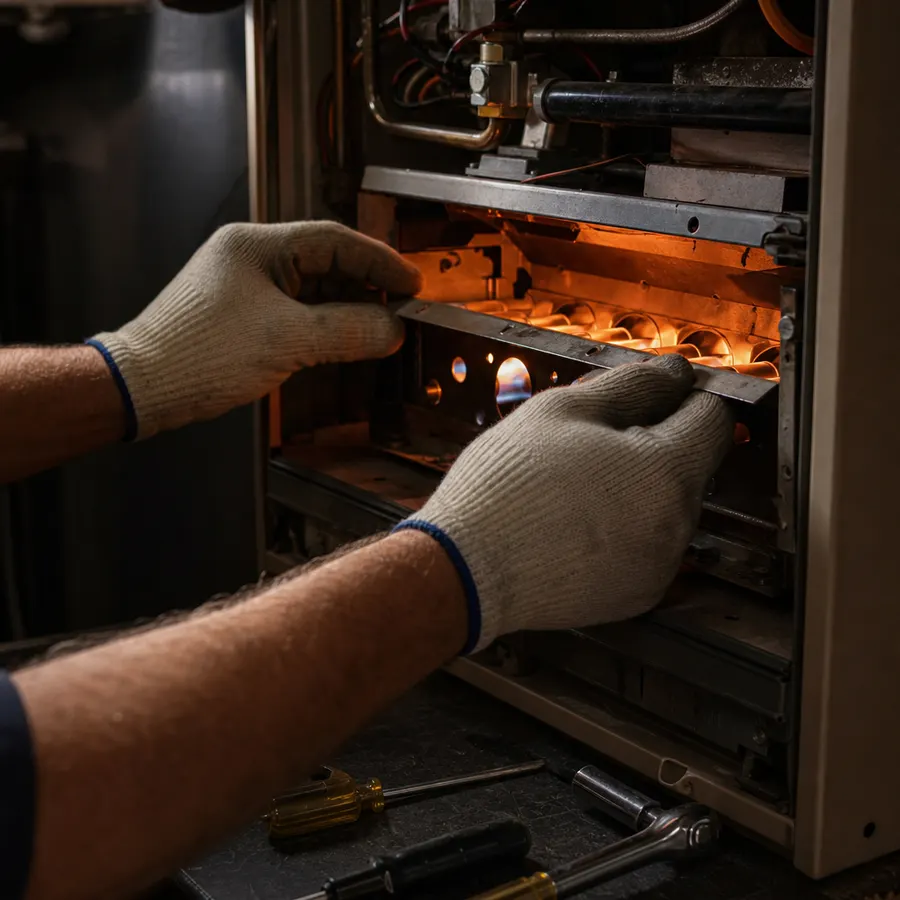
When a system sits dormant and gathers dust, the introduction of heat and shifting humidity causes severe corrosion on internal components. A professional tune-up includes carefully removing, cleaning, and testing the flame sensor. We also clear the burner ports to ensure a clean, blue, and efficient flame.
Out-of-Calibration Thermostats
The system might be operating perfectly fine mechanically, but it is receiving the wrong commands because the thermostat is reading the room temperature incorrectly. Dust accumulation inside older thermostat housings can easily disrupt the internal sensors. Even slight electrical drifts in newer digital models can cause the controls to misread the ambient temperature by several degrees.
The technician will test the thermostat's accuracy and recalibrate it to match the actual room temperature. We also ensure the communication wires between the control unit and the heating system are secure. Sending the correct voltage is critical for smooth, continuous operation.
What to Expect During Your Heating Maintenance Visit
A Diagnostic-Led Approach
When you schedule heating maintenance and tune-up services with Feistritzer Heating & Air Conditioning, you aren't just getting a quick visual inspection. We bring our repair-first, brand-agnostic approach to every home we visit. Our NATE-certified technicians start by listening to your specific concerns about comfort, uneven temperatures, or rising energy bills.
We then perform a comprehensive diagnostic check of the entire system. This includes testing electrical draws, inspecting the heat exchanger for structural integrity, cleaning the ignition components, and measuring airflow. We check all safety limit switches, lubricate moving parts, and verify that your venting system is safely directing exhaust gases outdoors.
Honest Recommendations and Clear Options
Because we operate with post-install accountability and a consultative mindset, we don't use tune-ups as an excuse to push commissioned sales. If we find a worn part, we will show you exactly what it is and explain how it impacts your system's lifecycle. We recommend the exact solution we would choose for our own homes, giving you clear options and honest advice.
Comprehensive Heating Solutions for Your Home
While a thorough tune-up resolves most efficiency and performance issues, our diagnostic process sometimes uncovers problems that require next steps. If we discover a failing component, such as a cracked heat exchanger or a seized blower motor, we seamlessly transition to heating repair and service to fix the issue safely. Conversely, if your system is over fifteen years old and the cost to repair it outweighs its remaining value, we can provide an honest assessment for heating installation and replacement. We look at the load, comfort needs, and lifecycle of the equipment to recommend the right fit, rather than pushing a specific logo.
The Real Cost of Skipping Heating Maintenance
Financial and Mechanical Consequences
Ignoring routine heating maintenance rarely saves money; it simply defers the cost until it multiplies. The most immediate consequence is financial, as a dirty, neglected system runs longer cycles and significantly drives up your monthly energy bills. You end up paying the cost of a tune-up directly to your utility company month after month.
Beyond the utility costs, the physical toll on the equipment is severe when a system struggles against restricted airflow or misfiring burners. Standard wear-and-tear accelerates rapidly, meaning a simple tune-up could prevent an expensive blower motor replacement down the line. Most importantly, skipping maintenance poses real safety risks for your household.
Safety Risks of Neglected Equipment
Gas-fired furnaces require regular checks of the heat exchanger and venting systems to ensure carbon monoxide is safely directed outside your home. Waiting until the system breaks down compromises your comfort, your wallet, and your safety. Scheduling routine maintenance is the only way to prevent these hazards and extend the life of your equipment.
Securing Reliable Heating Performance
Your heating system represents a major investment in your home's comfort, and keeping it running shouldn't involve guesswork. Regular, professional maintenance ensures that small inefficiencies don't turn into major breakdowns when you need your system the most. Whether you live near the university or on the outskirts of Campbellsville, our family-owned team is ready to restore your system's efficiency. Reach out today to schedule a comprehensive diagnostic tune-up with Feistritzer Heating & Air Conditioning and experience the peace of mind that comes with a thoroughly inspected, optimized heating system.