
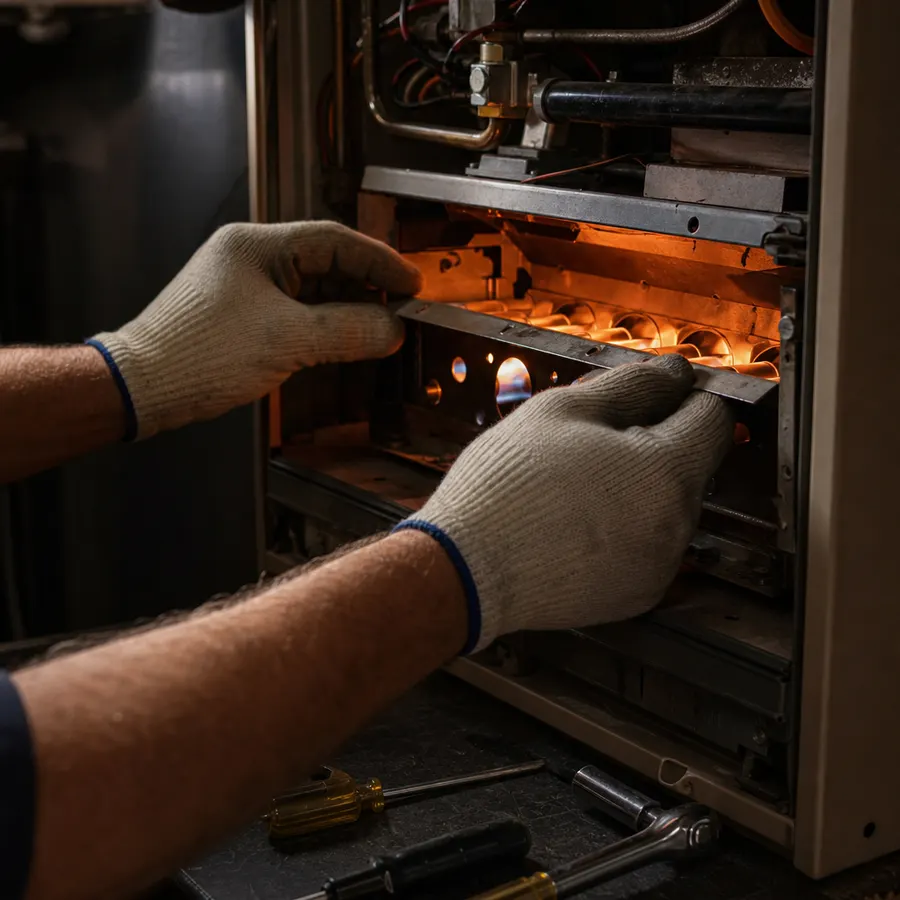
Replacing a Failing Heating System in Your Campbellsville Home
Are you constantly adjusting the thermostat because your heating system blows lukewarm air, or bracing yourself for skyrocketing utility bills every time the Campbellsville weather turns cold? An aging, failing heater does not just cost more to operate; it becomes a serious liability that leaves your home vulnerable to a complete breakdown and potential safety hazards. Feistritzer Heating & Air Conditioning provides honest, repair-first diagnostics to tell you exactly what is wrong and outline your best path forward.
Warning Signs Your Heating System Needs Replacement
Escalating Energy Bills
You notice your gas or electric bills creeping higher every month, even though your thermostat habits have not changed. This indicates your heating equipment has lost its mechanical efficiency over years of heavy use. As internal components wear out, the system has to run longer and consume significantly more fuel or electricity to produce the same amount of heat.
For older units, an original efficiency rating might drop significantly as scale builds up on the burners and the blower motor loses torque. The equipment essentially works twice as hard to deliver half the results. You end up paying for a new system in wasted energy costs over time.
By continuing to run this exhausted equipment, you absorb all the financial penalty without getting any of the comfort. Upgrading to a modern system instantly stops this energy bleed. Modern units utilize advanced technology to maximize every dollar you spend on utilities.
Diminished Airflow and Cold Spots
Certain rooms in your home feel like iceboxes, while others are uncomfortably warm. You might also notice that the air coming from the vents feels weak or barely trickles out when the unit is running. This is often caused by a failing blower motor or a system that is no longer capable of pushing conditioned air through the ductwork.
In older Campbellsville properties, this is a glaring sign that the current unit is losing its capacity to handle the home's specific heating load. Historic homes and mid-century builds often have quirky duct layouts that require a strong, healthy blower to push air to the furthest rooms. When the motor begins to fail, the warm air simply cannot make the journey.
Over time, a struggling motor will overheat and seize completely, leading to a total system shutdown. Catching this airflow drop early allows you to plan for a replacement before you are left in a freezing house.
The Band-Aid Repair Cycle
You find yourself calling an HVAC technician multiple times a year to replace sensors, fix igniters, or top off refrigerant in an older heat pump. Frequent breakdowns mean the equipment has reached the end of its mechanical lifespan. When one aging component fails, it puts additional strain on the remaining old parts.
This creates a domino effect of cascading breakdowns that quickly drains your wallet. Replacing an inducer motor one month and a control board the next is a clear signal that the system is structurally failing. Continuing to repair a dying system is a poor long-term investment.
Eventually, a major catastrophic failure will force a replacement anyway. When a compressor dies or a heat exchanger cracks, the cost of repair exceeds the value of the unit. At that point, all those previous repair bills become entirely wasted money.
Yellow Burner Flames or Strange Odors
For gas furnaces, you might notice the burner flame is yellow or flickering instead of a steady, sharp blue. You might also smell a faint, metallic odor or notice excess soot building up around the cabinet. A yellow flame means the gas is not burning cleanly or completely.
This is a massive red flag that can indicate a cracked heat exchanger or a severe combustion issue. The heat exchanger is the metal shield that keeps toxic combustion gases separate from the breathable air circulating through your home. When this metal cracks, it creates a critical safety hazard.
A compromised heat exchanger can leak deadly, odorless carbon monoxide into your living space. This requires immediate professional intervention and usually necessitates a full system replacement to ensure your family remains safe.
Unresponsive Thermostat and Constant Running
The system runs continuously without ever reaching the temperature set on the thermostat. Because of the damp, biting nature of Central Kentucky cold snaps, a system losing its heating capacity leaves homes feeling clammy and drafty. The unit simply lacks the output required to overcome the heat loss of the house.
This constant running accelerates wear and tear on already degraded parts. The blower motor and internal mechanisms are forced to operate far outside their intended duty cycles. It is a clear indicator that the equipment is either drastically undersized or mechanically exhausted.
What is Causing Your Heating System to Fail
Age-Related Component Degradation
Heating systems generally last fifteen to twenty years under normal operating conditions. Once they cross this threshold, the internal mechanisms simply degrade from a decade and a half of constant thermal expansion and contraction. The metal inside the unit heats up and cools down thousands of times, eventually leading to structural fatigue.
Given the heavy reliance on heating during cold weather, the operational hours on these systems add up quickly. Parts like the heat exchanger become brittle, while moving parts like the blower wheel lose their balance. The solution is usually a full system replacement.
Swapping out one major part on a twenty-year-old system is risky. The next oldest part is likely to fail shortly after, pulling you back into the repair cycle. A fresh installation resets the clock on your home comfort.
Improper Initial Sizing and Installation
The unit turns on and off rapidly or runs constantly without ever properly warming the house. This happens because the system is either too large or too small for the actual square footage and layout of the property. We frequently see this in older Campbellsville homes where previous contractors simply swapped boxes.
Many installers skip proper calculations, ignoring how the home's insulation, windows, and ductwork impact the actual heating needs. An oversized furnace blasts the house with heat, satisfying the thermostat in five minutes, but leaves distant bedrooms freezing because the air did not circulate long enough. An undersized unit runs nonstop but never reaches the set point.
Resolving this requires a strict load calculation. A professional will measure your home to determine the exact size and type of equipment your specific property needs for optimal comfort and lifecycle.
Chronic Lack of Maintenance
The system has overheated, tripped high-limit switches, or suffered a cracked heat exchanger long before its expected lifespan is up. Years of running with dirty filters, neglected burners, and restricted airflow force the system to run hotter and harder than designed. The excess heat stresses the internal metal components until they fracture or fail completely.
A clogged filter alone can choke the airflow so severely that the furnace overheats and shuts down as a safety precaution. Over time, this repeated overheating warps the heat exchanger and destroys the blower motor. While minor maintenance issues can often be repaired, severe damage from chronic neglect usually requires replacing the compromised unit.
This is the only way to restore safe, reliable heating to your home. Starting fresh with a new system and a commitment to annual maintenance ensures you get the full lifespan out of your next investment.
Ductwork Restrictions and Airflow Issues
Sometimes the root cause of a failing heater is actually the ductwork attached to it. Crushed, disconnected, or severely undersized ducts create massive static pressure within the system. The blower motor has to work twice as hard to push air through restricted passages, leading to premature motor failure.
This constant resistance also causes the heat exchanger to retain too much heat, accelerating metal fatigue. When assessing a failing system, we always evaluate the ductwork to ensure the new equipment will not suffer the same fate. We want your new installation to breathe easily and operate efficiently.
What to Expect During Your Service Visit
When you call Feistritzer Heating & Air Conditioning for a heating assessment, you are not just getting a sales pitch for a new unit. We operate on a strict repair-first philosophy. First, a NATE-certified technician will deeply diagnose your current system to understand exactly what is failing and why.
We look at the whole picture to determine if a repair is viable, safe, and financially sensible for your specific situation. If the system can be reliably fixed, we will show you exactly what that takes. We believe in showing homeowners what can be repaired today and what can wait, giving you the power to make an informed decision.
If replacement is the only safe or logical option, we act as consultants rather than salespeople. We perform detailed load calculations to ensure the new equipment is perfectly sized for your home's unique layout. Because we are proudly brand-agnostic, we do not push a specific logo or manufacturer on our customers.
Instead, we recommend the exact equipment we would put in our own homes based on load, comfort, and lifecycle. Finally, we deliver commissioned installations. This means our team is fully accountable for the quality of the install long after the job is finished, verifying proper airflow, gas pressure, and temperature rise before we leave.
Related Services You May Need
If your system's issues are minor, a complete replacement might not be necessary. Our Heating Repair & Service team can often restore older units to safe working order if the core components remain intact. Alternatively, if you are looking to upgrade your home's efficiency, ask us about Heat Pump Installation & Replacement or Ductless Mini-Split Installation & Replacement for highly efficient, zoned climate control. We also offer Thermostat & Controls Installation & Replacement to help you get the absolute most out of your current or newly installed system.
The True Cost of Waiting to Replace a Failing Heater
Ignoring a failing heater is a gamble with your comfort, your wallet, and your safety. Financially, an inefficient system drains your bank account through inflated utility bills and inevitable emergency repair fees. Every month you run a dying system is money thrown away on wasted energy that could have gone toward a reliable, modern upgrade.
Practically, waiting until the system completely dies guarantees it will happen at the worst possible time. Complete breakdowns rarely happen on mild days; they happen when the system is working its hardest during a deep freeze, leaving your home freezing and your plumbing at risk of bursting. Scrambling to find a replacement in the middle of a cold snap is stressful and severely limits your options.
Most importantly, running a compromised gas furnace carries the severe risk of carbon monoxide leaks into your living space. Addressing an aging system proactively puts you in control of the timeline and the budget. You get to choose the right equipment on your terms, ensuring your home remains a safe and comfortable environment.
Secure Reliable Comfort for Your Home
Do not spend another season hoping your aging heater makes it through the next cold snap. Whether you need a definitive diagnosis on a struggling furnace or a flawless installation of a modern, high-efficiency system, Feistritzer Heating & Air Conditioning is here to help. We are proud to bring honest, homegrown HVAC expertise to Campbellsville and the surrounding areas. Reach out today to schedule your comprehensive heating system evaluation.