
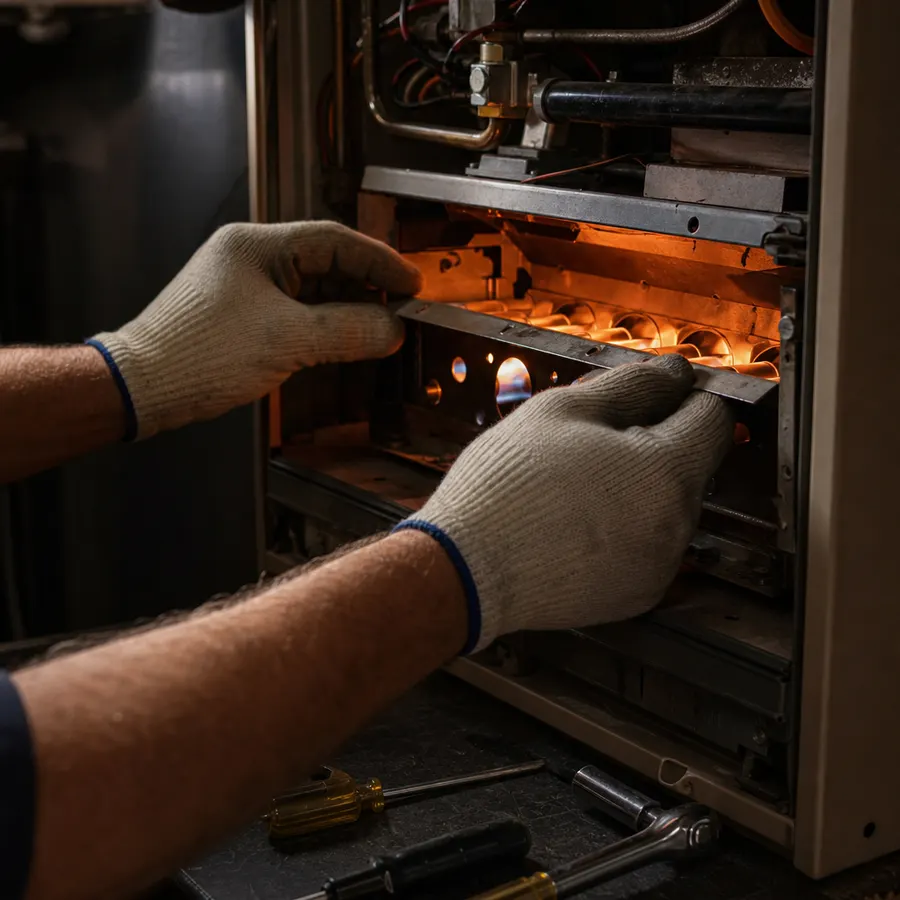
Solving Heating Repair Problems in Your Campbellsville Home
Are you waking up to a freezing house, listening to your furnace turn on and off every five minutes, or noticing your heat pump running constantly but only blowing lukewarm air into the room? When a furnace or heat pump starts showing these symptoms, it is actively wasting energy, driving up your utility bills, and pushing compromised parts closer to a total breakdown. The team at Feistritzer Heating & Air Conditioning is ready to get to the root of the problem, fix the failing components, and restore reliable heat to your home.
Warning Signs Your Heating System Needs Immediate Attention
Lukewarm Air Blowing from Your Vents
You hold your hand up to the register, and while air is moving, it feels room-temperature or even slightly cool instead of comfortably warm. For homes with heat pumps, this usually means the system is failing to pull heat from the outside air, or the auxiliary heating strips are malfunctioning. For gas furnaces, it could indicate a failing burner or a cracked heat exchanger that is tripping safety sensors.
Ignoring this means your system will run continuously in a desperate attempt to reach the thermostat setting. This results in massive energy bills and eventual compressor failure.
Rapid Short-Cycling
Your heating system turns on, runs for a few minutes, shuts off abruptly, and then starts the whole process over again shortly after. This is a classic sign of overheating caused by restricted airflow, or a malfunctioning flame sensor that shuts the gas valve down as a safety precaution. In older Campbellsville homes, this is frequently tied to undersized or aging ductwork choking the system.
Short-cycling puts immense strain on the blower motor and starter components. If left unchecked, it will drastically shorten the lifespan of your entire HVAC system.
Unusually High Energy Bills
Your heating habits have not changed, but your electric or gas bill has suddenly spiked compared to the same time last year. This happens when a system loses its efficiency, like a heat pump stuck in emergency heat mode or a furnace fighting against a failing blower motor. The equipment is forced to consume twice the energy to produce the same amount of heat.
You are essentially paying for a repair you have not received yet. The money wasted on utility overages is often more than the cost of fixing the underlying mechanical issue.
Banging, Squealing, or Grinding Noises
Instead of a gentle hum, your heating system sounds like metal scraping on metal, emits a loud bang when it turns on, or squeals continuously while running. Squeals usually point to worn-out blower belts or dry motor bearings, while grinding indicates a failing motor. A loud bang in a gas furnace means gas is building up before finally catching a spark.
Mechanical noises are the sound of parts destroying themselves. Delayed ignition is particularly dangerous, as the small explosions can crack the heat exchanger and introduce carbon monoxide into your home.
Unresponsive Thermostat Controls
You adjust the temperature on your wall unit, but the heating system completely ignores the command. Sometimes the screen goes blank, or the system continues to run long after the target temperature has been reached. This points to a communication failure between the thermostat and the main control board.
Often, this is caused by frayed wiring, tripped breakers, or a failing thermostat unit that can no longer send the correct voltage signals. We test the electrical continuity from the wall to the equipment to isolate the disconnect.
Strange Odors Coming from Vents
When your system kicks on, you might notice a sharp electrical burning smell or the distinct odor of raw gas. A dusty smell during the first few uses is normal, but persistent burning odors indicate overheating wires or a failing motor. The smell of gas or rotten eggs is an immediate emergency indicating a leak in the combustion system.
If you smell gas, shut the system down immediately and call for professional help. We use specialized combustible gas detectors to find the source of the leak and secure the system.
Common Causes of Heating Breakdowns
Heat Pump Defrost Board Failures
The outdoor unit freezes over into a block of ice and fails to trigger its automatic defrost cycle, choking off the system's ability to absorb heat. The damp, freezing conditions in Central Kentucky cause heavy frost buildup on outdoor coils, especially with the moisture coming off Green River Lake. Because local heat pumps have to run their defrost cycles so frequently, the control boards and sensors endure heavy wear and tear.
We test the defrost thermostat and control board to pinpoint the exact electrical failure. Replacing the faulty electronics allows the system to properly melt away ice and resume efficient heating.
Restricted Airflow and Overheating
The furnace gets too hot and trips its high-limit switch, shutting the system down before the house actually gets warm. Many older homes in the Campbellsville area have retrofitted duct systems that were not perfectly sized, or homeowners unknowingly use overly restrictive filters. Both scenarios choke the system of return air and cause severe overheating.
The solution involves testing the static pressure of the system, replacing clogged filters, and cleaning the blower wheel. We also adjust fan speeds to ensure the system breathes properly through your existing ductwork.
Dirty or Failing Flame Sensors
The furnace ignites successfully but shuts off just a few seconds later because the system cannot confirm that a flame is actually present. Over time, the flame sensor inside a gas furnace becomes coated in carbon buildup and light oxidation. When it gets too dirty, it loses its ability to detect the flame and shuts the gas valve off to prevent a dangerous gas leak.
Often, this requires a professional, delicate cleaning of the sensor rod. If the sensor is completely degraded, we replace the part entirely to restore reliable ignition.
Worn Blower Motors or Capacitors
The system tries to turn on, but you only hear a faint buzzing sound, or the fan struggles to push air through the vents. Capacitors are small electrical components that give the blower motor the jolt of energy it needs to start. When they lose their charge and fail, the motor overheats trying to start without them.
We test the microfarad readings on the capacitor and the amp draw on the motor. Usually, replacing an inexpensive capacitor is all it takes to get the blower running at full power again.
Refrigerant Leaks in Heat Pumps
Unlike gas furnaces, heat pumps rely on a closed loop of chemical refrigerant to capture and move heat into your home. If a line develops a pinhole leak, the system loses its ability to transfer heat effectively. You will notice the system running non-stop while the air coming from the vents gets progressively cooler.
Refrigerant does not get consumed like fuel; it only disappears if there is a physical leak in the copper lines or coils. We use electronic leak detectors to find the exact location of the breach, repair the copper, and recharge the system to factory specifications.
Cracked Heat Exchangers
The heat exchanger is the metal shield that separates the toxic combustion gases of your furnace from the clean air blowing into your living space. Over years of expanding and contracting with extreme temperature changes, this metal can develop hairline cracks. When this happens, carbon monoxide can easily slip into your ductwork.
This is one of the most serious mechanical failures a heating system can experience. We use combustion analyzers and visual inspection cameras to check the integrity of the heat exchanger and ensure your home is safe.
What to Expect During the Service Visit
When you call for heating repair, you need answers, not a sales pitch. Feistritzer Heating & Air Conditioning serves Campbellsville and the surrounding communities with a strict repair-first, consultative approach. First, a NATE-certified technician will arrive and listen to the specific symptoms you have noticed.
We do not just look at the broken part; we perform a comprehensive diagnostic of the entire heating system to understand why that failure happened. Because we are completely brand-agnostic, we service all makes and models without pushing you toward a specific manufacturer. We evaluate the load, comfort levels, and lifecycle of your current setup to give you the full picture.
Clear Explanations and Honest Options
Once we identify the root cause, we sit down and explain your options clearly. We will show you exactly what can be repaired today, what components are nearing the end of their lifecycle, and what can wait. You receive upfront pricing for the repair before any work begins, so there are never any surprise charges.
We only recommend the solutions we would choose for our own homes. Our goal is to focus on your comfort, your budget, and the longevity of your equipment rather than rushing a quick fix.
Related Services You May Need
If your system is facing a catastrophic failure like a cracked heat exchanger, we can walk you through Heating Installation & Replacement options focused on proper sizing rather than just swapping out boxes. We also provide specialized Heat Pump Repair & Service for alternative setups that need targeted attention. To prevent future breakdowns, you can always ask our technicians about our comprehensive Heating Maintenance & Tune-Up services to keep your equipment running efficiently year after year.
The True Cost of Waiting to Fix Your Heating System
Ignoring a heating problem rarely saves money. Heating systems are interconnected networks of mechanical and electrical parts, so when one component struggles, the rest of the system works harder to compensate. A failing capacitor can quickly cause a blower motor to overheat and burn out, turning a minor fix into a major expense.
A dirty flame sensor will cause your furnace to short-cycle until the ignition system completely fails. Beyond the mechanical damage, a struggling system consumes significantly more electricity or gas, silently draining your wallet through inflated utility bills. Most importantly, ignoring signs like strange smells or banging noises in gas furnaces can lead to cracked heat exchangers, creating a severe carbon monoxide risk for your family.
Resolving Your Heating Issues Today
You do not have to spend time shivering in your own home or worrying about whether your furnace will make it through the night. Our homegrown, family-operated team is dedicated to providing honest diagnostics and reliable repairs that stand the test of time. If your heating system is struggling to keep up, acting erratically, or making unusual noises, Feistritzer Heating & Air Conditioning is here to help restore your comfort.