
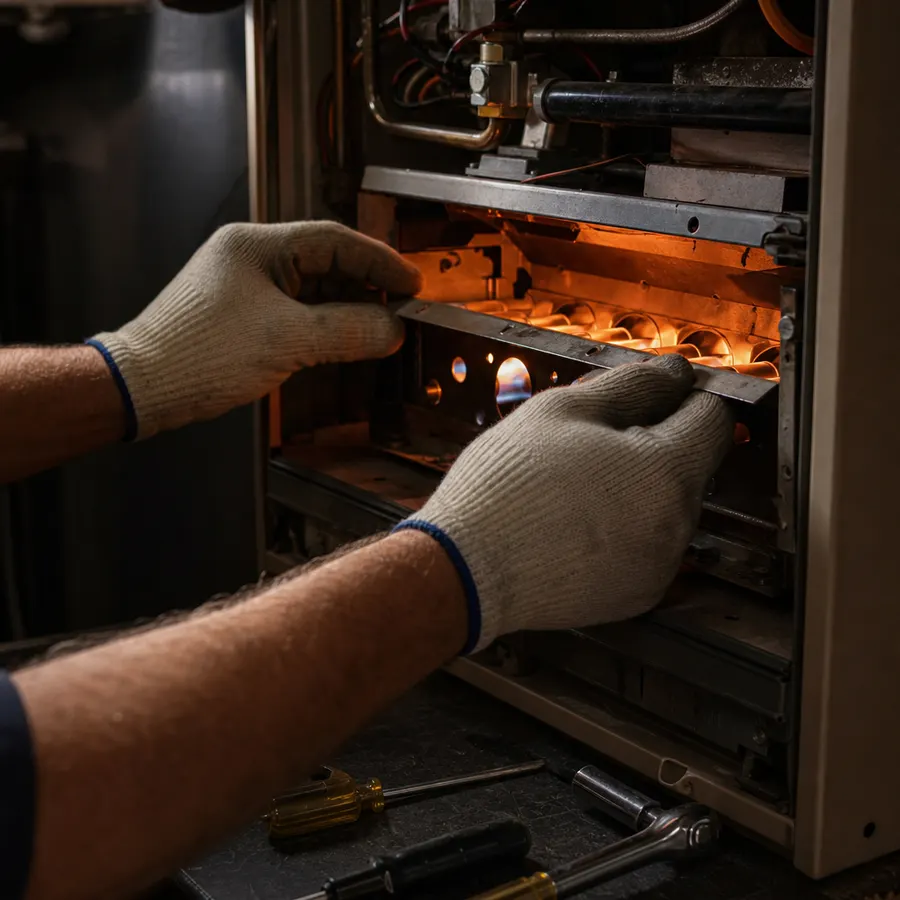
Diagnosing and Fixing Heating Failures in Your Salvisa Home
Are you dealing with a heat pump that runs non-stop but leaves your house feeling chilly, noticing a sharp burning odor when the furnace kicks on, or waking up to a completely unresponsive thermostat? Ignoring a struggling heating system in an open-terrain Salvisa home forces the equipment to run beyond its capacity, turning minor issues like a failing capacitor into cracked heat exchangers or burned-out compressors. Feistritzer Heating & Air Conditioning is ready to help with homegrown, NATE-certified experts who provide repair-first, brand-agnostic diagnostics to get your heat back on without pushing unnecessary replacements.
Warning Signs Your Heating System Needs Attention
When a heating system begins to fail, it rarely stops working completely without giving you a few warning signs first. Recognizing these symptoms early can mean the difference between a simple part replacement and a catastrophic equipment failure. Here is what you should be looking out for when your system starts acting up.
Weak Airflow or Lukewarm Air
You might notice that the air coming from the vents feels weak, barely trickles out, or feels room-temperature rather than actually warm. This usually points to a failing blower motor, a frozen evaporator coil on a heat pump, or severe airflow restriction in the ductwork or filter. If ignored, the system will run continuously trying to reach the set temperature, skyrocketing your energy bills and eventually causing the compressor or blower to overheat.
Short Cycling or Constant Running
The heating system might kick on, run for only a few minutes, shut off, and immediately restart, or it might run non-stop without ever satisfying the thermostat. Constant running often means the system is undersized or struggling against drafty conditions, while short cycling typically indicates an overheating furnace hitting its high-limit switch. Letting a system short-cycle will destroy the internal contactors and drastically shorten the lifespan of your heating equipment.
Unusual Odors from the Vents
You might smell a sharp, acrid burning scent, an electrical melting smell, or an exhaust-like odor when the heat turns on. While a brief dusty smell is normal when heat strips first activate, persistent burning smells mean wiring is melting, a motor is seizing, or exhaust gases are escaping a compromised heat exchanger. Electrical and exhaust odors are immediate safety hazards that risk electrical fires or carbon monoxide exposure in your home.
Grinding, Squealing, or Rattling Noises
Your system might sound abnormally loud, producing metallic grinding, high-pitched squeals, or heavy rattling from the indoor unit or ductwork. Squealing usually indicates a worn-out blower belt or failing motor bearings, while rattling can mean loose internal components. Catching these noises early usually means a simple part replacement, but waiting until the noise stops means the motor has died and the repair bill has multiplied.
Unresponsive Thermostats and System Lockouts
You might adjust the temperature on your wall control, only to find the screen blank or the system completely refusing to engage. This type of system lockout often happens when a safety sensor detects a critical fault and shuts down the heating cycle to protect the equipment. Forcing the system to restart without diagnosing the lockout can cause severe electrical damage or bypass vital safety mechanisms.
Common Causes of Heating Failures
Finding the right solution requires understanding exactly why the equipment is struggling in the first place. Rural properties face unique environmental challenges that accelerate wear and tear on mechanical components.
Clogged Filters from Agricultural Dust
The system's air filter can become completely impacted with dirt, restricting return air and suffocating the heating equipment. Because local homes are often surrounded by open agricultural land, airborne dust and field debris get pulled into HVAC systems much faster than in dense city environments. This clogs filters well before the standard ninety-day mark, requiring us to replace the filter, clean the blower wheel, and reset any tripped high-limit safety switches.
Electrical and Control Board Failures
Sometimes the thermostat calls for heat but the system does not respond, or components fail to sequence properly like an inducer motor starting without the burners igniting. Rural power grids can experience micro-surges or brownouts that fry sensitive HVAC control boards, and field mice seeking warmth often chew through low-voltage thermostat wires. We trace the electrical voltage from the breaker to the board, identify the short, repair damaged wiring, and replace the control board if necessary.
Dirty Flame Sensors or Burners
You might hear the furnace ignite for a few seconds and then immediately click off, leaving the house cold. Propane and gas furnaces rely on a flame sensor to verify ignition, but over time, carbon buildup coats this sensor and causes the system to shut down as a safety precaution. The repair is straightforward as we carefully clean the sensor, inspect the burner alignment, and test the ignition sequence to ensure safe operation.
Worn Blower Motors and Capacitors
The system might try to push air, but the motor hums without spinning or runs dangerously hot before shutting itself down. Heating systems in open-terrain homes work incredibly hard to combat heat loss, which degrades motor bearings and drains capacitors faster than normal. We test the microfarad reading on the capacitor and the amp draw on the motor to determine if we need to replace a weak capacitor or source a brand-agnostic motor replacement.
Drafty Environments Forcing Equipment Overload
Many older properties lack modern insulation, meaning the heat your system produces escapes through walls and windows almost immediately. Because the home loses heat so quickly, the heating equipment is forced to work overtime to maintain the temperature set on the thermostat. This heavy, sustained workload degrades mechanical parts prematurely, leading to burned-out motors and stressed compressors long before their expected lifespan ends.
What to Expect When We Diagnose Your Heating System
When you call us for heating repair and service, a NATE-certified professional arrives promptly, respecting both your home and your schedule. We do not just look at the broken part, swap it out, and call it a day. Instead, we perform a whole-system diagnosis to inspect the heating load, airflow, and lifecycle of the entire system to find the exact root cause of the failure.
A Consultative, Brand-Agnostic Approach
Our consultative, repair-first philosophy means your technician will clearly explain what can be repaired immediately, what can wait, and what the most cost-effective path forward is. We maintain a strict brand-agnostic stance, meaning our recommendations are based on what works best for your home rather than pushing a specific manufacturer logo. Feistritzer Heating & Air Conditioning proudly serves rural and residential properties throughout Salvisa and the surrounding area with honest, transparent diagnostics.
Comprehensive Heating Solutions for Central Kentucky
While many problems can be fixed on the spot, regular heating maintenance and tune-up services are the best way to catch failing components before they cause a breakdown. For homes utilizing dual-fuel or electric setups, specialized heat pump repair and service is available to ensure the outdoor unit is properly defrosting and operating efficiently. If your equipment is truly beyond repair, we offer honest heating installation and replacement options based entirely on your home's load requirements.
The True Cost of Ignoring Heating Problems
Putting off a service call might seem like a way to save money in the short term, but failing heating equipment only gets worse over time. Mechanical stress compounds quickly, turning minor inconveniences into major household disruptions.
Escalating Equipment Damage
HVAC components rely heavily on each other to function properly. A struggling blower motor capacitor might seem like a minor issue, but if ignored, it will force the entire blower motor to overheat and burn out. This chain reaction turns a minor, inexpensive repair into a major equipment replacement.
Serious Safety Risks
Ignoring burning smells or short-cycling gas furnaces poses immediate dangers to your household. A compromised heat exchanger can leak carbon monoxide into your living space, turning a simple mechanical failure into a life-safety issue. Immediate professional diagnosis is crucial when you suspect exhaust or electrical problems.
Wasted Energy and High Bills
A system struggling to heat a drafty home is running longer cycles and drawing significantly more power. You end up paying for heat you are not even feeling through drastically inflated utility bills. Fixing the underlying issue restores efficiency and keeps your monthly energy costs under control.
Reliable Heating Repair in Salvisa When You Need It
Feistritzer Heating & Air Conditioning has been family-owned and operated since 1976, bringing accountable, homegrown expertise to every single call. You deserve an honest, repair-first assessment of your heating system from professionals who treat your home like their own. Reach out today to schedule a diagnostic visit and let us restore dependable comfort to your Salvisa property.