
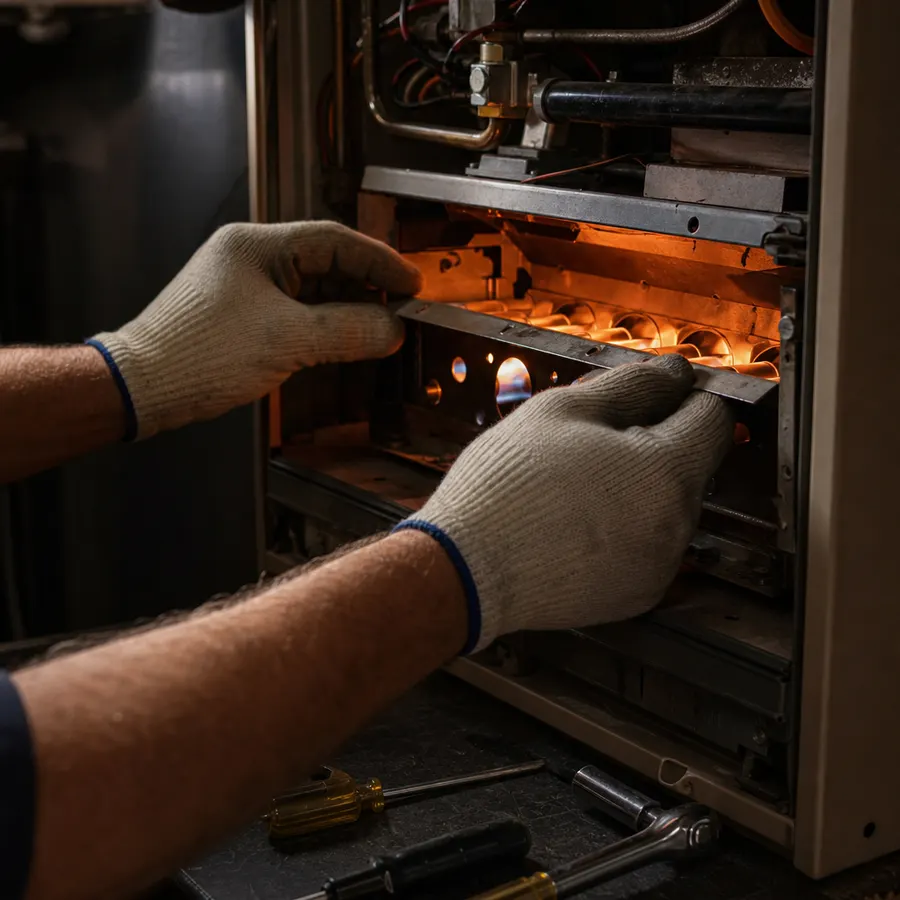
Resolving Uneven Heating and System Strain in Your Versailles Home
Are you noticing a lingering burning dust smell when your system runs, dealing with a unit that turns on and off every few minutes, or constantly adjusting the thermostat because certain rooms never seem to get warm? These are not just minor annoyances, but clear indicators that your heating system is operating under heavy strain, burning more energy to produce less heat while accelerating wear and tear on expensive parts. Feistritzer Heating & Air Conditioning provides comprehensive, brand-agnostic maintenance to get to the root of system strain and restore proper airflow and safe operation.
Warning Signs & Symptoms
Persistent Burning Dust Odors
You notice a distinct, dry burning smell that lingers long after the system kicks on, rather than just a brief odor during the first run of the year. This indicates that agricultural dust, pet dander, and household debris have bypassed the filter and coated the heat exchanger or heating elements. As the system runs, this accumulated debris bakes onto the sensitive metal components and creates that persistent smell.
If ignored, this buildup acts as an insulator that forces the heat exchanger to retain too much heat instead of transferring it to your air. This retained heat leads to severe overheating, tripped safety limit switches, and eventually a cracked heat exchanger. A cracked heat exchanger is a catastrophic safety failure that requires immediate replacement.
Rapid System Cycling (Short Cycling)
The heating unit turns on, runs for only a few minutes, shuts off, and then immediately tries to start again without ever fully reaching the set temperature on the thermostat. This short cycling is almost always a sign of a dirty flame sensor, a heavily clogged air filter, or an overheating issue causing the internal safety mechanisms to shut the burner down prematurely. The system recognizes a fault and cuts power to protect itself from damage.
Constant starting and stopping puts massive electrical and mechanical stress on the entire system. It requires a surge of electricity every time the motor starts, which drives up utility bills significantly. Over time, this rapid cycling drastically shortens the lifespan of the ignition system, the blower motor, and the main control board.
Cold Spots and Uneven Airflow
You might notice that certain rooms remain noticeably colder than the room with the thermostat, despite the system running constantly. Often, these cold spots appear in upstairs bedrooms or additions that are furthest from the main equipment. While sometimes an insulation issue, in older Versailles homes this frequently points to a struggling blower motor covered in debris.
A system that has lost its efficiency due to neglected internal maintenance simply cannot push air with the force required to reach distant vents. Forcing a compromised system to heat a drafty or older home leads to continuous operation. This results in skyrocketing energy costs and eventual system failure from sheer overwork.
Unusually High Energy Bills
You receive a utility bill that is significantly higher than historical averages for similar weather conditions, even though your thermostat habits have not changed. A neglected heating system loses its efficiency as clogged burners, dirty coils, and dry motor bearings create mechanical resistance. This resistance forces the equipment to consume more gas or electricity just to produce the same amount of heat you used to get for less.
Paying for wasted energy is a direct financial loss that compounds every single month the system runs poorly. The cost of running a neglected, inefficient system is almost always higher than the cost of routine professional maintenance. A properly tuned system operates cleanly, efficiently, and uses the absolute minimum amount of energy necessary.
Common Causes of Heating Strain
Airborne Particulates Clogging Airflow
Filters become impacted over time, and a thick layer of debris coats the blower motor wheel, reducing its ability to pull and push air through the home. Because homes in Versailles pull in a high volume of outdoor dust, pollen, and field debris, filters here clog much faster than standard manufacturer guidelines might suggest. When the blower wheel blades fill with dirt, they lose their cup shape and can no longer scoop air effectively.
The solution involves replacing the filter with the correct MERV rating for the system load so it captures dust without restricting airflow. We also physically clean the blower wheel and clear the surrounding cabinet of accumulated debris. This hands-on cleaning instantly restores full airflow and takes the strain off the blower motor.
Fouled Flame Sensors and Igniters
The flame sensor is a critical safety device that becomes coated in a thin layer of carbon or dust, blinding it to the presence of a flame. When the sensor cannot detect the flame, it shuts off the gas valve as a safety precaution. This leads to the short cycling symptom commonly seen in systems that have not been opened and cleaned recently.
A technician must carefully remove, clean, and recalibrate the sensor using specialized materials to avoid damaging the metal. We also inspect the hot surface igniter for signs of micro-cracking or electrical resistance issues. Catching a weak igniter during maintenance prevents a sudden breakdown on a freezing night.
Dry or Worn Mechanical Components
Belts become frayed and motor bearings lose their lubrication, creating friction that slows down operation and causes grinding or squealing noises. In older properties with retrofitted systems, older-style belt-driven blowers or aging motors are more common and require hands-on mechanical adjustments. Friction is the enemy of any mechanical system, causing parts to overheat and draw excessive electrical current.
Maintenance requires inspecting all moving parts and applying proper lubrication to bearings to reduce this friction. We also adjust belt tension and test the electrical draw of the motors to ensure they are not over-amping. Keeping these components moving freely prevents sudden motor burnouts and keeps your system running quietly.
Neglected or Compromised Heat Exchangers
The metal of the heat exchanger experiences stress from repeated heating and cooling cycles, eventually leading to rust, metal fatigue, or hairline cracks. The fluctuating damp cold of the region causes systems to cycle frequently, putting continuous thermal stress on the heat exchanger over the years. Condensation from the combustion process can also pool and cause rust if the system is not draining or venting properly.
A professional tune-up includes a thorough visual and often camera-assisted inspection of the heat exchanger. We do this to ensure its structural integrity and verify that dangerous combustion gases are safely contained. Identifying a compromised heat exchanger early is absolutely essential for the safety of everyone in the home.
What to Expect During the Service Visit
Systematic Assessment and Deep Cleaning
We start by listening to your concerns and observing the system in operation before taking anything apart. Our technicians perform a hands-on deep cleaning and calibration that includes wiping down sensors, checking combustion efficiency, tightening electrical connections, and measuring motor amperage. We check the thermostat calibration, test all safety limit switches, and ensure the venting system is clear of obstructions.
Because our technicians are NATE-certified and brand-agnostic, we know the specific quirks, common failure points, and maintenance requirements of every major make and model. We treat the system as a whole rather than just checking off a generic list of parts. This comprehensive approach ensures we catch small issues before they snowball into expensive emergencies.
Consultative Reporting and Honest Advice
Feistritzer Heating & Air Conditioning operates on a repair-first philosophy, meaning we show you exactly what we found without pushing unnecessary upgrades. Once the tune-up is complete, we explain the current health of the system and show you what parts are showing wear. We believe in educating our customers so you understand exactly how your equipment is functioning.
We will clearly lay out what can be repaired, what needs attention soon, and what can safely wait. As a homegrown Central Kentucky company, our focus is entirely on long-term accountability and your home comfort, not high-pressure sales. We recommend the exact same solutions we would choose for our own homes.
Related Services to Consider
Comprehensive HVAC Support
If our maintenance visit uncovers a failed component, such as a cracked heat exchanger or a dead blower motor, we can seamlessly transition into Heating Repair & Service to restore safe operation. Sometimes older equipment is simply beyond safe repair, and we can guide you through Heating Installation & Replacement options based on load and lifecycle. For homes utilizing dual-fuel setups or electric heating, regular Heat Pump Maintenance & Tune-Up is also available to ensure both the heating and cooling cycles operate at peak efficiency.
Why This Matters and the Cost of Waiting
Safety Risks and Premature Failure
The most critical risk of neglected heating maintenance is carbon monoxide exposure, as a dirty burner or a cracked heat exchanger can allow dangerous combustion gases to enter the living space. Forcing a system to operate with restricted airflow or severe friction also guarantees that major components will fail years before their intended lifespan. A blower motor fighting through a clogged filter will eventually overheat and burn out completely.
Most manufacturers require proof of annual professional maintenance to keep parts warranties valid. Ignoring tune-ups can leave you paying out of pocket for major repairs that would have otherwise been covered. Waiting simply means living with cold spots, poor indoor air quality, and the constant stress of wondering if the system will break down when it is needed most.
Keep Your Heating System Running Strong in Versailles
Routine maintenance is the single best investment you can make to lower utility bills, prevent unexpected breakdowns, and extend the life of your equipment. We have been family-owned since 1976, bringing decades of repair-first, consultative HVAC expertise to every single call we take. Reach out to Feistritzer Heating & Air Conditioning today to schedule your comprehensive heating tune-up and secure your home comfort and safety.