
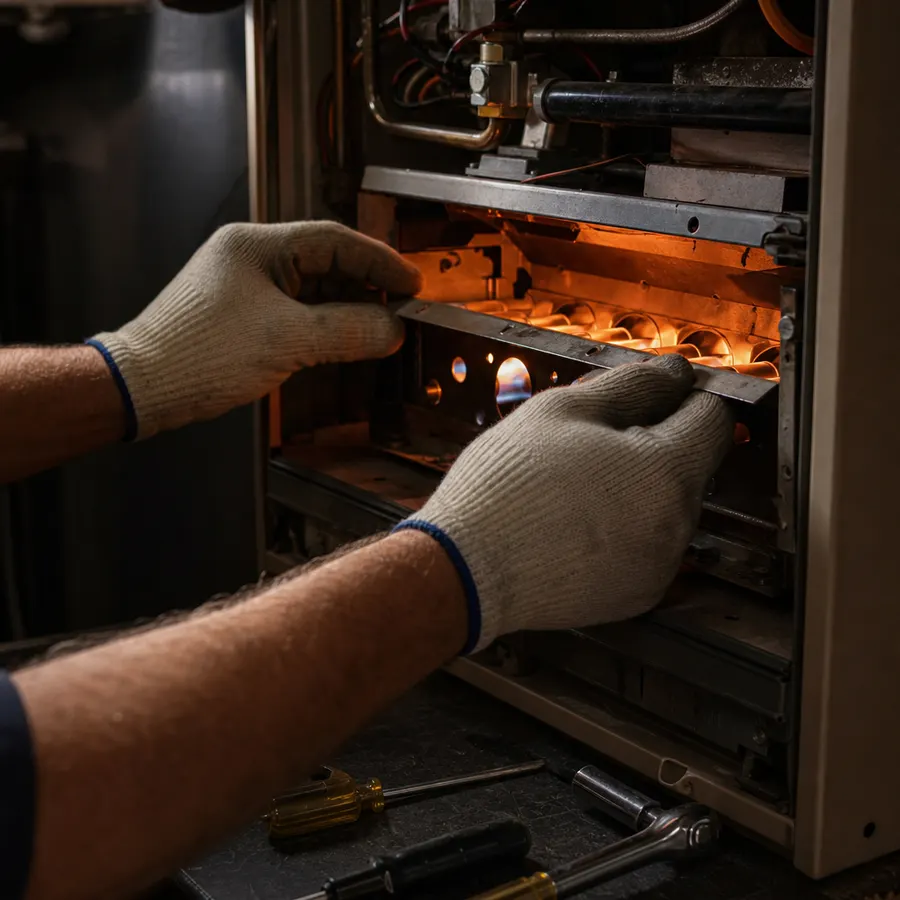
Resolving Heating Malfunctions in Your Versailles Home
Are you dealing with a furnace blowing lukewarm air, hearing a loud metallic bang every time the system kicks on, or noticing your historic Versailles home has freezing bedrooms despite the thermostat being set to 72 degrees? A system blowing cold air is actively wasting your energy, and a loud bang is a serious safety hazard that requires immediate professional attention rather than a quick DIY fix. Feistritzer Heating & Air Conditioning provides repair-first diagnostics to uncover exactly why your system is failing and get your heat restored.
Signs Your Heating System Needs Professional Repair
Lukewarm or Cool Air from Vents
You might notice that while the system is running and air is blowing from the registers, the air feels room-temperature or actively cold. This leaves your house chilly and often leads to frustrating battles over the thermostat setting. When your heating system runs without producing heat, it is completely failing its primary job.
This usually points to a failure in the ignition sequence. It could be a dirty flame sensor shutting off the gas valve for safety, a burnt-out ignitor, or a tripped high-limit switch preventing the burners from firing. The system believes it is trying to heat the house, but the actual combustion process has stopped.
If ignored, the blower motor will run continuously as it waits for a temperature rise that never happens. This drives up your electrical bills and will eventually burn out the motor itself. Catching this early prevents a simple sensor cleaning from turning into a major motor replacement.
Uneven Heating and Persistent Cold Spots
The downstairs living areas might feel perfectly comfortable, but the upstairs bedrooms remain freezing cold. We see this frequently in the older, historic homes around Versailles. Homeowners often resort to plugging in dangerous space heaters just to make certain rooms usable.
While some minor temperature variance is normal in older homes, severe cold spots usually mean the blower motor is failing. The motor loses the torque needed to push air all the way to the furthest rooms. Alternatively, there could be a significant leak in your aging ductwork that is dumping warm air into your crawlspace or attic.
This imbalance forces your heating equipment to overwork. The thermostat desperately tries to satisfy the temperature setting for the cold rooms, causing the unit to run non-stop. This drastically shortens the lifespan of your entire heating system.
Loud Banging, Squealing, or Rattling Noises
You might hear startling sounds like a loud boom when the heat first kicks on, a high-pitched squeal while it runs, or a constant metallic rattle. Heating systems should operate with a steady, quiet hum. Sudden, aggressive noises are a clear cry for help from failing mechanical parts.
A loud bang is often delayed ignition, meaning gas builds up in the combustion chamber before finally catching with a small explosion. Squealing indicates a failing blower motor bearing or a bad fan belt. Rattling often points to loose internal components or a failing inducer motor assembly.
Delayed ignition is a severe safety hazard that puts immense pressure on the internal metal components. Over time, these small explosions can crack the heat exchanger. Meanwhile, a squealing bearing will eventually seize completely, freezing the motor in place.
Frequent Short-Cycling
Your heating system turns on, runs for just two or three minutes, shuts off abruptly, and then repeats the cycle over and over again. This rapid on-and-off behavior is incredibly disruptive and prevents your home from ever reaching a comfortable temperature. It is a classic sign that the system is actively overheating.
Often, the system is starved for air due to a heavily clogged filter from rural dust and agricultural debris. This lack of airflow causes the internal temperature to spike, which trips the safety limit switch to prevent a fire. Once the unit cools down, it tries to run again, only to overheat immediately.
Short-cycling destroys your energy efficiency and puts immense stress on the heat exchanger. The constant expansion and contraction from rapid heating and cooling cycles weakens the metal. Eventually, this stress causes the heat exchanger to crack, ruining the furnace.
The Root Causes Behind Heating Failures
Clogged Airflow and Dirty Flame Sensors
Dust, pet hair, and airborne debris easily coat the delicate metal rod of the flame sensor over time. When this happens, the sensor cannot detect the burner flame and shuts off the gas valve as a safety precaution. Your system will attempt to light, but immediately shut down.
With the agricultural activity and rural dust around the Versailles area, filters and internal components often get dirtier much faster than you might anticipate. A heavily soiled air filter acts like a brick wall, choking off the oxygen your system needs to breathe. This suffocates the furnace and triggers emergency shutdowns.
The solution involves a technician carefully cleaning the flame sensor with specialized abrasives. We also replace restrictive filters and test the safety switches to ensure proper operation. Restoring smooth airflow is often the fastest way to get your heat running reliably again.
Failing Ignitors or Pilot Assemblies
Modern furnaces use electronic hot surface ignitors that glow white-hot to safely light the gas. Over time, these components degrade, lose their electrical resistance, and become brittle. Eventually, they crack or burn out entirely, leaving the burners unable to light.
Central Kentucky experiences fluctuating temperatures that require heating systems to cycle on and off frequently. This constant cycling wears out electronic ignitors much faster than in climates with steady, prolonged cold. The ignitor simply reaches the end of its natural lifecycle.
A technician will test the electrical draw to the ignition control board to confirm the failure. We then swap out the faulty ignitor component with an exact, OEM-compatible replacement. This restores the safe, reliable ignition sequence your system depends on.
Aging Blower Motors and Weak Capacitors
The blower motor is the workhorse responsible for circulating heated air throughout your rooms. Over time, the start capacitor, which gives the motor the jolt of energy it needs to start, loses its electrical charge. In other cases, the motor's internal copper windings begin to short out from heat damage.
In older Versailles homes with restrictive or aging ductwork, the blower motor has to work much harder to push air through the house. This extra friction and strain accelerate wear and tear on these sensitive electrical components. The motor runs hotter and harder than it was designed to.
If caught early, replacing a weak capacitor is a fast and inexpensive fix. If the motor has already seized due to neglect, the solution requires a full blower motor replacement. We also recalibrate the system's airflow to prevent the new motor from suffering the same fate.
Cracked or Compromised Heat Exchangers
The heat exchanger is the crucial metal shield that keeps toxic combustion gases separate from the breathable air in your home. Years of expanding and contracting from heating and cooling cause inevitable metal fatigue. This leads to microscopic cracks or rusted-out holes in the metal walls.
Because many properties in our area rely on aging gas furnaces, age-related heat exchanger failure is a very common root cause we encounter. It is an invisible problem that poses a massive risk to your household. Carbon monoxide can leak through these cracks directly into your living space.
This requires expert diagnosis, often using combustion analysis or a specialized inspection camera to find the hidden damage. Because a cracked heat exchanger is a severe safety risk, the solution involves either a major component replacement or a serious discussion about replacing the unit entirely.
What to Expect During Your Heating Repair Visit
Comprehensive System Diagnostics
When a Feistritzer Heating & Air Conditioning NATE-certified technician arrives at your Versailles home, we do not just look at the broken part. We diagnose the whole system to understand exactly why that specific component failed in the first place. A blown fuse is a symptom, but we want to find the electrical short that caused it.
Our technician will test the electrical components, measure your system airflow, and carefully inspect all safety switches. We check the gas pressure, evaluate the ductwork static pressure, and ensure the thermostat is communicating correctly. This thorough approach ensures we fix the root cause, not just the obvious symptom.
Honest, Consultative Options
After the diagnostic is complete, we sit down with you and provide a clear, plain-language explanation of your options. We operate with a strict repair-first, brand-agnostic approach. This means we show you what can be repaired today and what might need your attention later down the road.
We always recommend the solution we would choose for our own home based on load, comfort, and the remaining lifecycle of your equipment. There are no high-pressure sales tactics or unnecessary upgrades pushed on you. You get honest answers, accountable service, and the information you need to make the right choice for your home.
Comprehensive Heating and Comfort Solutions
If a system is beyond its usable lifecycle or a repair is simply no longer cost-effective, we offer complete Heating Installation & Replacement services with post-install accountability. For homes relying on electric heat or dual-fuel setups, our expert Heat Pump Repair & Service is readily available to restore your comfort. We also highly recommend scheduling annual Heating Maintenance & Tune-Ups to catch failing components before they cause a stressful mid-season breakdown.
The Cost of Delaying Heating Repairs
Skyrocketing Energy Bills
Ignoring heating warning signs always leads to larger, more expensive problems down the road. A system that short-cycles or struggles to push air will cause your energy bills to skyrocket as its efficiency plummets. You end up paying more money for a home that never actually feels warm.
Escalating Component Failures
Heating systems are interconnected networks of moving parts. Ignoring strange noises or weak airflow forces the entire system to overwork to compensate for one failing part. This chain reaction can easily turn a minor, inexpensive capacitor replacement into a catastrophic blower motor failure.
When a furnace runs with restricted airflow, the internal heat builds up rapidly. This bakes the surrounding electrical wiring and degrades the circuit boards. Fixing a small problem early prevents a cascading failure of your most expensive components.
Hidden Safety Hazards
Beyond the financial cost, there is a serious safety aspect to consider when dealing with combustion appliances. Ignoring signs of delayed ignition or poor combustion can lead to carbon monoxide exposure. This odorless, colorless gas can leak from a cracked heat exchanger into your ductwork.
Modern furnaces have built-in safety switches, but relying on them to constantly catch system failures is dangerous. Prompt repairs protect both the safety of your home and the health of your family. Do not gamble with gas leaks or electrical shorts.
Restoring Reliable Heat to Your Home
As a homegrown, family-owned company serving Central Kentucky since 1976, we believe in honest diagnostics and doing what is right for our neighbors. You deserve a heating system that keeps your family safe and comfortable without constant worry. Feistritzer Heating & Air Conditioning is ready to restore reliable heat to your home, so reach out today to schedule your repair visit.